Amazing 3 Days to Lovina For It Dolphin Tour and Amed for it Sunset Point.
Day 1 Itineraries. On the first day tour we will be start the trip by hotel pick up time at 9 AM, with first stop at Ulundanu beratan Temple. Ulundanu Beratan Temple or Pura Bratan, is a major Hindu Shaivite temple in Bali, Indonesia. The temple complex is on the shores of Lake Bratan in the mountains near Bedugul. The water from the lake serves the entire region in the outflow area; downstream there are many smaller water temples that are specific to each irrigation association (subak). In Bali, Hindu temples are known as “pura”, being designed as open-air places of worship in walled compounds. The compound walls have a series of intricately decorated gates without doors for the devotee to enter. The design and plan of the holy pura follows a square layout. A typical temple is laid out according to ancient Lontar texts with three courtyards separated by low walls pierced by ornate gateways. Our next stop will be at Handara Gate, not far from Ulundanu Beratan Temple. Located in the charming village of Pancasari, Sukasada, Buleleng, Bali, Handara Gate has become an iconic symbol of Bali’s captivating allure. As you approach Handara Gate, the first thing that strikes you is the remarkable backdrop – a lush, verdant forest that exudes a sense of ancient mystique. It’s not just any ordinary gate; it’s a breath-taking portal to a world where timeless Balinese architecture blends seamlessly with the pristine beauty of nature. This is where the magic begins. After having some photos at Handara gate, will be then head up north to have a stop at Wanagiri Hidden Hill. The Hidden Hills Wanagiri, or Bukit Wanagiri, is an paradise for panoramic views, located in Bali. This picturesque location with its lush green hills and pristine lakes provides a spectacular view during sunset. It is a well-known destination for photographers and outdoor enthusiasts alike. But does its staged selfie spots make it a paradise or a hackneyed hangout. stil at the same area we will be visiting Banyumala waterfall for bath and sflash. The Banyumala Twin Waterfalls are located in the village of Wanagiri, which is situated in the regency of Buleleng on the island of Bali, Indonesia. It is believed that the falls have been a popular local attraction for centuries, with the Balinese people visiting the falls for recreational purposes and to pay respects to the gods. The falls are named after the Banyumala tree, which is a species of mahogany that is native to the region. The tree is revered by the Balinese people for its medicinal properties and is often used in traditional medicine and rituals. In recent years, the Banyumala Twin Waterfalls have become a popular tourist destination, attracting visitors from around the world who are drawn to the natural beauty and recreational opportunities that the falls offer. Despite the increased tourism, the falls and the surrounding village of Wanagiri remain an important cultural and spiritual center for the local community. Banjar Hot spring will be as our last stop before check in to Aneka Lovina Hotel. Banjar Hot Springs are centuries-old springs have been upgraded with modern facilities over time. They’ve have become a favourite retreat and recreational site among locals and international visitors. Locally known as Air Panas Banjar, the hot springs are located approximately 5 km southwest from the famous Lovina coast in North Bali. They share the same district as the Brahmavihara Arama Buddhist monastery, which is located only 1.5 km to the east. In Bali there is a unique natural wonder and at the same time a wellness oasis, which is located in the middle of a tropical greenery and a temple complex. The springs of Air Panas Banjar are considered a unique attraction in Bali, which is very popular among locals, as well as tourists. The water contains sulfur and is highly turbid, but is especially suitable for sensitive skin. The numerous springs make it possible that the water basins are always supplied with fresh water. Banjar Hot Spring is our last stop then we heading up to Lovina area for hotel check in at Aneka Lovina Hotel, as our first nights stay on this trip.
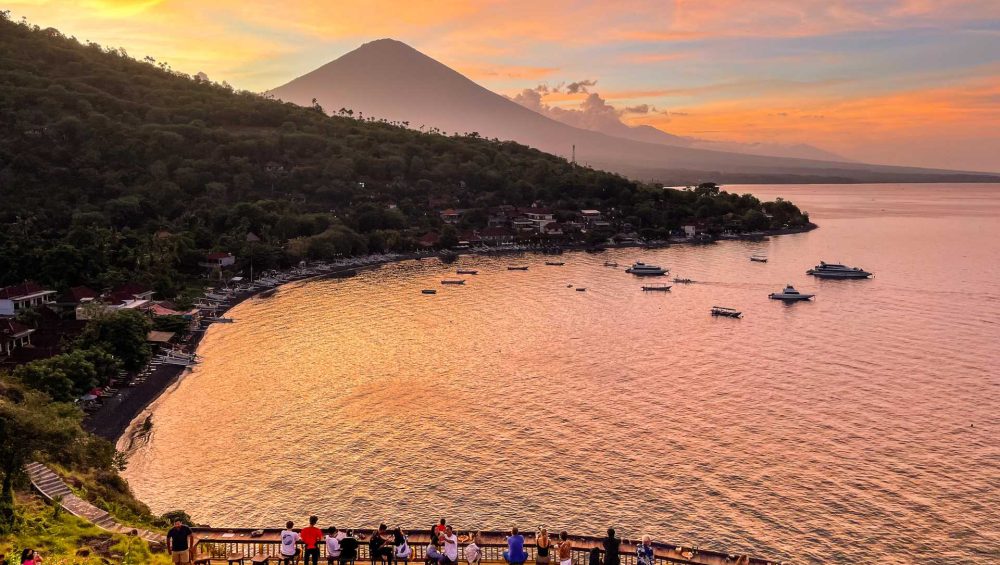
Day 2 Itineraries. Dolphin Tour and Snorkeling with Wake up early in the morning and get into the boat at 06:00 AM to sail far away into the sea chasing where are the dolphin arising and jumping. Ride on a traditional wooden boat with six passenger loading capacity. You might able to watch more than ten Dolphins jump up and beautiful morning with it sun rise. Many boats will be running together from the other people who want do same as you to observe dolphin at Lovina. It about one an half hour around and then continued to do snorkeling. Snorkeling at Lovina is another fun for those who like water attraction. the cabin of the boat will be take you down to the sea of Lovina where many colorful fishes live in their habitat, it will be take around an hour to observe it. after that we continued our journey. a few minutes snorkeling then return to your hotel for breakfast. After having breakfast and take all luggages into the car we will be continued our trip with a stop at Lovina Beach center. is a relatively new name coined in the 1950s by the late king of Buleleng (Buleleng Regency) Anak Agung Panji Tisna, with a good eye for future tourism-based development. It started with small lodge built on his own land and named Lovina. After going through struggle of ups and downs, finally the community accepted the presence of Lovina. Nowadays the name Lovina is used for the stretch of seven traditional villages, which all slightly merge into one over ten kilometersof the main road which hugs the north coast to the west of Singaraja: Temukus, Kalibukbuk, Anturan, Pemaron, Tukad Mungga, Banyualit and Kaliasem. Kalibukuk is the main hub of this area and is often thought of “Lovina town centre”. Beji Temple will be as our next Stop. The Beji temple environment was a temple environment to worship ‘ Dewi Sri ‘ as Goddess that was connected with agriculture especially being trusted as Goddess that created rice as the main food stuff. This temple environment as know as the Subak Temple environment for the Sangsit traditional village, where all of the king environmental part was illustrated Buleleng carving style in the form of plants that crept and the motive of the flower that characterized the age to 15, King’s Majapahit era. In the main gate of the temple environment was decorated by two dragons as the guard of the temple. The attraction that was unique from this temple environment was carving that filled all the temple parts as though none the place of the temple that was not decorated with carving. This carving was painted by colors so as this temple environment became more unique. The trip will ne then heading up north to Amed Beach for Hotel check in with a quick stop at Amed Sunset View Point. Amed is the most recent tourist development area in Bali. It was only in 2000 that tarmac was laid on the roads. Telephone lines were installed in 2003 and it took until 2007 for a bridge to be built over a section of the main road that regularly washed away during the rainy season. This is the most commonly used base for visitors wishing to dive the USS Liberty wreck at Tulamben and that area is also covered by this article. There are other good dive sites close at hand and a thriving dive industry has developed all the way along the coast here. Hidden Paradise hotel will be as our hotel for overnight on the second day.
Day 3 Itinerarries.
The tour start at 4.30 AM early morning for hotel pick up (is a must to avoid long Line up for Just a couple of shot on the gate) with first stop at Lempuyang Temple for sunrise photoshoot on the split gate. Lempuyang Temple or Gate of Heaven is a Balinese Hindu temple or pura located in the slope of Mount Lempuyang in Karangasem, Bali. Pura Penataran Agung Lempuyang is considered as part of a complex of pura surrounding Mount Lempuyang, one of the highly regarded temples of Bali. The temples of Mount Lempuyang, represented by the highest pura at the peak of Mount Lempuyang, Pura Lempuyang Luhur, is one of the Sad Kahyangan Jagad, or the “six sanctuaries of the world”, the six holiest places of worship on Bali. After we get turn for Photo session, we will be then continued or trip to Tirta Gangga Water Garden. Tirta Gangga water garden was built in 1948 by the King of Karangasem, Anak Agung Anglurah Ketut Karangasem. This water garden was constructed in a very unique architecture of Balinese and Chinese styles. Tirtagangga Water Garden scratches on a 1,2 Hectare area, which consists of three complexes. The first complex lies on the lowest level of this area, where we can find two ponds and a water tower. The second complex in the middle level is the location where we can find swimming pools; while in the third part, which is the main complex, we can find the rest house of the King. the highlight of this place you can take a picture with many colourful fishes or koi fishes.please bring money or cash to purchase fish food to fee the Koi fish to take beautiful pictures. Our next stop will be on this trip at Candidasa for lunch. Candidasa is a seaside town on the eastern cost of Bali that rests on the edge of a fresh water lagoon, named Candi Dasa Lagoon. The town is centred around Jalan Raya Candidasa, where a number of hotels, restaurants, and shops line the main road. It is popular tourist stop, attracting divers and those looking for a more sedate alternative to the busy, nightclub filled Kuta area or the large, manicured resorts at Nusa Dua. Next to Candidasa we will be have a stop at Tenganan Village. Tenganan Pegringsingan or Pageringsingan is a village in the regency of Karangasem in East Bali, Indonesia. Before the 1970s was known by anthropologists to be a secluded society in the archipelago. Rapid changes have occurred in the village since the 1970s, such as the development of local communications by the central government, the opening up to tourism, and the breaking of the endogamic rules. Tourists are attracted to Tenganan by its unique Bali Aga culture that still holds to the original traditions, ceremonies, and rules of ancient Balinese, and its unique village layout and architecture. It is known for its gamelan selunding or Gambelan selonding music played on iron metallophones and gringsing or geringsing double ikat textiles woven in only 3 places in the world. Our last stop on this trip will be at Kanto Lampoo waterfall. The waterfall’s structure is one of its most captivating features. Instead of a sheer vertical drop, water flows down several levels of rock, creating a beautiful curtain-like effect as it fans out across the black stones. This unique structure makes Kanto Lampo an ideal spot for visitors to wade into the water and interact with the falls up close. Tour finish then we will be check in into your next hotel.
What To Bring:
Comfortable cloths sandal or shoes
Change clothes
Sunblock
Sunglass
Cash
Credit Card
(2 DAY/1 NIGHT Round Trip)
TRIP PRICE BY SEASON
June 1 – August 30, 15%
December 15- January 15, 25%
Note:
This tour also can modified to be 4D3N start from the airport with one night extra before the tour start and one night extra after the tour finish..
The itineraries will be;
Day 1, Airport pick up and drop you off to the hotel.
Day 2- Day 3, start Two Days Round Trip 1.
Day 4, Pick up hotel and drop you off to the Airport.
Bali Combination Tour for white water rafting at Ubud river, Balinese Traditional Spa treatment, with combination of Ubud Market, Ubud Palace and Ubud Monkey Forest.
River Rafting, Spa and Monkey forest is day tour for combination of activities and tour with firts stop will be at Bintang Bali Rafting for white water rafting. Take place in scenic Ayung river for an unforgettable white water rafting experience. You can witness green beautiful views along the river. Expert and experienced guides will give you an insight into the river ecology and amaze you with their dexterity and skill in this classic adventure tour. Discover hidden waterfall, swim in the prestige water and feel the thrills of the paradise river. Be sure to enjoy the views from the stunning restaurant and bask in the energy of one of Bali’s most tranquil settings.
After we do white water rafting, we will be have a stop at Ubud Traditional Spa for 60 minutes Balinese traditional massage. Ubud Traditional Spa is one of the best spas in Bali with professional therapists. The rooms are beautiful, clean, and air-conditioned. Additionally, oil diffusers are placed in the rooms, making the atmosphere even more relaxing. Guests are greeted with lemongrass tea, and you can choose your own massage oil.
Next stop will be at Ubud traditional art market and Ubud Royal Palace after we having 60 minutes of Balinese traditional massage. Ubud Traditional Art Market or Pasar Seni Ubud, is the most popular art market in Bali, and it’s even appeared in the movie Eat, Pray, Love! the Ubud Art Market will tell you everything you need to know.Ubud Art Market is in the centre of Ubud, which is in Central Bali. It’s a short walk from most hotels, resorts, restaurants and attractions in Ubud. The Ubud Market offers a ton of locally made and sourced products. You can find beautiful silk scarves, woven baskets, stylish hats, amazing kites, handmade woven bags, Balinese-style paintings, Balinese handicrafts, Moroccan-style oil lamps, beach clothes and much more. next to Ubud market there is A famous Ubud Palace or known as Puri Saren Ageng Ubud. The palace was the official residence of the royal family of Ubud. It was on his travels that Rsi Markandya received a divine revelation that in Bali he was to bury five precious metals on a mountain slope where the mother temple of Besakih now stands today. Along with a group of followers, Rsi Markandya was magnetically attracted to a destination located in the central foothills of the island that radiated light and energy. This place was Campuhan in Ubud at a junction in the Wos River and it was here that he felt compelled to build a temple by the name of Pura Gunung Lebah.
On this combination tour our next stop will be at Ubud Sacred Monkey Forest, Monkey Forest Ubud, the monkeys within the Sacred Monkey Forest of Padang Tegal are commonly called long-tailed macaques. Their scientific name is Macaca fascicuiaris. On Bali, there are Balinese long-tailed macaque troops (populations) that live in areas where they have little to no contact with humans and troops that come into contact with humans on a regular basis. In western part is Dalem Temple (temple dedicated to Siva Gods), in eastern is the cemetery and Merajapati Temple dedicated to Goddess of Durga (wife of Siva God).
7 Days Round Trip to Lovina, Amed, and Ubud and Sanur.
Day 1 Itineraries.
Hotel pick up will be at 8.30 Am with first stop at Jati Luwih Rice Teracce. Jatiluwih Rice Terraces, drive pass through amazing country side and traditional small villages to Jatiluwih Village the most interesting places will see such as very beautiful of huge rice terraces, coffee plantation, durian trees, cacao, bamboo, avocado and etc. Jatiluwih Village has beautiful land wide of rice terraces and the best rice terraces in Bali island (recently denoted by UNESCO as world heritage culture). After harvest season you may see the farmer flowing the field with cow or buffalo, they still use traditional equipment to manage their land. ...
Our next stop will be at Ulundanu Beratan Temple. Ulundanu Beratan Temple – Temple in the lake, the temple well known with Ulundanu Temple. ‘Ulun’ it’s mean heart and ‘Danu’ it’s mean lake, the temple dedicated to the Gods of lake or waters (Danu Goddess), the lake supply a lot of water to the rice field. The temple founded in 17th century by the King of Mengwi. In outside yard there is buddhist temple and big Banyan tree. This temple of the important temple in the mountain used for Nyegara Gunung ceremony, nyegara (ocean) and Gunung (mountain).
Famous Handara gate will be as our next stop, Located in the charming village of Pancasari, Sukasada, Buleleng, Bali, Handara Gate has become an iconic symbol of Bali’s captivating allure. As you approach Handara Gate, the first thing that strikes you is the remarkable backdrop – a lush, verdant forest that exudes a sense of ancient mystique. It’s not just any ordinary gate; it’s a breath-taking portal to a world where timeless Balinese architecture blends seamlessly with the pristine beauty of nature. This is where the magic begins.
After having some photos at Handara gate, will be then head up north to have a stop at Wanagiri Hidden Hill. The Hidden Hills Wanagiri, or Bukit Wanagiri, is an paradise for panoramic views, located in Bali. This picturesque location with its lush green hills and pristine lakes provides a spectacular view during sunset. It is a well-known destination for photographers and outdoor enthusiasts alike. But does its staged selfie spots make it a paradise or a hackneyed hangout. Our next trip will be Visiting Sangeh Monkey Forest as the last stop before we check in to our Hotel at Ubud.
Our Fourt stop will be at Banjar Hotspring, Banjar Hot Spring Pool, located in Banjar Village, hot spring (air panas) are only short distance from Buddhist Monastery. The water is slight sulfurous and hot, will be good to swim early morning or late afternoon. Must wear swimsuit and not allowed to use soap. There are three pool, first pool a little bit higher than the main pool another pool with water pours from three meter high spouts to give you back shoulder massage. Will be crowded when Balinese Holidays.
Our journey continue to have a stop at Lovina Beach Lovina Beach, about three kilometers drive from Banjar hot spring will arrive in Lovina Beach, on the way you may see a lot of grapes plantation grow up around Banjar Village, the name of Lovina became from the word of Love Indonesia (INA), the beach has black sand with small wave and the area the base of tourist object in north of Bali. Many hotels and restaurants built including small night life. The most popular activities here is to see dolphin early morning at 06.00 pm with hire small boat or do snorkeling.
After have a quick stop at the beach we will be then check in To Aneka Lovina Hotel. Aneka Lovina Villas & Spa Bali is a finest resort hotel in North Bali, perfectly located along the famous, calm beach of Lovina which offers superb facilities & impeccable service. Aneka Lovina Villas & Spa Bali is set amidst lust tropical gardens; It’s a quiet place, slow pace of village life, coupled with the tranquility of the beach and calm seas which is excellent for snorkeling and diving. Daily dolphin attraction in their natural habitat can also be watched early in the morning.
Day 2 Itineraries. Dolphin Tour and Snorkeling with Wake up early in the morning and get into the boat at 06:00 AM to sail far away into the sea chasing where are the dolphin arising and jumping. Ride on a traditional wooden boat with six passenger loading capacity. You might able to watch more than ten Dolphins jump up and beautiful morning with it sun rise. Many boats will be running together from the other people who want do same as you to observe dolphin at Lovina. It about one an half hour around and then continued to do snorkeling. Snorkeling at Lovina is another fun for those who like water attraction. the cabin of the boat will be take you down to the sea of Lovina where many colorful fishes live in their habitat, it will be take around an hour to observe it. after that we continued our journey. a few minutes snorkeling then return to your hotel for breakfast. ...
After having breakfast and take all luggages into the car we will be continued our trip with a stop at Lovina Beach center. is a relatively new name coined in the 1950s by the late king of Buleleng (Buleleng Regency) Anak Agung Panji Tisna, with a good eye for future tourism-based development. It started with small lodge built on his own land and named Lovina. After going through struggle of ups and downs, finally the community accepted the presence of Lovina. Nowadays the name Lovina is used for the stretch of seven traditional villages, which all slightly merge into one over ten kilometersof the main road which hugs the north coast to the west of Singaraja: Temukus, Kalibukbuk, Anturan, Pemaron, Tukad Mungga, Banyualit and Kaliasem. Kalibukuk is the main hub of this area and is often thought of “Lovina town centre”.
Beji Temple will be as our next Stop. The Beji temple environment was a temple environment to worship ‘ Dewi Sri ‘ as Goddess that was connected with agriculture especially being trusted as Goddess that created rice as the main food stuff. This temple environment as know as the Subak Temple environment for the Sangsit traditional village, where all of the king environmental part was illustrated Buleleng carving style in the form of plants that crept and the motive of the flower that characterized the age to 15, King’s Majapahit era. In the main gate of the temple environment was decorated by two dragons as the guard of the temple. The attraction that was unique from this temple environment was carving that filled all the temple parts as though none the place of the temple that was not decorated with carving. This carving was painted by colors so as this temple environment became more unique.
The trip will ne then heading up east to Amed Beach for Hotel check in with a quick stop at Amed Sunset View Point. Amed is the most recent tourist development area in Bali. It was only in 2000 that tarmac was laid on the roads. Telephone lines were installed in 2003 and it took until 2007 for a bridge to be built over a section of the main road that regularly washed away during the rainy season. This is the most commonly used base for visitors wishing to dive the USS Liberty wreck at Tulamben and that area is also covered by this article. There are other good dive sites close at hand and a thriving dive industry has developed all the way along the coast here. Hidden Paradise hotel will be as our hotel for overnight on the second day.
Day 3 Itinerarries.
The tour start at 4.30 AM early morning for hotel pick up (is a must to avoid long Line up for Just a couple of shot on the gate) with first stop at Lempuyang Temple for sunrise photoshoot on the split gate. Lempuyang Temple or Gate of Heaven is a Balinese Hindu temple or pura located in the slope of Mount Lempuyang in Karangasem, Bali. Pura Penataran Agung Lempuyang is considered as part of a complex of pura surrounding Mount Lempuyang, one of the highly regarded temples of Bali. The temples of Mount Lempuyang, represented by the highest pura at the peak of Mount Lempuyang, Pura Lempuyang Luhur, is one of the Sad Kahyangan Jagad, or the “six sanctuaries of the world”, the six holiest places of worship on Bali. ...
After we get turn for Photo session, we will be then continued or trip to Tirta Gangga Water Garden. Tirta Gangga water garden was built in 1948 by the King of Karangasem, Anak Agung Anglurah Ketut Karangasem. This water garden was constructed in a very unique architecture of Balinese and Chinese styles. Tirtagangga Water Garden scratches on a 1,2 Hectare area, which consists of three complexes. The first complex lies on the lowest level of this area, where we can find two ponds and a water tower. The second complex in the middle level is the location where we can find swimming pools; while in the third part, which is the main complex, we can find the rest house of the King. the highlight of this place you can take a picture with many colourful fishes or koi fishes.please bring money or cash to purchase fish food to fee the Koi fish to take beautiful pictures.
Our next stop will be on this trip at Candidasa for lunch. Candidasa is a seaside town on the eastern cost of Bali that rests on the edge of a fresh water lagoon, named Candi Dasa Lagoon. The town is centred around Jalan Raya Candidasa, where a number of hotels, restaurants, and shops line the main road. It is popular tourist stop, attracting divers and those looking for a more sedate alternative to the busy, nightclub filled Kuta area or the large, manicured resorts at Nusa Dua.
Next to Candidasa we will be have a stop at Tenganan Village. Tenganan Pegringsingan or Pageringsingan is a village in the regency of Karangasem in East Bali, Indonesia. Before the 1970s was known by anthropologists to be a secluded society in the archipelago. Rapid changes have occurred in the village since the 1970s, such as the development of local communications by the central government, the opening up to tourism, and the breaking of the endogamic rules. Tourists are attracted to Tenganan by its unique Bali Aga culture that still holds to the original traditions, ceremonies, and rules of ancient Balinese, and its unique village layout and architecture. It is known for its gamelan selunding or Gambelan selonding music played on iron metallophones and gringsing or geringsing double ikat textiles woven in only 3 places in the world.
Our last stop on this trip will be at Kanto Lampoo waterfall. The waterfall’s structure is one of its most captivating features. Instead of a sheer vertical drop, water flows down several levels of rock, creating a beautiful curtain-like effect as it fans out across the black stones. This unique structure makes Kanto Lampo an ideal spot for visitors to wade into the water and interact with the falls up close. our hotel check in will be Radha Phala hotel Ubud.
Day 4 Itineraries.
On the Fifth day of Six Days Round Trip 1, hotel pick up will be at 9 am, with first stop wil be at Ubud Market and Palace. Ubud Traditional Art Market or Pasar Seni Ubud, is the most popular art market in Bali, and it’s even appeared in the movie Eat, Pray, Love! the Ubud Art Market will tell you everything you need to know.Ubud Art Market is in the centre of Ubud, which is in Central Bali. It’s a short walk from most hotels, resorts, restaurants and attractions in Ubud. The Ubud Market offers a ton of locally made and sourced products. You can find beautiful silk scarves, woven baskets, stylish hats, amazing kites, handmade woven bags, Balinese-style paintings, Balinese handicrafts, Moroccan-style oil lamps, beach clothes and much more. ...
next to Ubud market there is A famous Ubud Palace or known as Puri Saren Ageng Ubud. The palace was the official residence of the royal family of Ubud. It was on his travels that Rsi Markandya received a divine revelation that in Bali he was to bury five precious metals on a mountain slope where the mother temple of Besakih now stands today. Along with a group of followers, Rsi Markandya was magnetically attracted to a destination located in the central foothills of the island that radiated light and energy.
Our next stop wil be at Tegalalang Rice terace. the world famous rice terraces. is one of the most popular attractions in Ubud thanks to its photogenic ambiance. Although the iconic rice paddies are a top tourist destination, Tegalalang gives a glimpse into the traditional Balinese irrigation system that support the livelihood of the locals to this very day. Tegalalang is known as one of the most popular rice fields in Ubud and deeply entrenched around a popular Balinese traditional mode of irrigation named Subak, dating back to the 9th century. The system embodies the Tri Hita Karana philosophy on life and like many other Bali’s rice terraces, Tegalalang is a UNESCO World Heritage Site.
After Having astop at Tegalalang, we will be then headi up north to see Kintamani for Mount Batur Volcano Viewing. The area of north-eastern Bali at the Mount Batur caldera, and which encompasses Penelokan, Toya Bungkah, Batur and Kintamani villages, is known widely as just Kintamani. Kintamani, Batur and Penelokan villages sit on the rim of the huge Batur caldera about 1,500m above sea level, and offer dramatic views of the active volcano Mount Batur and serene Lake Batur. Toyo Bungkah village is down at the lake edge.As well as the lake and the volcano, Kintamani is home to Pura Ulun Danu Batur, one of Bali’s key nine directional temples.
Our next stop will be Cat Phoo Chino Bali coffee Plantation. Kopi luwak, or civet coffee, is one of the world’s most expensive and low-production varieties of coffee. It is made from the beans of coffee berries which have been eaten by the Asian Palm Civet (Paradoxurus hermaphroditus) and other related civets, then passed through its digestive tract. A civet eats the berries for their fleshy pulp. In the digestive tract, the civets’ proteolytic enzymes seep into the beans, making shorter peptides and more free amino acids. Passing through a civet’s intestines the beans are then defecated, keeping their shape. After gathering, thorough washing, sun drying, light roasting and brewing, these beans yield an aromatic coffee with much less bitterness. This coffee is widely noted as the most expensive coffee in the world with prices reaching $350 per kilogram ($160 per pound). In this place you can try any types of drinks with different flavor that they served you as tester such as Bali coffee, lemon tea, ginger tea, ginger coffee, coconut tea, coconut coffee, choco tea and etc.
Not far from Coffee Plantation, we will be stop at Tirta Empul Temple. Tirta Empul Temple or Holy Spring Water Temple, it’s located in Tampaksiring region near Gunung Kawi Temple. The temple was built around the springs and special bathing-pools. In the inner courtyard there is clear slate-blue spring water bubbling up into it’s own enclosed rectangular pool through a sedimentary layer of black sand. In Balinese legend this spring water was created by Indra God when he fought with the Mayadenawa King. This place now very crowded with the people when the secret day for bath special ritual called in Balinese melukat.
Our last stop will be at Tegenungan Waterfall. Tegenungan Waterfall is one of many tourist places and destination, Natural scenery around Tegenungan Waterfall is quite beautiful, with green trees and beautiful. Near the waterfall has been constructed with several shower baths from natural springs. Local residents often bathe and fetch water for daily consumption at these baths, especially in the morning and afternoon. tour finish and we will dcheck in to Sanur Paradize Plaza Suite Hotel.
Day 5 Itineraries.
Hotel pick up from Sanur Paradize Plaza Suite Hotel at 07.15 AM for fast boat at 9.00 AM to Nusa Penida Island. check in at the fast boat counter at 08.30 AM. transfers to Nusa Penida island. Arrived at Nusa Penida port our team at nusa penida will be pick you up with your name on a pagin board. first visit will be at Kelingking Beach. Kelingking Beach is a breathtaking rocky cliff in the ocean and one of the most famous spot of Nusa Penida, often featured in advertisements for Bali and Indonesia. Its unique rock formations resemble the backbone of a dinosaur and it’s even nicknamed T-Rex Bay on Google Maps. From the top of the cliff, visitors may even spot Manta rays. Tourists flock to the esplanade for breathtaking views and drone photography. The popularity of Kelingking Beach has greatly contributed to the tourist growth of Nusa Penida island, particularly through social media. Interestingly, “Kelingking” also means pinky finger in Indonesian, but the reason behind it requires a little imagination. ...
Next stop wil be at Broken Beach or Pasih Uwug (locally language) and Angle Billabong Bay. Located in Nusa Penida, Bali, Broken Beach and Angel’s Billabong are two of the most breathtaking natural wonders you will ever encounter. Although I first visited these sites in November 2015, during my second trip to Nusa Penida, I was astounded by their beauty. The road to these destinations was challenging back then, fortunately, it has since been greatly improved. Broken Beach and Angel’s Billabong are some of Nusa Penida‘s must-visit sites, situated on the southwestern coast of the island near Crystal Bay. Formerly notorious for its terrible road conditions, the route is now much better. Only the last hundred meters serves as a reminder of the past. Those who want a challenge can hike from Crystal Bay to Broken Beach. But the trail can be difficult to locate and can take up to two hours to traverse. Known as Pasih Uug to the locals, the two beaches are among Nusa Penida’s most iconic destinations, alongside Kelingking Beach and Crystal Bay.
Our last stop will be at Crystal Bay. Crystal Bayin Nusa Penida boasts a stunning sandy beach that can be easily reached by road, as well as a renowned location for scuba diving and snorkeling. It’s an exceptional spot, highlighted by a remarkable rock formation in the center of the bay, making it a must-visit destination in Nusa Penida. Crystal Bay, located on the island of Nusa Penida in Bali, is an awe-inspiring beach that can be easily reached by scooter, thanks to a newly-built road from Toyapakeh harbor. Spend your day reveling in the mesmerizing scenery of the beach and the sea. Or simply unwind under a parasol. You may even get lucky enough to catch sight of dolphins. The sunset from this beach is undoubtedly one of the most spectacular experiences in Nusa Penida. With all these amazing features, it’s no wonder that Crystal Bay is considered one of the top 5 must-visit destinations on Nusa Penida island. afte visiting Crystal Bay, we will be check in to Arsa Shanti hotel.
Day 6 Itineraries. After having breakfast at Hotel, our trip will be start at 9 AM for hotel pick up (hotel checkout), then our first stop will be at at Diamond Beach or Atuh Beach, a beautiful beach located in a remote cove under steep green cliffs on the east coast of Nusa Penida island. Atuh beach, also known as Pantai Atuh by locals, is a perfect beach to relax and swim for the day. Therefore it’s one of the best beaches on Nusa Penida if you ask us. Located in the next bay to Diamond beach you can perfectly combine these two wonderful Nusa Penida beaches. Both have some of the most crystal clear water and are surrounded by towering limestone rocks. With Diamond beach being a rugged, untouched beach without any sunbeds or warungs, Atuh Beach offers a handful of warungs where you can order drinks, food and rent sunbeds. Read in this complete guide everything you need to know about Atuh Beach Nusa Penida. ...
Our next stop will be at Rumah Pohon or Tree House. The Tree House (Rumah Pohon) on Nusa Penida has become one of the most popular attractions and one of the most popular places to stay! It is perched up on the mountain at Thousand Island (Pulau Seribu) viewpoint near Atuh Beach. It is part of the Thousand Island viewpoint area costing only 10,000 rupiah to park and enter, which is less than $1 USD. The best part about this treehouse is that it is actually a house and you can rent it out for pretty cheap considering how popular this spot has become and how insane the view is.
Imagine waking up to a breathtaking sunrise and a panorama of the sparkling ocean from your window. That’s the unique allure of Rumah Pohon Nusa Penida, a mesmerizing treehouse that encapsulates the untouched charm of Nusa Penida, Bali. Rumah Pohon Nusa Penida sits majestically on a hilltop, overlooking the alluring Thousand Island viewpoint.
Our last stop will be at Bukit Teletubbies or Teletubbies Hill. Teletubbies Hill (also known as Bukit Teletubbies – the word “Bukit” means “hill” in Bahasa Indonesia) is a charming site on the island of Nusa Penida, off the coast of mainland Bali. It takes its name from the famous children’s show and while it’s not the same hill as the one seen in the show, it’s a lovely place to capture some memories on this small island in the Indian Ocean. After visiting east site at Nusa Penida we will be then heading to Nusa Penida Port arrive at 3.30 Pm for return fastboat at 4 Pm. arrive Sanur port at 5 PM, then we will be check in to Mercure Hotel Sanur hotel.
Day 7 Itineraries.
Hotel pick up at 10.30 AM, our trip will be starting by doing watersport activities (on your own expenses) at Tanjung Benoa Beach. Located at north of Nusa Dua, this is a beautiful white sand beach area where visitors can enjoy many types of water recreation and sports such as snorkeling, flying fish, parasailing, diving, banana boat, jet ski, glass bottom boat and turtle island and more. Beaches in this area are very quiet and almost not choppy, unlike in Kuta, Sanur or Uluwatu beach making this the only place for this fun games.This area is an extension of Nusa Dua Resort, with easy access to its luxurious hotels and other tourism facilities, can be reached within 30 minutes from Kuta, 35 minutes away from Sanur, 60 minutes away from Ubud and 20 minutes from Denpasar International Airport. ...
Nusa Dua Beach will be as our next stop. Nusa Dua is known as an enclave of large international 5-star resorts in south-eastern Bali. It is located 40 kilometers from Denpasar and 20 minutes from the Bali International Airport ‘Ngurah Rai’, the provincial capital of Bali, and administered under Kuta South District. Nusa Dua was designed to be an ‘all-inclusive’ type of tourist destination. Proof lies in the pristine Bali Tourism Development Centre’s (BTDC’s) complex of world-class hotels, the up-market Bali Collection shopping square with its very well-maintained facilities, the area’s luxurious 18-hole golf course, clean white-golden sandy beaches and much more. The name Nusa Dua is derived from the two small islands to the east. Though it’s the most developed area in Bali, it still houses many temples, and lots of other attractions.
Our next stop will be at Garuda wisnu Kencana Park or GWK . GWK is a tourist destination and attraction located at Ungasan, Badung on the island of Bali, Indonesia, about 10–15 minutes drive from Ngurah Rai International Airport. It is devoted to the Hindu god Vishnu, and his mount, Garuda, the mythical bird who became his companion. Owned and managed by Alam Sutera Realty, Tbk, the construction of the 120.9 m (397 ft) statue of Vishnu riding his mount Garuda was completed in August 2018. The park has a land area of about 60 hectares and is 263 m (863 ft) above sea level.
After visiting GWK, we will be heading down south to see Uluwatu Temple. Uluwatu Temple, Ulu in Balinese mean top, Watu mean stone. This temple built in 11 th century by Javanese priest Empu Kuturan or well known as Empu Raja Kerta. The temple located in south western tip of island, up to the blue sea cliff approximately 100 meters high, the best place to view of the sunset. In 16 century another Javanese priest Danghyang Nirartha visit this temple and add more building, he retreated to this temple for his final life, when he attained Moksah or freedom. The temple has very agresif monkey colony.
Still at Uluwatu Temple area there is a kecak Fire dance Show. we will be watch then dance as our last stop for 5 days round trip. Kecak Dance at Uluwatu Temple, A Kecak performance is very simple. The men’s chorus chants the words Cak ke-cak ke-cak ke-cak ke-cak ke-cak, in rhythm, over and over again, For this reason they are called the Kecak or Cak dance. The Kecak dances consist of about fifty men wearing only a loin-cloth, the upper part of their bodies left bare. They form rows of circles, in the middle of which is a coconut oil lamp. The Kecak dance is performed for dance-dramas and the story presented is take from the Ramayana epic.
What To Bring:
Comfortable cloths sandal or shoes
Change clothes
Sunblock
Sunglass
Cash
Credit Card
(7DAYS/6 NIGHTS Round Trip)
TRIP PRICE BY SEASON
June 1 – August 30, extra cost 15 %
December 15- January 15, Extra cost 25
Note:
This tour also can modified to be 9D8N start from the airport with one night extra before the tour start and one night extra after the tour finish..
The itineraries will be;
Day 1, Airport pick up and drop you off to the hotel.
Day 2- Day 8, start Seven Days Round Trip 1.
Day 9, Pick up hotel and drop you off to the Airport.
7 Days Round Trip 1, to Pemuteran Village for Snorkeling at Menjangan Island and Lovina Beach for it Dolphin Tour, Amed beach for Amed Sunset Point, Lempuyang Temple, Ubud and Kintamani Volcano and Uluwatu Temple for it Amazing Sunset.
Day 1 Itineraries.
Hotel pick up at 9 AM, with first stop will be at Tanah Lot Temple. is a rock formation off the Indonesian island of Bali. It is home to the ancient Hindu pilgrimage temple Pura Tanah Lot (literally “Tanah Lot temple”), a popular tourist and cultural icon for photography. The temple sits on a large offshore rock which has been shaped continuously over the years by the ocean tide. Tanah Lot is claimed to be the work of the 16th-century Dang Hyang Nirartha. During his travels along the south coast he saw the rock-island’s beautiful setting and decided to rest there. Some fishermen saw him, and bought him gifts. Nirartha then spent the night on the little island. ...
Our next stop will be at Warung Di kebun for lunch, Warung di Kebun located just a few minutes before we arrive at the center site of Pupuan rise paddies filed is open to the public and has a large terrace facing the views of the gardens, paddies and all the way down to the coast. A range of Indonesian and Western food is served from 7 AM to 10 PM. There is an emphasis on local ingredients and on seasonal fruit. After lunch we will then heading up to have a stop at Pupuan Rice Terrace. One of the most pictures one area on the island. Terraced rice field line the contours of hill, which fall gently down to clean running streams. The wider view is also breath taking. Nestling under the shadow Batu Karu Mount from the area.
After have a stop at Pupuan, the journey then continued strait to Pemuteran beach Pemuteran is a small laid-back village which has become increasingly popular with visitors in recent years. There are a number of waterfront resorts and its proximity to Lovina and West Bali National Park together with the extreme natural beauty of the area, has fueled quite rapid growth in tourism infrastructure in the area. Pemuteran is home to the largest artificial Biorock reef project in the world and there is a real spirit of marine conservation effort in this area.
After tour we then check in to Adhi Asrri Hotel. we spend one night here. Located in Pemuteran, a small fishing village in Northern Bali, the Adi Assri beach resort is the perfect spot to stay while visiting Bali. Our beach-front cottages offer the finest luxury accommodations. Close to the best diving areas in Bali, the unspoiled Menjangan Island is just a short boat ride away. You can also enjoy snorkeling directly from our beautiful beach. If you enjoy trekking or hiking, the West Bali National Park is right in our backyard.
Day 2 Itineraries.
Hotel pick up at 9 AM after you having breakfast at hotel for great snorkeling at Menjangan Island. The best place for snorkeling in Bali, Located about 15 minute drive from our hotel at Pemuteran and about 30 minute by boat from Labuan Lalang Harbor. The boat will land on the island. The snorkeling start from the beach, on the leg level of water you already can see a lot of colorful fish. So even you never do snorkeling you already can enjoy it. the snorkeling and transfers will be take time around 2.5 hours. ...
Pulaki temple will be as our next stop after snorkeling. It located near the grape-growing village of Banyu Poh. This important temple commemorates the arrival of the Javanese saint-priest Dang HyangNirartha to Bali in the early 16th century. Cliffs tower behind the temple surrounded by jungle and overrun by hordes of simians. Considered sacred, the macaques are well fed by pilgrims. The monkeys on the hills range have existed before the arrival of Danghyang Nirartha. It is said that when he entered the forest of Pulaki he was escorted by those monkey troops. As his respect to those monkeys Danghyang Nirartha then established the Pulaki Temple and the entire monkeys there came to be its guardian.
Our third stop will be at Banjar Hotspring, Banjar Hot Spring Pool, located in Banjar Village, hot spring (air panas) are only short distance from Buddhist Monastery. The water is slight sulfurous and hot, will be good to swim early morning or late afternoon. Must wear swimsuit and not allowed to use soap. There are three pool, first pool a little bit higher than the main pool another pool with water pours from three meter high spouts to give you back shoulder massage. Will be crowded when Balinese Holidays.
not far form Banjar we will be also visiting Bali Buddhist Monastery known as Brahmavira Arama Buddhist Monastery. is the perfect place for a serene Buddhist Monastery in Bali. Buddhist Monastery Bali located at Tegehe hamlet, the village of Banjar, near Lovina, in Buleleng Regency. Perched on a slope of a hill, Brahmavira Arama Buddhist Temple and Monastery rise majestically overlooking a sea with lush green hill as a background. after visiting Bali Buddhist Monastery.
Our journey continue to have a stop at Lovina Beach Lovina Beach, about three kilometers drive from Banjar hot spring will arrive in Lovina Beach, on the way you may see a lot of grapes plantation grow up around Banjar Village, the name of Lovina became from the word of Love Indonesia (INA), the beach has black sand with small wave and the area the base of tourist object in north of Bali. Many hotels and restaurants built including small night life. The most popular activities here is to see dolphin early morning at 06.00 pm with hire small boat or do snorkeling.
After have a quick sto at the beach we will be then check in To Aneka Lovina Hotel. Aneka Lovina Villas & Spa Bali is a finest resort hotel in North Bali, perfectly located along the famous, calm beach of Lovina which offers superb facilities & impeccable service. Aneka Lovina Villas & Spa Bali is set amidst lust tropical gardens; It’s a quiet place, slow pace of village life, coupled with the tranquility of the beach and calm seas which is excellent for snorkeling and diving. Daily dolphin attraction in their natural habitat can also be watched early in the morning.
Day 3 Itineraries. On the third Day, the day starting by Wild Dolphin Tour with Wake up early in the morning and get into the boat at 06:00 AM to sail far away into the sea chasing where are the dolphin arising and jumping. Ride on a traditional wooden boat with six passenger loading capacity. You might able to watch more than ten Dolphins jump up and beautiful morning with it sun rise. Many boats will be running together from the other people who want do same as you to observe dolphin at Lovina. It about one an half hour around. After having Dolphin tour, we will return to our hotel for breakfast. ...
After having breakfast and take all luggages into the car we will be continued our trip with a stop at Lovina Beach center. is a relatively new name coined in the 1950s by the late king of Buleleng (Buleleng Regency) Anak Agung Panji Tisna, with a good eye for future tourism-based development. It started with small lodge built on his own land and named Lovina. After going through struggle of ups and downs, finally the community accepted the presence of Lovina. Nowadays the name Lovina is used for the stretch of seven traditional villages, which all slightly merge into one over ten kilometersof the main road which hugs the north coast to the west of Singaraja: Temukus, Kalibukbuk, Anturan, Pemaron, Tukad Mungga, Banyualit and Kaliasem. Kalibukuk is the main hub of this area and is often thought of “Lovina town centre”.
Beji Temple will be as our next Stop. The Beji temple environment was a temple environment to worship ‘ Dewi Sri ‘ as Goddess that was connected with agriculture especially being trusted as Goddess that created rice as the main food stuff. This temple environment as know as the Subak Temple environment for the Sangsit traditional village, where all of the king environmental part was illustrated Buleleng carving style in the form of plants that crept and the motive of the flower that characterized the age to 15, King’s Majapahit era. In the main gate of the temple environment was decorated by two dragons as the guard of the temple. The attraction that was unique from this temple environment was carving that filled all the temple parts as though none the place of the temple that was not decorated with carving. This carving was painted by colors so as this temple environment became more unique.
The trip will ne then heading up north to Amed Beach for Hotel check in with a quick stop at Amed Sunset View Point. Amed is the most recent tourist development area in Bali. It was only in 2000 that tarmac was laid on the roads. Telephone lines were installed in 2003 and it took until 2007 for a bridge to be built over a section of the main road that regularly washed away during the rainy season. This is the most commonly used base for visitors wishing to dive the USS Liberty wreck at Tulamben and that area is also covered by this article. There are other good dive sites close at hand and a thriving dive industry has developed all the way along the coast here. Hidden Paradise hotel will be as our hotel for overnight on the second day.
Day 4 Itinerarries.
The tour start at 4.30 AM early morning for hotel pick up (is a must to avoid long Line up for Just a couple of shot on the gate) with first stop at Lempuyang Temple for sunrise photoshoot on the split gate. Lempuyang Temple or Gate of Heaven is a Balinese Hindu temple or pura located in the slope of Mount Lempuyang in Karangasem, Bali. Pura Penataran Agung Lempuyang is considered as part of a complex of pura surrounding Mount Lempuyang, one of the highly regarded temples of Bali. The temples of Mount Lempuyang, represented by the highest pura at the peak of Mount Lempuyang, Pura Lempuyang Luhur, is one of the Sad Kahyangan Jagad, or the “six sanctuaries of the world”, the six holiest places of worship on Bali. ...
After we get turn for Photo session, we will be then continued or trip to Tirta Gangga Water Garden. Tirta Gangga water garden was built in 1948 by the King of Karangasem, Anak Agung Anglurah Ketut Karangasem. This water garden was constructed in a very unique architecture of Balinese and Chinese styles. Tirtagangga Water Garden scratches on a 1,2 Hectare area, which consists of three complexes. The first complex lies on the lowest level of this area, where we can find two ponds and a water tower. The second complex in the middle level is the location where we can find swimming pools; while in the third part, which is the main complex, we can find the rest house of the King. the highlight of this place you can take a picture with many colourful fishes or koi fishes.please bring money or cash to purchase fish food to fee the Koi fish to take beautiful pictures.
Our next stop will be on this trip at Candidasa for lunch. Candidasa is a seaside town on the eastern cost of Bali that rests on the edge of a fresh water lagoon, named Candi Dasa Lagoon. The town is centred around Jalan Raya Candidasa, where a number of hotels, restaurants, and shops line the main road. It is popular tourist stop, attracting divers and those looking for a more sedate alternative to the busy, nightclub filled Kuta area or the large, manicured resorts at Nusa Dua.
Next to Candidasa we will be have a stop at Tenganan Village. Tenganan Pegringsingan or Pageringsingan is a village in the regency of Karangasem in East Bali, Indonesia. Before the 1970s was known by anthropologists to be a secluded society in the archipelago. Rapid changes have occurred in the village since the 1970s, such as the development of local communications by the central government, the opening up to tourism, and the breaking of the endogamic rules. Tourists are attracted to Tenganan by its unique Bali Aga culture that still holds to the original traditions, ceremonies, and rules of ancient Balinese, and its unique village layout and architecture. It is known for its gamelan selunding or Gambelan selonding music played on iron metallophones and gringsing or geringsing double ikat textiles woven in only 3 places in the world.
Our last stop on this trip will be at Kanto Lampoo waterfall. The waterfall’s structure is one of its most captivating features. Instead of a sheer vertical drop, water flows down several levels of rock, creating a beautiful curtain-like effect as it fans out across the black stones. This unique structure makes Kanto Lampo an ideal spot for visitors to wade into the water and interact with the falls up close. after tour we then check in hotel to Radhal Phala hotel.
Day 5 Itineraries.
Hotel pick up will be at 8.30 Am with first stop at Sangeh Monkey Forest as the last stop before we check in to our Hotel at Ubud. Sangeh Monkey Forest is a small fertile rain forest dwelt by a group of monkeys. It is one of the popular Bali Tourist Destinations located in the Sangeh countryside, Badung Regency, north part of Denpasar town or about 1 hour from Denpasar City. Furthermore, this forest is an animal sanctuary in Bali. The group of monkeys are living together in this forest. Therefore, it is an ideal place for Macaca fascicularis (Long Tail Macaque) to live freely and use the forest as their habitat. This Sangeh Monkey Forest is strategically located beside the main road from Denpasar to Petang Village. Moreover, good road access facilitates the visitors who want to reach this place. Hence. many tourists have come to this place to see the cute monkeys. ...
Our next trip will be visiting Jati Luwih Rice Teracce. Jatiluwih Rice Terraces, drive pass through amazing country side and traditional small villages to Jatiluwih Village the most interesting places will see such as very beautiful of huge rice terraces, coffee plantation, durian trees, cacao, bamboo, avocado and etc. Jatiluwih Village has beautiful land wide of rice terraces and the best rice terraces in Bali island (recently denoted by UNESCO as world heritage culture). After harvest season you may see the farmer flowing the field with cow or buffalo, they still use traditional equipment to manage their land.
Ulundanu Beratan Temple will be our next stop after jati Luwih rice terrace. Ulundanu Beratan Temple – Temple in the lake, the temple well known with Ulundanu Temple. ‘Ulun’ it’s mean heart and ‘Danu’ it’s mean lake, the temple dedicated to the Gods of lake or waters (Danu Goddess), the lake supply a lot of water to the rice field. The temple founded in 17th century by the King of Mengwi. In outside yard there is buddhist temple and big Banyan tree. This temple of the important temple in the mountain used for Nyegara Gunung ceremony, nyegara (ocean) and Gunung (mountain).
Not from Ulundanu, just a few minute Ulndanu beratan we will have a stop at Famous Handara gate, Located in the charming village of Pancasari, Sukasada, Buleleng, Bali, Handara Gate has become an iconic symbol of Bali’s captivating allure. As you approach Handara Gate, the first thing that strikes you is the remarkable backdrop – a lush, verdant forest that exudes a sense of ancient mystique. It’s not just any ordinary gate; it’s a breath-taking portal to a world where timeless Balinese architecture blends seamlessly with the pristine beauty of nature. This is where the magic begins.
After having some photos at Handara gate, will be then head up north to have a stop at Wanagiri Hidden Hill. The Hidden Hills Wanagiri, or Bukit Wanagiri, is an paradise for panoramic views, located in Bali. This picturesque location with its lush green hills and pristine lakes provides a spectacular view during sunset. It is a well-known destination for photographers and outdoor enthusiasts alike. But does its staged selfie spots make it a paradise or a hackneyed hangout. Tour end we will be then drop you off to your next booked hotel.
Day 6 Itineraries.
On the sixth day of Seven Days Round Trip 1, hotel pick up will be at 9 am(hotel checkout), with first stop will be at Ubud Sacred Monkey Forest. Monkey Forest Ubud, the monkeys within the Sacred Monkey Forest of Padang Tegal are commonly called long-tailed macaques. Their scientific name is Macaca fascicuiaris. On Bali, there are Balinese long-tailed macaque troops (populations) that live in areas where they have little to no contact with humans and troops that come into contact with humans on a regular basis. In western part is Dalem Temple (temple dedicated to Siva Gods), in eastern is the cemetery and Merajapati Temple dedicated to Goddess of Durga (wife of Siva God). ...
Next stop will be at Ubud Market and Palace. Ubud Traditional Art Market orPasar Seni Ubud, is the most popular art market in Bali, and it’s even appeared in the movie Eat, Pray, Love! the Ubud Art Market will tell you everything you need to know.Ubud Art Market is in the centre of Ubud, which is in Central Bali. It’s a short walk from most hotels, resorts, restaurants and attractions in Ubud. The Ubud Market offers a ton of locally made and sourced products. You can find beautiful silk scarves, woven baskets, stylish hats, amazing kites, handmade woven bags, Balinese-style paintings, Balinese handicrafts, Moroccan-style oil lamps, beach clothes and much more. next to Ubud market there is A famous Ubud Palace or known as Puri Saren Ageng Ubud. The palace was the official residence of the royal family of Ubud. It was on his travels that Rsi Markandya received a divine revelation that in Bali he was to bury five precious metals on a mountain slope where the mother temple of Besakih now stands today. Along with a group of followers, Rsi Markandya was magnetically attracted to a destination located in the central foothills of the island that radiated light and energy.
Our next stop will be at Tegalalang Rice terace. the world famous rice terraces. is one of the most popular attractions in Ubud thanks to its photogenic ambiance. Although the iconic rice paddies are a top tourist destination, Tegalalang gives a glimpse into the traditional Balinese irrigation system that support the livelihood of the locals to this very day. Tegalalang is known as one of the most popular rice fields in Ubud and deeply entrenched around a popular Balinese traditional mode of irrigation named Subak, dating back to the 9th century. The system embodies the Tri Hita Karana philosophy on life and like many other Bali’s rice terraces, Tegalalang is a UNESCO World Heritage Site.
After Having astop at Tegalalang, we will be then headi up north to see Kintamani for Mount Batur Volcano Viewing. The area of north-eastern Bali at the Mount Batur caldera, and which encompasses Penelokan, Toya Bungkah, Batur and Kintamani villages, is known widely as just Kintamani. Kintamani, Batur and Penelokan villages sit on the rim of the huge Batur caldera about 1,500m above sea level, and offer dramatic views of the active volcano Mount Batur and serene Lake Batur. Toyo Bungkah village is down at the lake edge.As well as the lake and the volcano, Kintamani is home to Pura Ulun Danu Batur, one of Bali’s key nine directional temples.
Our next stop will be Cat Phoo Chino Bali coffee Plantation. Kopi luwak, or civet coffee, is one of the world’s most expensive and low-production varieties of coffee. It is made from the beans of coffee berries which have been eaten by the Asian Palm Civet (Paradoxurus hermaphroditus) and other related civets, then passed through its digestive tract. A civet eats the berries for their fleshy pulp. In the digestive tract, the civets’ proteolytic enzymes seep into the beans, making shorter peptides and more free amino acids. Passing through a civet’s intestines the beans are then defecated, keeping their shape. After gathering, thorough washing, sun drying, light roasting and brewing, these beans yield an aromatic coffee with much less bitterness. This coffee is widely noted as the most expensive coffee in the world with prices reaching $350 per kilogram ($160 per pound). In this place you can try any types of drinks with different flavor that they served you as tester such as Bali coffee, lemon tea, ginger tea, ginger coffee, coconut tea, coconut coffee, choco tea and etc.
Not far from Coffee Plantation, we will be stop at Tirta Empul Temple. Tirta Empul Temple or Holy Spring Water Temple, it’s located in Tampaksiring region near Gunung Kawi Temple. The temple was built around the springs and special bathing-pools. In the inner courtyard there is clear slate-blue spring water bubbling up into it’s own enclosed rectangular pool through a sedimentary layer of black sand. In Balinese legend this spring water was created by Indra God when he fought with the Mayadenawa King. This place now very crowded with the people when the secret day for bath special ritual called in Balinese melukat.
Our last stop will be at Tegenungan Waterfall. Tegenungan Waterfall is one of many tourist places and destination, Natural scenery around Tegenungan Waterfall is quite beautiful, with green trees and beautiful. Near the waterfall has been constructed with several shower baths from natural springs. Local residents often bathe and fetch water for daily consumption at these baths, especially in the morning and afternoon. tour finish and we will dcheck in to Sanur Paradize Plaza Suite Hotel.
Day 7 Itineraries.
Hotel pick up at 10.30 AM, our trip will be starting by doing watersport activities (on your own expenses) at Tanjung Benoa Beach. Located at north of Nusa Dua, this is a beautiful white sand beach area where visitors can enjoy many types of water recreation and sports such as snorkeling, flying fish, parasailing, diving, banana boat, jet ski, glass bottom boat and turtle island and more. Beaches in this area are very quiet and almost not choppy, unlike in Kuta, Sanur or Uluwatu beach making this the only place for this fun games.This area is an extension of Nusa Dua Resort, with easy access to its luxurious hotels and other tourism facilities, can be reached within 30 minutes from Kuta, 35 minutes away from Sanur, 60 minutes away from Ubud and 20 minutes from Denpasar International Airport. ...
Our next stop will be at Nusa Dua Beach. Nusa Dua is known as an enclave of large international 5-star resorts in south-eastern Bali. It is located 40 kilometers from Denpasar and 20 minutes from the Bali International Airport ‘Ngurah Rai’, the provincial capital of Bali, and administered under Kuta South District. Nusa Dua was designed to be an ‘all-inclusive’ type of tourist destination. Proof lies in the pristine Bali Tourism Development Centre’s (BTDC’s) complex of world-class hotels, the up-market Bali Collection shopping square with its very well-maintained facilities, the area’s luxurious 18-hole golf course, clean white-golden sandy beaches and much more. The name Nusa Dua is derived from the two small islands to the east. Though it’s the most developed area in Bali, it still houses many temples, and lots of other attractions.
Garuda wisnu Kencana Park or GWK become our next Stop. GWK is a tourist destination and attraction located at Ungasan, Badung on the island of Bali, Indonesia, about 10–15 minutes drive from Ngurah Rai International Airport. It is devoted to the Hindu god Vishnu, and his mount, Garuda, the mythical bird who became his companion. Owned and managed by Alam Sutera Realty, Tbk, the construction of the 120.9 m (397 ft) statue of Vishnu riding his mount Garuda was completed in August 2018. The park has a land area of about 60 hectares and is 263 m (863 ft) above sea level.
After visiting GWK, we will be heading down south to see Uluwatu Temple. Uluwatu Temple, Ulu in Balinese mean top, Watu mean stone. This temple built in 11 th century by Javanese priest Empu Kuturan or well known as Empu Raja Kerta. The temple located in south western tip of island, up to the blue sea cliff approximately 100 meters high, the best place to view of the sunset. In 16 century another Javanese priest Danghyang Nirartha visit this temple and add more building, he retreated to this temple for his final life, when he attained Moksah or freedom. The temple has very agresif monkey colony.
Still at Uluwatu Temple area there is a kecak Fire dance Show. we will be watch then dance as our last stop for 5 days round trip. Kecak Dance at Uluwatu Temple, A Kecak performance is very simple. The men’s chorus chants the words Cak ke-cak ke-cak ke-cak ke-cak ke-cak, in rhythm, over and over again, For this reason they are called the Kecak or Cak dance. The Kecak dances consist of about fifty men wearing only a loin-cloth, the upper part of their bodies left bare. They form rows of circles, in the middle of which is a coconut oil lamp. The Kecak dance is performed for dance-dramas and the story presented is take from the Ramayana epic.
What To Bring:
Comfortable cloths, sandals or shoes
Change clothes
Sunblock
Sunglass
Cash
Credit Card
(7DAY/6NIGHT Round Trip 1)
TRIP PRICE BY SEASON
June 1 – August 30, extra cost 15 %
December 15- January 15, Extra cost 25
Note:
This tour also can modified to be 9D8N start from the airport with one night extra before the tour start and one night extra after the tour finish..
The itineraries will be;
Day 1, Airport pick up and drop you off to the hotel.
Day 2- Day 3, start Seven Days Round Trip 1.
Day 4, Pick up hotel and drop you off to the Airport.
Day 1 itineraries.
The tour will be start at 8.30 am from your hotel on first day, our first stop will be at Taman Ayun temple, the Royal Family Temple in Mengwi, huge state temple of Mengwi Kingdom surrounded by a wide moat, the temple built in 1634. Outside yard with open grassy expanse and meeting hall for held the meeting, dance performance and sometime cockfighting. Middle yard built high wood bell tower called by Kulkul, outside yard to middle yard separate by open gate and from middle yard to inner courtyard separate by close gate. Inner courtyard has a lot of multi tiered shrines called by Meru, from first till the highest one this temple has pool sorrounding the temple complex, next stop will be at Ulundanu Beratan Temple, Temple in the lake the temple well known with Ulundanu Temple Ulun it’s mean heart and danu it’s mean lake, the temple dedicated to the Gods of lake or waters (Danu Goddes), the lake supply a lot of water to the rice field. The temple founded in 17th century by the King of Mengwi. In outside yard there is buddhist temple and big Banyan tree. This temple of the important temple in the mountain used for Nyegara Gunung ceremony, nyegara or segara (ocean) and Gunung (mountain). next to this temple, we will be see Handara Gate. Located in the charming village of Pancasari, Sukasada, Buleleng, Bali, Handara Gate has become an iconic symbol of Bali’s captivating allure. As you approach Handara Gate, the first thing that strikes you is the remarkable backdrop – a lush, verdant forest that exudes a sense of ancient mystique. It’s not just any ordinary gate; it’s a breath-taking portal to a world where timeless Balinese architecture blends seamlessly with the pristine beauty of nature. This is where the magic begins. after visiting Handara gate, the trip will be continued by visiting Wanagiri Hidden Hill. The Hidden Hills Wanagiri, or Bukit Wanagiri, is an paradise for panoramic views, located in Bali. This picturesque location with its lush green hills and pristine lakes provides a spectacular view during sunset. It is a well-known destination for photographers and outdoor enthusiasts alike. But does its staged selfie spots make it a paradise or a hackneyed hangout? Visitors can expect to see panoramic views of the surrounding lush green hills and beautiful lakes, as well as a popular spot for photography enthusiasts and nature lovers. Visitors also can expect to see beautiful sunset views. Banyumala waterfall located in the village of Wanagiri, which is situated in the regency of Buleleng on the island of Bali, Indonesia. It is believed that the falls have been a popular local attraction for centuries, with the Balinese people visiting the falls for recreational purposes and to pay respects to the gods. The falls are named after the Banyumala tree, which is a species of mahogany that is native to the region. The tree is revered by the Balinese people for its medicinal properties and is often used in traditional medicine and rituals. In recent years, the Banyumala Twin Waterfalls have become a popular tourist destination, attracting visitors from around the world who are drawn to the natural beauty and recreational opportunities that the falls offer. Despite the increased tourism, the falls and the surrounding village of Wanagiri remain an important cultural and spiritual center for the local community. Central Lovina beach is the last place that we will be see before check in to our hotel Aneka Lovina Hotel. hotel check in will be around 5 Pm.
Day 2 itineraries.
Hotel pick up will be at 6 am at your hotel lobby for Wild Dolphin Watching on the sea of Lovina, Wake up early in the morning and get into the boat at 06:00 AM to sail far away into the sea chasing where are the dolphin arising and jumping. Ride on a traditional wooden boat with six passenger loading capacity. You might able to watch more than ten Dolphins jump up and beautiful morning with it sun rise. Many boats will be running together from the other people who want do same as you to observe dolphin at Lovina. It about one an half hour around and then return to your hotel for breakfast. Beji Temple at Sangsit village will be our next visit, Pura Beji is dedicated to the rice goddess Dewi Sri, and is revered especially by the farmers around the area. Pura Beji is an example of a stereotypical northern Balinese architecture with its relatively heavier decorations than it is southern Balinese counterpart, and its typical foliage-like carvings. aftter beji temple visit we will be then heading drive up to see Ulundanu Batur Temple. also known as (“Pura Batur” or “Pura Ulun Danu“) is a Hindu Balinese temple located on the island of Bali, Indonesia. As one of the Pura Kahyangan Jagat, Pura Ulun Danu Batur is one of the most important temples in Bali which acted as the maintainer of harmony and stability of the entire island. Pura Ulun Danu Batur represents the direction of the North and is dedicated to the god Vishnu and the local goddess Dewi Danu, goddess of Lake Batur, the largest lake in Bali. Following the destruction of the original temple compound, the temple was relocated and rebuilt in 1926. The temple, along with 3 other sites in Bali, form the Cultural Landscape of Bali Province which was inscribed as a World Heritage Site by UNESCO in 2012. not far from Ulundanu Batur temple, we will be have a stop at Kintamani village to see Mount Batur Volcano. Kintamani Bali is one of the island’s most underrated areas, with fresh mountain air, lake view hotels and restaurants, and the humongous 13-kilometer-wide volcanic caldera that the village has sat in since ancient times.The main attraction in Kintamani is the epic Mount Batur volcano, which is super popular for sunrise hikes, but there are a bunch of other neat things to see in the area like temples, hot springs, and the giant crater lake. aafter having lunch at kintamani we wil be have a quick break at Bali Coffee Plantation. Kopi luwak, or civet coffee, is one of the world’s most expensive and low-production varieties of coffee. It is made from the beans of coffee berries which have been eaten by the Asian Palm Civet (Paradoxurus hermaphroditus) and other related civets, then passed through its digestive tract. A civet eats the berries for their fleshy pulp. In the digestive tract, the civets’ proteolytic enzymes seep into the beans, making shorter peptides and more free amino acids. Passing through a civet’s intestines the beans are then defecated, keeping their shape. After gathering, thorough washing, sun drying, light roasting and brewing, these beans yield an aromatic coffee with much less bitterness. This coffee is widely noted as the most expensive. Not far from Bali coffee Plantation we will be see Tegalalang rice terrace. this rice terraces has beautiful view with coconut trees and beautiful small river valley. Tegallalang Village well known with the village of handicrafts center especially for wholesale and export, a long of the road you will see a lot of shops, they sell variety of painted woodcarving with colorful designed. The painted woodcarving products that they sell made from very light wood with reasonable price, they do sell their handicrafts for retail too. our last stop will be at Ubud market. Ubud Traditional Art Market or Pasar Seni Ubud, is the most popular art market in Bali, and it’s even appeared in the movie Eat, Pray, Love! the Ubud Art Market will tell you everything you need to know.Ubud Art Market is in the centre of Ubud, which is in Central Bali. It’s a short walk from most hotels, resorts, restaurants and attractions in Ubud. The Ubud Market offers a ton of locally made and sourced products. You can find beautiful silk scarves, woven baskets, stylish hats, amazing kites, handmade woven bags, Balinese-style paintings, Balinese handicrafts, Moroccan-style oil lamps, beach clothes and much more. next to Ubud market there is A famous Ubud Palace or known as Puri Saren Ageng Ubud. The palace was the official residence of the royal family of Ubud. Tour End then we will be drop you of to your next hotel
What To Bring:
Comfortable clothes, sandal or shoes
Change clothes
Sunblock
Sunglass
Cash
(2 DAY/1 NIGHT Round Trip 2)
TRIP PRICE BY SEASON
June 1 – August 30, extra 10%
December 15- January 15, extra 20%
Note:
This tour also can modified to be 4D3N start from the airport with one night extra before the tour start and one night extra after the tour finish..
The itineraries will be;
Day 1, Airport pick up and drop you off to the hotel.
Day 2- Day 3, start Two Days Round Trip 1.
Day 4, Pick up hotel and drop you off to the Airport.
Six Days Round Trip 1, to see Pemuteran Village for Snorkeling at Menjangan Island and Lovina Beach for it dolphin tour, Amed beach for Amed Sunset Point, Lempuyang Temple, Ubud and Kintamani Volcano and Uluwatu Temple for it Amazing Sunset.
Day 1 Itineraries.
Hotel pick up at 9 AM, with first stop will be at Tanah Lot Temple. is a rock formation off the Indonesian island of Bali. It is home to the ancient Hindu pilgrimage temple Pura Tanah Lot (literally “Tanah Lot temple”), a popular tourist and cultural icon for photography. The temple sits on a large offshore rock which has been shaped continuously over the years by the ocean tide. Tanah Lot is claimed to be the work of the 16th-century Dang Hyang Nirartha. During his travels along the south coast he saw the rock-island’s beautiful setting and decided to rest there. Some fishermen saw him, and bought him gifts. Nirartha then spent the night on the little island. ...
Our next stop will be at Warung Di kebun for lunch, Warung di Kebun located just a few minutes before we arrive at the center site of Pupuan rise paddies filed is open to the public and has a large terrace facing the views of the gardens, paddies and all the way down to the coast. A range of Indonesian and Western food is served from 7 AM to 10 PM. There is an emphasis on local ingredients and on seasonal fruit. After lunch we will then heading up to have a stop at Pupuan Rice Terrace. One of the most pictures one area on the island. Terraced rice field line the contours of hill, which fall gently down to clean running streams. The wider view is also breath taking. Nestling under the shadow Batu Karu Mount from the area. the journey then we continued strait to Pemuteran beach Pemuteran is a small laid-back village which has become increasingly popular with visitors in recent years. There are a number of waterfront resorts and its proximity to Lovina and West Bali National Park together with the extreme natural beauty of the area, has fueled quite rapid growth in tourism infrastructure in the area. Pemuteran is home to the largest artificial Biorock reef project in the world and there is a real spirit of marine conservation effort in this area.
After tour we then check in to Adhi Asrri Hotel. we spend one night here. Located in Pemuteran, a small fishing village in Northern Bali, the Adi Assri beach resort is the perfect spot to stay while visiting Bali. Our beach-front cottages offer the finest luxury accommodations. Close to the best diving areas in Bali, the unspoiled Menjangan Island is just a short boat ride away. You can also enjoy snorkeling directly from our beautiful beach. If you enjoy trekking or hiking, the West Bali National Park is right in our backyard.
Day 2 Itineraries.
Hotel pick up at 9 AM after you having breakfast at hotel for great snorkeling at Menjangan Island. The best place for snorkeling in Bali, Located about 15 minute drive from our hotel at Pemuteran and about 30 minute by boat from Labuan Lalang Harbor. The boat will land on the island. The snorkeling start from the beach, on the leg level of water you already can see a lot of colorful fish. So even you never do snorkeling you already can enjoy it. the snorkeling and transfers will be take time around 2.5 hours. ...
Pulaki temple will be as our next stop after snorkeling. It located near the grape-growing village of Banyu Poh. This important temple commemorates the arrival of the Javanese saint-priest Dang HyangNirartha to Bali in the early 16th century. Cliffs tower behind the temple surrounded by jungle and overrun by hordes of simians. Considered sacred, the macaques are well fed by pilgrims. The monkeys on the hills range have existed before the arrival of Danghyang Nirartha. It is said that when he entered the forest of Pulaki he was escorted by those monkey troops. As his respect to those monkeys Danghyang Nirartha then established the Pulaki Temple and the entire monkeys there came to be its guardian.
Our third stop will be at Banjar Hotspring, Banjar Hot Spring Pool, located in Banjar Village, hot spring (air panas) are only short distance from Buddhist Monastery. The water is slight sulfurous and hot, will be good to swim early morning or late afternoon. Must wear swimsuit and not allowed to use soap. There are three pool, first pool a little bit higher than the main pool another pool with water pours from three meter high spouts to give you back shoulder massage. Will be crowded when Balinese Holidays.
not far form Banjar we will be also visiting Bali Buddhist Monastery known as Brahmavira Arama Buddhist Monastery. is the perfect place for a serene Buddhist Monastery in Bali. Buddhist Monastery Bali located at Tegehe hamlet, the village of Banjar, near Lovina, in Buleleng Regency. Perched on a slope of a hill, Brahmavira Arama Buddhist Temple and Monastery rise majestically overlooking a sea with lush green hill as a background. after visiting Bali Buddhist Monastery.
Our journey continue to have a stop at Lovina Beach Lovina Beach, about three kilometers drive from Banjar hot spring will arrive in Lovina Beach, on the way you may see a lot of grapes plantation grow up around Banjar Village, the name of Lovina became from the word of Love Indonesia (INA), the beach has black sand with small wave and the area the base of tourist object in north of Bali. Many hotels and restaurants built including small night life. The most popular activities here is to see dolphin early morning at 06.00 pm with hire small boat or do snorkeling.
After have a quick sto at the beach we will be then check in To Aneka Lovina Hotel. Aneka Lovina Villas & Spa Bali is a finest resort hotel in North Bali, perfectly located along the famous, calm beach of Lovina which offers superb facilities & impeccable service. Aneka Lovina Villas & Spa Bali is set amidst lust tropical gardens; It’s a quiet place, slow pace of village life, coupled with the tranquility of the beach and calm seas which is excellent for snorkeling and diving. Daily dolphin attraction in their natural habitat can also be watched early in the morning.
Day 3 Itineraries. Dolphin Tour and Snorkeling with Wake up early in the morning and get into the boat at 06:00 AM to sail far away into the sea chasing where are the dolphin arising and jumping. Ride on a traditional wooden boat with six passenger loading capacity. You might able to watch more than ten Dolphins jump up and beautiful morning with it sun rise. Many boats will be running together from the other people who want do same as you to observe dolphin at Lovina. It about one an half hour around and then continued to do snorkeling. Snorkeling at Lovina is another fun for those who like water attraction. the cabin of the boat will be take you down to the sea of Lovina where many colorful fishes live in their habitat, it will be take around an hour to observe it. After ahving snorkeling activities we will return to our hotel for breakfast. ...
After having breakfast and take all luggages into the car we will be continued our trip with a stop at Lovina Beach center. is a relatively new name coined in the 1950s by the late king of Buleleng (Buleleng Regency) Anak Agung Panji Tisna, with a good eye for future tourism-based development. It started with small lodge built on his own land and named Lovina. After going through struggle of ups and downs, finally the community accepted the presence of Lovina. Nowadays the name Lovina is used for the stretch of seven traditional villages, which all slightly merge into one over ten kilometersof the main road which hugs the north coast to the west of Singaraja: Temukus, Kalibukbuk, Anturan, Pemaron, Tukad Mungga, Banyualit and Kaliasem. Kalibukuk is the main hub of this area and is often thought of “Lovina town centre”.
Beji Temple will be as our next Stop. The Beji temple environment was a temple environment to worship ‘ Dewi Sri ‘ as Goddess that was connected with agriculture especially being trusted as Goddess that created rice as the main food stuff. This temple environment as know as the Subak Temple environment for the Sangsit traditional village, where all of the king environmental part was illustrated Buleleng carving style in the form of plants that crept and the motive of the flower that characterized the age to 15, King’s Majapahit era. In the main gate of the temple environment was decorated by two dragons as the guard of the temple. The attraction that was unique from this temple environment was carving that filled all the temple parts as though none the place of the temple that was not decorated with carving. This carving was painted by colors so as this temple environment became more unique.
The trip will ne then heading up north to Amed Beach for Hotel check in with a quick stop at Amed Sunset View Point. Amed is the most recent tourist development area in Bali. It was only in 2000 that tarmac was laid on the roads. Telephone lines were installed in 2003 and it took until 2007 for a bridge to be built over a section of the main road that regularly washed away during the rainy season. This is the most commonly used base for visitors wishing to dive the USS Liberty wreck at Tulamben and that area is also covered by this article. There are other good dive sites close at hand and a thriving dive industry has developed all the way along the coast here. Hidden Paradise hotel will be as our hotel for overnight on the second day.
Day 4 Itinerarries.
The tour start at 4.30 AM early morning for hotel pick up (is a must to avoid long Line up for Just a couple of shot on the gate) with first stop at Lempuyang Temple for sunrise photoshoot on the split gate. Lempuyang Temple or Gate of Heaven is a Balinese Hindu temple or pura located in the slope of Mount Lempuyang in Karangasem, Bali. Pura Penataran Agung Lempuyang is considered as part of a complex of pura surrounding Mount Lempuyang, one of the highly regarded temples of Bali. The temples of Mount Lempuyang, represented by the highest pura at the peak of Mount Lempuyang, Pura Lempuyang Luhur, is one of the Sad Kahyangan Jagad, or the “six sanctuaries of the world”, the six holiest places of worship on Bali. ...
After we get turn for Photo session, we will be then continued or trip to Tirta Gangga Water Garden. Tirta Gangga water garden was built in 1948 by the King of Karangasem, Anak Agung Anglurah Ketut Karangasem. This water garden was constructed in a very unique architecture of Balinese and Chinese styles. Tirtagangga Water Garden scratches on a 1,2 Hectare area, which consists of three complexes. The first complex lies on the lowest level of this area, where we can find two ponds and a water tower. The second complex in the middle level is the location where we can find swimming pools; while in the third part, which is the main complex, we can find the rest house of the King. the highlight of this place you can take a picture with many colourful fishes or koi fishes.please bring money or cash to purchase fish food to fee the Koi fish to take beautiful pictures.
Our next stop will be on this trip at Candidasa for lunch. Candidasa is a seaside town on the eastern cost of Bali that rests on the edge of a fresh water lagoon, named Candi Dasa Lagoon. The town is centred around Jalan Raya Candidasa, where a number of hotels, restaurants, and shops line the main road. It is popular tourist stop, attracting divers and those looking for a more sedate alternative to the busy, nightclub filled Kuta area or the large, manicured resorts at Nusa Dua.
Next to Candidasa we will be have a stop at Tenganan Village. Tenganan Pegringsingan or Pageringsingan is a village in the regency of Karangasem in East Bali, Indonesia. Before the 1970s was known by anthropologists to be a secluded society in the archipelago. Rapid changes have occurred in the village since the 1970s, such as the development of local communications by the central government, the opening up to tourism, and the breaking of the endogamic rules. Tourists are attracted to Tenganan by its unique Bali Aga culture that still holds to the original traditions, ceremonies, and rules of ancient Balinese, and its unique village layout and architecture. It is known for its gamelan selunding or Gambelan selonding music played on iron metallophones and gringsing or geringsing double ikat textiles woven in only 3 places in the world.
Our last stop on this trip will be at Kanto Lampoo waterfall. The waterfall’s structure is one of its most captivating features. Instead of a sheer vertical drop, water flows down several levels of rock, creating a beautiful curtain-like effect as it fans out across the black stones. This unique structure makes Kanto Lampo an ideal spot for visitors to wade into the water and interact with the falls up close. after tour we then check in hotel to Radhal Phala hotel.
Day 5 Itineraries.
On the Fifth day of Six Days Round Trip 1, hotel pick up will be at 9 am, with first stop will be at Ubud Sacred Monkey Forest. Monkey Forest Ubud, the monkeys within the Sacred Monkey Forest of Padang Tegal are commonly called long-tailed macaques. Their scientific name is Macaca fascicuiaris. On Bali, there are Balinese long-tailed macaque troops (populations) that live in areas where they have little to no contact with humans and troops that come into contact with humans on a regular basis. In western part is Dalem Temple (temple dedicated to Siva Gods), in eastern is the cemetery and Merajapati Temple dedicated to Goddess of Durga (wife of Siva God). ...
Next stop will be at Ubud Market and Palace. Ubud Traditional Art Market orPasar Seni Ubud, is the most popular art market in Bali, and it’s even appeared in the movie Eat, Pray, Love! the Ubud Art Market will tell you everything you need to know.Ubud Art Market is in the centre of Ubud, which is in Central Bali. It’s a short walk from most hotels, resorts, restaurants and attractions in Ubud. The Ubud Market offers a ton of locally made and sourced products. You can find beautiful silk scarves, woven baskets, stylish hats, amazing kites, handmade woven bags, Balinese-style paintings, Balinese handicrafts, Moroccan-style oil lamps, beach clothes and much more. next to Ubud market there is A famous Ubud Palace or known as Puri Saren Ageng Ubud. The palace was the official residence of the royal family of Ubud. It was on his travels that Rsi Markandya received a divine revelation that in Bali he was to bury five precious metals on a mountain slope where the mother temple of Besakih now stands today. Along with a group of followers, Rsi Markandya was magnetically attracted to a destination located in the central foothills of the island that radiated light and energy.
Our next stop will be at Tegalalang Rice terace. the world famous rice terraces. is one of the most popular attractions in Ubud thanks to its photogenic ambiance. Although the iconic rice paddies are a top tourist destination, Tegalalang gives a glimpse into the traditional Balinese irrigation system that support the livelihood of the locals to this very day. Tegalalang is known as one of the most popular rice fields in Ubud and deeply entrenched around a popular Balinese traditional mode of irrigation named Subak, dating back to the 9th century. The system embodies the Tri Hita Karana philosophy on life and like many other Bali’s rice terraces, Tegalalang is a UNESCO World Heritage Site.
After Having astop at Tegalalang, we will be then headi up north to see Kintamani for Mount Batur Volcano Viewing. The area of north-eastern Bali at the Mount Batur caldera, and which encompasses Penelokan, Toya Bungkah, Batur and Kintamani villages, is known widely as just Kintamani. Kintamani, Batur and Penelokan villages sit on the rim of the huge Batur caldera about 1,500m above sea level, and offer dramatic views of the active volcano Mount Batur and serene Lake Batur. Toyo Bungkah village is down at the lake edge.As well as the lake and the volcano, Kintamani is home to Pura Ulun Danu Batur, one of Bali’s key nine directional temples.
Our next stop will be Cat Phoo Chino Bali coffee Plantation. Kopi luwak, or civet coffee, is one of the world’s most expensive and low-production varieties of coffee. It is made from the beans of coffee berries which have been eaten by the Asian Palm Civet (Paradoxurus hermaphroditus) and other related civets, then passed through its digestive tract. A civet eats the berries for their fleshy pulp. In the digestive tract, the civets’ proteolytic enzymes seep into the beans, making shorter peptides and more free amino acids. Passing through a civet’s intestines the beans are then defecated, keeping their shape. After gathering, thorough washing, sun drying, light roasting and brewing, these beans yield an aromatic coffee with much less bitterness. This coffee is widely noted as the most expensive coffee in the world with prices reaching $350 per kilogram ($160 per pound). In this place you can try any types of drinks with different flavor that they served you as tester such as Bali coffee, lemon tea, ginger tea, ginger coffee, coconut tea, coconut coffee, choco tea and etc.
Not far from Coffee Plantation, we will be stop at Tirta Empul Temple. Tirta Empul Temple or Holy Spring Water Temple, it’s located in Tampaksiring region near Gunung Kawi Temple. The temple was built around the springs and special bathing-pools. In the inner courtyard there is clear slate-blue spring water bubbling up into it’s own enclosed rectangular pool through a sedimentary layer of black sand. In Balinese legend this spring water was created by Indra God when he fought with the Mayadenawa King. This place now very crowded with the people when the secret day for bath special ritual called in Balinese melukat.
Our last stop will be at Tegenungan Waterfall. Tegenungan Waterfall is one of many tourist places and destination, Natural scenery around Tegenungan Waterfall is quite beautiful, with green trees and beautiful. Near the waterfall has been constructed with several shower baths from natural springs. Local residents often bathe and fetch water for daily consumption at these baths, especially in the morning and afternoon. tour finish and we will dcheck in to Sanur Paradize Plaza Suite Hotel.
Day 6 Itineraries.
Hotel pick up will be at 8.30 Am with first stop at Sangeh Monkey Forest as the last stop before we check in to our Hotel at Ubud. Sangeh Monkey Forest is a small fertile rain forest dwelt by a group of monkeys. It is one of the popular Bali Tourist Destinations located in the Sangeh countryside, Badung Regency, north part of Denpasar town or about 1 hour from Denpasar City. Furthermore, this forest is an animal sanctuary in Bali. The group of monkeys are living together in this forest. Therefore, it is an ideal place for Macaca fascicularis (Long Tail Macaque) to live freely and use the forest as their habitat. This Sangeh Monkey Forest is strategically located beside the main road from Denpasar to Petang Village. Moreover, good road access facilitates the visitors who want to reach this place. Hence. many tourists have come to this place to see the cute monkeys. ...
Our next trip will be visiting Jati Luwih Rice Teracce. Jatiluwih Rice Terraces, drive pass through amazing country side and traditional small villages to Jatiluwih Village the most interesting places will see such as very beautiful of huge rice terraces, coffee plantation, durian trees, cacao, bamboo, avocado and etc. Jatiluwih Village has beautiful land wide of rice terraces and the best rice terraces in Bali island (recently denoted by UNESCO as world heritage culture). After harvest season you may see the farmer flowing the field with cow or buffalo, they still use traditional equipment to manage their land.
Ulundanu Beratan Temple will be our next stop after jati Luwih rice terrace. Ulundanu Beratan Temple – Temple in the lake, the temple well known with Ulundanu Temple. ‘Ulun’ it’s mean heart and ‘Danu’ it’s mean lake, the temple dedicated to the Gods of lake or waters (Danu Goddess), the lake supply a lot of water to the rice field. The temple founded in 17th century by the King of Mengwi. In outside yard there is buddhist temple and big Banyan tree. This temple of the important temple in the mountain used for Nyegara Gunung ceremony, nyegara (ocean) and Gunung (mountain).
Not from Ulundanu, just a few minute Ulndanu beratan we will have a stop at Famous Handara gate, Located in the charming village of Pancasari, Sukasada, Buleleng, Bali, Handara Gate has become an iconic symbol of Bali’s captivating allure. As you approach Handara Gate, the first thing that strikes you is the remarkable backdrop – a lush, verdant forest that exudes a sense of ancient mystique. It’s not just any ordinary gate; it’s a breath-taking portal to a world where timeless Balinese architecture blends seamlessly with the pristine beauty of nature. This is where the magic begins.
After having some photos at Handara gate, will be then head up north to have a stop at Wanagiri Hidden Hill. The Hidden Hills Wanagiri, or Bukit Wanagiri, is an paradise for panoramic views, located in Bali. This picturesque location with its lush green hills and pristine lakes provides a spectacular view during sunset. It is a well-known destination for photographers and outdoor enthusiasts alike. But does its staged selfie spots make it a paradise or a hackneyed hangout. Tour end we will be then drop you off to your next booked hotel.
What To Bring:
Comfortable cloths, sandals or shoes
Change clothes
Sunblock
Sunglass
Cash
Credit Card
(6DAY/5NIGHT Round Trip 1)
TRIP PRICE BY SEASON
June 1 – August 30, extra cost 15 %
December 15- January 15, Extra cost 25
Note:
This tour also can modified to be 8D7N start from the airport with one night extra before the tour start and one night extra after the tour finish..
The itineraries will be;
Day 1, Airport pick up and drop you off to the hotel.
Day 2- Day 3, start Six Days Round Trip 1.
Day 4, Pick up hotel and drop you off to the Airport.
5 Days Round Trip to Pemuteran Village for Snorkeling at Menjangan Island and Lovina Beach for it Dolphin Tour, Amed beach for Amed Sunset Point, Lempuyang Temple, Ubud and Kintamani Volcano
Day 1 Itineraries.
Hotel pick up at 9 AM, with first sto will be at Tanah Lot Temple. is a rock formation off the Indonesian island of Bali. It is home to the ancient Hindu pilgrimage temple Pura Tanah Lot (literally “Tanah Lot temple”), a popular tourist and cultural icon for photography. The temple sits on a large offshore rock which has been shaped continuously over the years by the ocean tide. Tanah Lot is claimed to be the work of the 16th-century Dang Hyang Nirartha. During his travels along the south coast he saw the rock-island’s beautiful setting and decided to rest there. Some fishermen saw him, and bought him gifts. Nirartha then spent the night on the little island. ...
Our next stop will be at Warung Di kebun for lunch, Warung di Kebun located just a few minutes before we arrive at the center site of Pupuan rise paddies filed is open to the public and has a large terrace facing the views of the gardens, paddies and all the way down to the coast. A range of Indonesian and Western food is served from 7 AM to 10 PM. There is an emphasis on local ingredients and on seasonal fruit.
On our journey to Pemuteran we travel through Pupuan and Antosari. One of the most pictures one area on the island. Terraced rice field line the contours of hill, which fall gently down to clean running streams. The wider view is also breath taking. Nestling under the shadow Batu Karu Mount from the area.
Our the journey then we continued strait to Pemuteran beach Pemuteran is a small laid-back village which has become increasingly popular with visitors in recent years. There are a number of waterfront resorts and its proximity to Lovina and West Bali National Park together with the extreme natural beauty of the area, has fueled quite rapid growth in tourism infrastructure in the area. Pemuteran is home to the largest artificial Biorock reef project in the world and there is a real spirit of marine conservation effort in this area.
Then we check in to Adhi Asrri Hotel. we spend one night here. Located in Pemuteran, a small fishing village in Northern Bali, the Adi Assri beach resort is the perfect spot to stay while visiting Bali. Our beach-front cottages offer the finest luxury accommodations. Close to the best diving areas in Bali, the unspoiled Menjangan Island is just a short boat ride away. You can also enjoy snorkeling directly from our beautiful beach. If you enjoy trekking or hiking, the West Bali National Park is right in our backyard.
Day 2 Itineraries.
Hotel pick up at 9 AM after you having breakfast at hotel for great snorkeling at Menjangan Island. The best place for snorkeling in Bali, Located about 15 minute drive from our hotel at Pemuteran and about 30 minute by boat from Labuan Lalang Harbor. The boat will land on the island. The snorkeling start from the beach, on the leg level of water you already can see a lot of colorful fish. So even you never do snorkeling you already can enjoy it. the snorkeling and transfers will be take time around 2.5 hours. ...
Pulaki temple will be as our next stop after snorkeling. It located near the grape-growing village of Banyu Poh. This important temple commemorates the arrival of the Javanese saint-priest Dang HyangNirartha to Bali in the early 16th century. Cliffs tower behind the temple surrounded by jungle and overrun by hordes of simians. Considered sacred, the macaques are well fed by pilgrims. The monkeys on the hills range have existed before the arrival of Danghyang Nirartha. It is said that when he entered the forest of Pulaki he was escorted by those monkey troops. As his respect to those monkeys Danghyang Nirartha then established the Pulaki Temple and the entire monkeys there came to be its guardian.
Our third stop will be at Banjar Hotspring, Banjar Hot Spring Pool, located in Banjar Village, hot spring (air panas) are only short distance from Buddhist Monastery. The water is slight sulfurous and hot, will be good to swim early morning or late afternoon. Must wear swimsuit and not allowed to use soap. There are three pool, first pool a little bit higher than the main pool another pool with water pours from three meter high spouts to give you back shoulder massage. Will be crowded when Balinese Holidays.
Not far form Banjar we will be also visiting Bali Buddhist Monastery known as Brahmavira Arama Buddhist Monastery. is the perfect place for a serene Buddhist Monastery in Bali. Buddhist Monastery Bali located at Tegehe hamlet, the village of Banjar, near Lovina, in Buleleng Regency. Perched on a slope of a hill, Brahmavira Arama Buddhist Temple and Monastery rise majestically overlooking a sea with lush green hill as a background. after visiting Bali Buddhist Monastery.
Before Hotel check in we will have a stop at Lovina Beach Lovina Beach, about three kilometers drive from Banjar hot spring will arrive in Lovina Beach, on the way you may see a lot of grapes plantation grow up around Banjar Village, the name of Lovina became from the word of Love Indonesia (INA), the beach has black sand with small wave and the area the base of tourist object in north of Bali. Many hotels and restaurants built including small night life. The most popular activities here is to see dolphin early morning at 06.00 pm with hire small boat or do snorkeling.
After have a quick sto at the beach we will be then check in To Aneka Lovina Hotel. Aneka Lovina Villas & Spa Bali is a finest resort hotel in North Bali, perfectly located along the famous, calm beach of Lovina which offers superb facilities & impeccable service. Aneka Lovina Villas & Spa Bali is set amidst lust tropical gardens; It’s a quiet place, slow pace of village life, coupled with the tranquility of the beach and calm seas which is excellent for snorkeling and diving. Daily dolphin attraction in their natural habitat can also be watched early in the morning.
Day 3 Itineraries. Dolphin Tour with Wake up early in the morning and get into the boat at 06:00 AM to sail far away into the sea chasing where are the dolphin arising and jumping. Ride on a traditional wooden boat with six passenger loading capacity. You might able to watch more than ten Dolphins jump up and beautiful morning with it sun rise. Many boats will be running together from the other people who want do same as you to observe dolphin at Lovina. It about two hours around and then return to your hotel for breakfast. ...
After having breakfast and take all luggages into the car we will be continued our trip with a stop at Lovina Beach center. is a relatively new name coined in the 1950s by the late king of Buleleng (Buleleng Regency) Anak Agung Panji Tisna, with a good eye for future tourism-based development. It started with small lodge built on his own land and named Lovina. After going through struggle of ups and downs, finally the community accepted the presence of Lovina. Nowadays the name Lovina is used for the stretch of seven traditional villages, which all slightly merge into one over ten kilometersof the main road which hugs the north coast to the west of Singaraja: Temukus, Kalibukbuk, Anturan, Pemaron, Tukad Mungga, Banyualit and Kaliasem. Kalibukuk is the main hub of this area and is often thought of “Lovina town centre”.
Beji Temple will be as our next Stop. The Beji temple environment was a temple environment to worship ‘ Dewi Sri ‘ as Goddess that was connected with agriculture especially being trusted as Goddess that created rice as the main food stuff. This temple environment as know as the Subak Temple environment for the Sangsit traditional village, where all of the king environmental part was illustrated Buleleng carving style in the form of plants that crept and the motive of the flower that characterized the age to 15, King’s Majapahit era. In the main gate of the temple environment was decorated by two dragons as the guard of the temple. The attraction that was unique from this temple environment was carving that filled all the temple parts as though none the place of the temple that was not decorated with carving. This carving was painted by colors so as this temple environment became more unique.
The trip will ne then heading up East to Amed Beach for Hotel check in with a quick stop at Amed Sunset View Point. Amed is the most recent tourist development area in Bali. It was only in 2000 that tarmac was laid on the roads. Telephone lines were installed in 2003 and it took until 2007 for a bridge to be built over a section of the main road that regularly washed away during the rainy season. This is the most commonly used base for visitors wishing to dive the USS Liberty wreck at Tulamben and that area is also covered by this article. There are other good dive sites close at hand and a thriving dive industry has developed all the way along the coast here. Hidden Paradise hotel will be as our hotel for overnight on the second day.
Day 4 Itinerarries.
The tour start at 4.30 AM early morning for hotel pick up (is a must to avoid long Line up for Just a couple of shot on the gate) with first stop at Lempuyang Temple for sunrise photoshoot on the split gate. Lempuyang Temple or Gate of Heaven is a Balinese Hindu temple or pura located in the slope of Mount Lempuyang in Karangasem, Bali. Pura Penataran Agung Lempuyang is considered as part of a complex of pura surrounding Mount Lempuyang, one of the highly regarded temples of Bali. The temples of Mount Lempuyang, represented by the highest pura at the peak of Mount Lempuyang, Pura Lempuyang Luhur, is one of the Sad Kahyangan Jagad, or the “six sanctuaries of the world”, the six holiest places of worship on Bali. ...
After we get turn for Photo session, we will be then continued or trip to Tirta Gangga Water Garden. Tirta Gangga water garden was built in 1948 by the King of Karangasem, Anak Agung Anglurah Ketut Karangasem. This water garden was constructed in a very unique architecture of Balinese and Chinese styles. Tirtagangga Water Garden scratches on a 1,2 Hectare area, which consists of three complexes. The first complex lies on the lowest level of this area, where we can find two ponds and a water tower. The second complex in the middle level is the location where we can find swimming pools; while in the third part, which is the main complex, we can find the rest house of the King. the highlight of this place you can take a picture with many colourful fishes or koi fishes.please bring money or cash to purchase fish food to fee the Koi fish to take beautiful pictures.
Our next stop will be on this trip at Candidasa for lunch. Candidasa is a seaside town on the eastern cost of Bali that rests on the edge of a fresh water lagoon, named Candi Dasa Lagoon. The town is centred around Jalan Raya Candidasa, where a number of hotels, restaurants, and shops line the main road. It is popular tourist stop, attracting divers and those looking for a more sedate alternative to the busy, nightclub filled Kuta area or the large, manicured resorts at Nusa Dua.
After having lunch at Candidasa, our journey continuing to see Kanto Lampoo waterfall. The waterfall’s structure is one of its most captivating features. Instead of a sheer vertical drop, water flows down several levels of rock, creating a beautiful curtain-like effect as it fans out across the black stones. This unique structure makes Kanto Lampo an ideal spot for visitors to wade into the water and interact with the falls up close.
Tegenungan waterfall will be as our lastt stop. The waterfall is located on the sacred Petanu River and is close to the artists’ village of Ubud. It is about 13 meters high and very bulky and wide. So if you are vacationing in Ubud or exploring the town for a day trip, a visit to Tegenungan Waterfall is worthwhile for everyone.
From the parking lot you first walk along a small path where there are some stores. These sell food and drink as well as clothes and souvenirs. There is also a restaurant overlooking the beautiful scenery around Tegenungan. Here you can drink a fresh coconut and watch the river from the observation deck. Down at the waterfall you can then swim in the shallow water and enjoy the nature around the lake. after tour we then check in hotel to Radhal Phala hotel.
Day 5 Itineraries.
On the fifth day of Five Days Round Trip 1, hotel pick up will be at 9 am, with first stop will be at Ubud Sacred Monkey Forest, Monkey Forest Ubud, the monkeys within the Sacred Monkey Forest of Padang Tegal are commonly called long-tailed macaques. Their scientific name is Macaca fascicuiaris. On Bali, there are Balinese long-tailed macaque troops (populations) that live in areas where they have little to no contact with humans and troops that come into contact with humans on a regular basis. In western part is Dalem Temple (temple dedicated to Siva Gods), in eastern is the cemetery and Merajapati Temple dedicated to Goddess of Durga (wife of Siva God). ...
Next to Ubud sacred monkey forest we will have chil at Ubud Market and Palace. Ubud Traditional Art Market or Pasar Seni Ubud, is the most popular art market in Bali, and it’s even appeared in the movie Eat, Pray, Love! the Ubud Art Market will tell you everything you need to know.Ubud Art Market is in the centre of Ubud, which is in Central Bali. It’s a short walk from most hotels, resorts, restaurants and attractions in Ubud. The Ubud Market offers a ton of locally made and sourced products. You can find beautiful silk scarves, woven baskets, stylish hats, amazing kites, handmade woven bags, Balinese-style paintings, Balinese handicrafts, Moroccan-style oil lamps, beach clothes and much more.
Next to Ubud market there is A famous Ubud Palace or known as Puri Saren Ageng Ubud. The palace was the official residence of the royal family of Ubud. It was on his travels that Rsi Markandya received a divine revelation that in Bali he was to bury five precious metals on a mountain slope where the mother temple of Besakih now stands today. Along with a group of followers, Rsi Markandya was magnetically attracted to a destination located in the central foothills of the island that radiated light and energy.
Our next stop wil be at Tegalalang Rice terace. the world famous rice terraces. is one of the most popular attractions in Ubud thanks to its photogenic ambiance. Although the iconic rice paddies are a top tourist destination, Tegalalang gives a glimpse into the traditional Balinese irrigation system that support the livelihood of the locals to this very day. Tegalalang is known as one of the most popular rice fields in Ubud and deeply entrenched around a popular Balinese traditional mode of irrigation named Subak, dating back to the 9th century. The system embodies the Tri Hita Karana philosophy on life and like many other Bali’s rice terraces, Tegalalang is a UNESCO World Heritage Site.
After Having astop at Tegalalang, we will be then headi up north to see Kintamani for Mount Batur Volcano Viewing. The area of north-eastern Bali at the Mount Batur caldera, and which encompasses Penelokan, Toya Bungkah, Batur and Kintamani villages, is known widely as just Kintamani. Kintamani, Batur and Penelokan villages sit on the rim of the huge Batur caldera about 1,500m above sea level, and offer dramatic views of the active volcano Mount Batur and serene Lake Batur. Toyo Bungkah village is down at the lake edge.As well as the lake and the volcano, Kintamani is home to Pura Ulun Danu Batur, one of Bali’s key nine directional temples.
Our next stop will be Cat Phoo Chino Bali coffee Plantation. Kopi luwak, or civet coffee, is one of the world’s most expensive and low-production varieties of coffee. It is made from the beans of coffee berries which have been eaten by the Asian Palm Civet (Paradoxurus hermaphroditus) and other related civets, then passed through its digestive tract. A civet eats the berries for their fleshy pulp. In the digestive tract, the civets’ proteolytic enzymes seep into the beans, making shorter peptides and more free amino acids. Passing through a civet’s intestines the beans are then defecated, keeping their shape. After gathering, thorough washing, sun drying, light roasting and brewing, these beans yield an aromatic coffee with much less bitterness. This coffee is widely noted as the most expensive coffee in the world with prices reaching $350 per kilogram ($160 per pound). In this place you can try any types of drinks with different flavor that they served you as tester such as Bali coffee, lemon tea, ginger tea, ginger coffee, coconut tea, coconut coffee, choco tea and etc.
Not far from Coffee Plantation, we will be stop at Tirta Empul Temple. Tirta Empul Temple or Holy Spring Water Temple, it’s located in Tampaksiring region near Gunung Kawi Temple. The temple was built around the springs and special bathing-pools. In the inner courtyard there is clear slate-blue spring water bubbling up into it’s own enclosed rectangular pool through a sedimentary layer of black sand. In Balinese legend this spring water was created by Indra God when he fought with the Mayadenawa King. This place now very crowded with the people when the secret day for bath special ritual called in Balinese melukat.
Our last stop will be at Tegenungan Waterfall. Tegenungan Waterfall is one of many tourist places and destination, Natural scenery around Tegenungan Waterfall is quite beautiful, with green trees and beautiful. Near the waterfall has been constructed with several shower baths from natural springs. Local residents often bathe and fetch water for daily consumption at these baths, especially in the morning and afternoon. tour finish and we will drop you to your next booking hotel. Tour end, and enjoy your Five Days Round Trip 1.
What To Bring:
Comfortable cloths sandal or shoes
Change clothes
Sunblock
Sunglass
Cash
Credit Card
(5DAY/4 NIGHT Round Trip)
TOUR PRICE BY THE SEASON
June 1 – August 30, extra cost 15 %
December 15- January 15, Extra cost 25 %
Note:
This tour also can modified to be 7D6N start from the airport with one night extra before the tour start and one night extra after the tour finish..
The itineraries will be;
Day 1, Airport pick up and drop you off to the hotel.
Day 2- Day 6, start Five Days Round Trip 1.
Day 7, Pick up hotel and drop you off to the Airport.
Great 4 Days Round Trip to Ulundanu, Ubud, Sideman Village and Lempuyang Temple of Gate of Heaven and Uluwatu temple with it famous Kecak and fire Dance.
Day 1 Itineraries.
Hotel pick up will be at 8.30 Am with first stop at Jati Luwih Rice Teracce. Jatiluwih Rice Terraces, drive pass through amazing country side and traditional small villages to Jatiluwih Village the most interesting places will see such as very beautiful of huge rice terraces, coffee plantation, durian trees, cacao, bamboo, avocado and etc. Jatiluwih Village has beautiful land wide of rice terraces and the best rice terraces in Bali island (recently denoted by UNESCO as world heritage culture). After harvest season you may see the farmer flowing the field with cow or buffalo, they still use traditional equipment to manage their land. ...
Our next stop will be at Ulundanu Beratan Temple. Ulundanu Beratan Temple – Temple in the lake, the temple well known with Ulundanu Temple. ‘Ulun’ it’s mean heart and ‘Danu’ it’s mean lake, the temple dedicated to the Gods of lake or waters (Danu Goddess), the lake supply a lot of water to the rice field. The temple founded in 17th century by the King of Mengwi. In outside yard there is buddhist temple and big Banyan tree. This temple of the important temple in the mountain used for Nyegara Gunung ceremony, nyegara (ocean) and Gunung (mountain).
Famous Handara gate will be as our next stop, Located in the charming village of Pancasari, Sukasada, Buleleng, Bali, Handara Gate has become an iconic symbol of Bali’s captivating allure. As you approach Handara Gate, the first thing that strikes you is the remarkable backdrop – a lush, verdant forest that exudes a sense of ancient mystique. It’s not just any ordinary gate; it’s a breath-taking portal to a world where timeless Balinese architecture blends seamlessly with the pristine beauty of nature. This is where the magic begins.
After having some photos at Handara gate, will be then head up north to have a stop at Wanagiri Hidden Hill. The Hidden Hills Wanagiri, or Bukit Wanagiri, is an paradise for panoramic views, located in Bali. This picturesque location with its lush green hills and pristine lakes provides a spectacular view during sunset. It is a well-known destination for photographers and outdoor enthusiasts alike. But does its staged selfie spots make it a paradise or a hackneyed hangout.
Not far from Wanagir Hidden hill, still on one area we will be visiting famous Banyumala Waterfall. The Banyumala Twin Waterfalls are located in the village of Wanagiri, which is situated in the regency of Buleleng on the island of Bali, Indonesia. It is believed that the falls have been a popular local attraction for centuries, with the Balinese people visiting the falls for recreational purposes and to pay respects to the gods. The falls are named after the Banyumala tree, which is a species of mahogany that is native to the region. The tree is revered by the Balinese people for its medicinal properties and is often used in traditional medicine and rituals. In recent years, the Banyumala Twin Waterfalls have become a popular tourist destination, attracting visitors from around the world who are drawn to the natural beauty and recreational opportunities that the falls offer. Despite the increased tourism, the falls and the surrounding village of Wanagiri remain an important cultural and spiritual center for the local community.
Our next trip will be Visiting Sangeh Monkey Forest as the last stop before we check in to our Hotel at Ubud. Sangeh Monkey Forest is a small fertile rain forest dwelt by a group of monkeys. It is one of the popular Bali Tourist Destinations located in the Sangeh countryside, Badung Regency, north part of Denpasar town or about 1 hour from Denpasar City. Furthermore, this forest is an animal sanctuary in Bali. The group of monkeys are living together in this forest. Therefore, it is an ideal place for Macaca fascicularis (Long Tail Macaque) to live freely and use the forest as their habitat. This Sangeh Monkey Forest is strategically located beside the main road from Denpasar to Petang Village. Moreover, good road access facilitates the visitors who want to reach this place. Hence. many tourists have come to this place to see the cute monkeys. RadhaPhala Hotel will be as our hotel at Ubud for overnight on first Night.
Day 2 Itineraries.
On the second day of Three Days Round Trip, hotel pick up will be at 9 am, with first stop wil be at Ubud Market and Palace. Ubud Traditional Art Market or Pasar Seni Ubud, is the most popular art market in Bali, and it’s even appeared in the movie Eat, Pray, Love! the Ubud Art Market will tell you everything you need to know.Ubud Art Market is in the centre of Ubud, which is in Central Bali. It’s a short walk from most hotels, resorts, restaurants and attractions in Ubud. The Ubud Market offers a ton of locally made and sourced products. You can find beautiful silk scarves, woven baskets, stylish hats, amazing kites, handmade woven bags, Balinese-style paintings, Balinese handicrafts, Moroccan-style oil lamps, beach clothes and much more. ...
Next to Ubud market there is A famous Ubud Palace or known as Puri Saren Ageng Ubud. The palace was the official residence of the royal family of Ubud. It was on his travels that Rsi Markandya received a divine revelation that in Bali he was to bury five precious metals on a mountain slope where the mother temple of Besakih now stands today. Along with a group of followers, Rsi Markandya was magnetically attracted to a destination located in the central foothills of the island that radiated light and energy.
Our next stop wil be at Tegalalang Rice terace. the world famous rice terraces. is one of the most popular attractions in Ubud thanks to its photogenic ambiance. Although the iconic rice paddies are a top tourist destination, Tegalalang gives a glimpse into the traditional Balinese irrigation system that support the livelihood of the locals to this very day. Tegalalang is known as one of the most popular rice fields in Ubud and deeply entrenched around a popular Balinese traditional mode of irrigation named Subak, dating back to the 9th century. The system embodies the Tri Hita Karana philosophy on life and like many other Bali’s rice terraces, Tegalalang is a UNESCO World Heritage Site.
After visiting Tegalalang Rice terrace we will be have a break at Bali coffee plantation, For those unfamiliar, for Kopi Luwak, or civet coffee. This rare brew is made from beans eaten and naturally fermented by a civet (a small jungle animal), which gives it an extraordinary flavor. this place isn’t just a coffee-tasting stop; it’s a beautiful spot deep in the jungle where we could see the coffee plants and learn about the entire production process, from plant to cup.
Our next trip will be Kintamani for Mount Batur Volcano Viewing. The area of north-eastern Bali at the Mount Batur caldera, and which encompasses Penelokan, Toya Bungkah, Batur and Kintamani villages, is known widely as just Kintamani. Kintamani, Batur and Penelokan villages sit on the rim of the huge Batur caldera about 1,500m above sea level, and offer dramatic views of the active volcano Mount Batur and serene Lake Batur. Toyo Bungkah village is down at the lake edge.As well as the lake and the volcano, Kintamani is home to Pura Ulun Danu Batur, one of Bali’s key nine directional temples.
Our next stop will be at Besakih Temple. Besakih Temple is a pura or Temple complex in the village of Besakih on the slopes of Mount Agung in eastern Bali, Indonesia. It is the most important, largest, and holiest temple of Balinese Hinduism,and one of a series of Balinese temples. Perched nearly 1000 meters up the side of Gunung Agung, it is an extensive complex of 23 separate but related temples with the largest and most important being Pura Penataran Agung. The temple is built on six levels, terraced up the slope. The entrance is marked by a candi bentar (split gateway), and beyond it, the Kori Agung is the gateway to the second courtyard.
After visiting Besakih Temple we will be have a Stop at Sideman Village. Sidemen Village is a stunning panoramic view of rural ingenuity and heritage. Here you’ll find a countryside community down the southern hillsides of Bali’s tallest mountain, Mount Agung. Swathes of paddies and plantations around the village are tended by their respective farming communities. The village area is one of the main destinations for day trips through the eastern region. It’s where you can find a ‘real Bali’ scene that offers both beautiful Bali rice paddy landscapes and interesting cultural highlights. Alamdari Hotel Sideman will be our next hotel for overnight stay.
Day 3 Itineraries.
The tour start at 3.30 AM early morning for hotel pick up with first stop at Lempuyang Temple for sunrise photoshoot on the split gate. Lempuyang Temple or Gate of Heaven is a Balinese Hindu temple or pura located in the slope of Mount Lempuyang in Karangasem, Bali. Pura Penataran Agung Lempuyang is considered as part of a complex of pura surrounding Mount Lempuyang, one of the highly regarded temples of Bali. The temples of Mount Lempuyang, represented by the highest pura at the peak of Mount Lempuyang, Pura Lempuyang Luhur, is one of the Sad Kahyangan Jagad, or the “six sanctuaries of the world”, the six holiest places of worship on Bali. After we get turn for Photo session. ...
Our trip will be then continued or trip to Tirta Gangga Water Garden. Tirta Gangga water garden was built in 1948 by the King of Karangasem, Anak Agung Anglurah Ketut Karangasem. This water garden was constructed in a very unique architecture of Balinese and Chinese styles. Tirtagangga Water Garden scratches on a 1,2 Hectare area, which consists of three complexes. The first complex lies on the lowest level of this area, where we can find two ponds and a water tower. The second complex in the middle level is the location where we can find swimming pools; while in the third part, which is the main complex, we can find the rest house of the King. the highlight of this place you can take a picture with many colourful fishes or koi fishes.please bring money or cash to purchase fish food to fee the Koi fish to take beautiful pictures. On the way Back from Tirta Gangga, we will be return to our hotel at Alamdari Hotel to get our luggage back.
Tukad cepung waterfall will be as our next stop, is one of the many oases of nature found in Bali. It is located in the village of Tembuku and is hidden away in a cave, surrounded by high cliffs and a variety of greenery. This stunning location attracts visitors from all over the world, as well as locals, due to its natural beauty. The sunlight falling on the glistening waterfall creates a rainbow, which feels as though it is projected right up to you. This place is comparatively cooler and offers an immense sense of peace and tranquility. Tukad Cepung is a rising star among Bali waterfalls and is a must-see destination for nature and photography enthusiasts.
Our last stop will be Penglipuran Village to see the best and cleanest village in the world. Penglipuran Village is one of the traditional villages located in Bangli Regency, Bali Province, Indonesia. The village is famous as one of the tourist destinations in Bali because of its society who still preserve their traditional culture in their daily lives. The architecture of buildings and land processing still follows the concept of Tri Hita Karana, the philosophy of Balinese society regarding the balance of relations between God, humans and their environment. Penglipuran village succeeded in building tourism that benefited all of their communities without losing their culture and traditions. In 1995, Penglipuran village also received a Kalpataru award from the Indonesian government for its efforts to protect the bamboo forest in their local ecosystem. after the trip heading to your Sanur Paradize Plaza Suite hotel to spend our night at this hotel.
Day 4 Itineraries.
Hotel pick up at 10.30 AM, our trip will be starting by doing watersport activities (on your own expenses) at Tanjung Benoa Beach. Located at north of Nusa Dua, this is a beautiful white sand beach area where visitors can enjoy many types of water recreation and sports such as snorkeling, flying fish, parasailing, diving, banana boat, jet ski, glass bottom boat and turtle island and more. Beaches in this area are very quiet and almost not choppy, unlike in Kuta, Sanur or Uluwatu beach making this the only place for this fun games. This area is an extension of Nusa Dua Resort, with easy access to its luxurious hotels and other tourism facilities, can be reached within 30 minutes from Kuta, 35 minutes away from Sanur, 60 minutes away from Ubud and 20 minutes from Denpasar International Airport....
Our next stop will be at Nusa Dua Beach. Nusa Dua is known as an enclave of large international 5-star resorts in south-eastern Bali. It is located 40 kilometers from Denpasar and 20 minutes from the Bali International Airport ‘Ngurah Rai’, the provincial capital of Bali, and administered under Kuta South District. Nusa Dua was designed to be an ‘all-inclusive’ type of tourist destination. Proof lies in the pristine Bali Tourism Development Centre’s (BTDC’s) complex of world-class hotels, the up-market Bali Collection shopping square with its very well-maintained facilities, the area’s luxurious 18-hole golf course, clean white-golden sandy beaches and much more. The name Nusa Dua is derived from the two small islands to the east. Though it’s the most developed area in Bali, it still houses many temples, and lots of other attractions.
Garuda wisnu Kencana Park or GWK become our next Stop. GWK is a tourist destination and attraction located at Ungasan, Badung on the island of Bali, Indonesia, about 10–15 minutes drive from Ngurah Rai International Airport. It is devoted to the Hindu god Vishnu, and his mount, Garuda, the mythical bird who became his companion. Owned and managed by Alam Sutera Realty, Tbk, the construction of the 120.9 m (397 ft) statue of Vishnu riding his mount Garuda was completed in August 2018. The park has a land area of about 60 hectares and is 263 m (863 ft) above sea level.
After visiting GWK, we will be heading down south to see Uluwatu Temple. Uluwatu Temple, Ulu in Balinese mean top, Watu mean stone. This temple built in 11 th century by Javanese priest Empu Kuturan or well known as Empu Raja Kerta. The temple located in south western tip of island, up to the blue sea cliff approximately 100 meters high, the best place to view of the sunset. In 16 century another Javanese priest Danghyang Nirartha visit this temple and add more building, he retreated to this temple for his final life, when he attained Moksah or freedom. The temple has very agresif monkey colony.
still at Uluwatu Temple area there is a kecak Fire dance Show. we will be watch then dance as our last stop for 5 days round trip. Kecak Dance at Uluwatu Temple, A Kecak performance is very simple. The men’s chorus chants the words Cak ke-cak ke-cak ke-cak ke-cak ke-cak, in rhythm, over and over again, For this reason they are called the Kecak or Cak dance. The Kecak dances consist of about fifty men wearing only a loin-cloth, the upper part of their bodies left bare. They form rows of circles, in the middle of which is a coconut oil lamp. The Kecak dance is performed for dance-dramas and the story presented is take from the Ramayana epic.
Amazing 4 Days Round Trip to Ulundanu, Ubud, Sideman Village and Lempuyang Temple of Gate of Heaven.
Day 1 Itineraries.
Hotel pick up will be at 8.30 Am with first stop at Jati Luwih Rice Teracce. Jatiluwih Rice Terraces, drive pass through amazing country side and traditional small villages to Jatiluwih Village the most interesting places will see such as very beautiful of huge rice terraces, coffee plantation, durian trees, cacao, bamboo, avocado and etc. Jatiluwih Village has beautiful land wide of rice terraces and the best rice terraces in Bali island (recently denoted by UNESCO as world heritage culture). After harvest season you may see the farmer flowing the field with cow or buffalo, they still use traditional equipment to manage their land. our next stop will be at Ulundanu Beratan Temple. Ulundanu Beratan Temple – Temple in the lake, the temple well known with Ulundanu Temple. ‘Ulun’ it’s mean heart and ‘Danu’ it’s mean lake, the temple dedicated to the Gods of lake or waters (Danu Goddess), the lake supply a lot of water to the rice field. The temple founded in 17th century by the King of Mengwi. In outside yard there is buddhist temple and big Banyan tree. This temple of the important temple in the mountain used for Nyegara Gunung ceremony, nyegara (ocean) and Gunung (mountain). ...
Famous Handara gate will be as our next stop, Located in the charming village of Pancasari, Sukasada, Buleleng, Bali, Handara Gate has become an iconic symbol of Bali’s captivating allure. As you approach Handara Gate, the first thing that strikes you is the remarkable backdrop – a lush, verdant forest that exudes a sense of ancient mystique. It’s not just any ordinary gate; it’s a breath-taking portal to a world where timeless Balinese architecture blends seamlessly with the pristine beauty of nature. This is where the magic begins.
After having some photos at Handara gate, will be then head up north to have a stop at Wanagiri Hidden Hill. The Hidden Hills Wanagiri, or Bukit Wanagiri, is an paradise for panoramic views, located in Bali. This picturesque location with its lush green hills and pristine lakes provides a spectacular view during sunset. It is a well-known destination for photographers and outdoor enthusiasts alike. But does its staged selfie spots make it a paradise or a hackneyed hangout. Our next trip will be Visiting Sangeh Monkey Forest as the last stop before we check in to our Hotel at Ubud. Our Fourt stop will be at Banjar Hotspring, Banjar Hot Spring Pool, located in Banjar Village, hot spring (air panas) are only short distance from Buddhist Monastery. The water is slight sulfurous and hot, will be good to swim early morning or late afternoon. Must wear swimsuit and not allowed to use soap. There are three pool, first pool a little bit higher than the main pool another pool with water pours from three meter high spouts to give you back shoulder massage. Will be crowded when Balinese Holidays. not far form Banjar we will be also visiting Bali Buddhist Monastery known as Brahmavira Arama Buddhist Monastery. is the perfect place for a serene Buddhist Monastery in Bali. Buddhist Monastery Bali located at Tegehe hamlet, the village of Banjar, near Lovina, in Buleleng Regency. Perched on a slope of a hill, Brahmavira Arama Buddhist Temple and Monastery rise majestically overlooking a sea with lush green hill as a background. after visiting Bali Buddhist Monastery.
Our journey continue to have a stop at Lovina Beach Lovina Beach, about three kilometers drive from Banjar hot spring will arrive in Lovina Beach, on the way you may see a lot of grapes plantation grow up around Banjar Village, the name of Lovina became from the word of Love Indonesia (INA), the beach has black sand with small wave and the area the base of tourist object in north of Bali. Many hotels and restaurants built including small night life. The most popular activities here is to see dolphin early morning at 06.00 pm with hire small boat or do snorkeling. After have a quick sto at the beach we will be then check in To Aneka Lovina Hotel. Aneka Lovina Villas & Spa Bali is a finest resort hotel in North Bali, perfectly located along the famous, calm beach of Lovina which offers superb facilities & impeccable service. Aneka Lovina Villas & Spa Bali is set amidst lust tropical gardens; It’s a quiet place, slow pace of village life, coupled with the tranquility of the beach and calm seas which is excellent for snorkeling and diving. Daily dolphin attraction in their natural habitat can also be watched early in the morning.
Day 2 Itineraries. Dolphin Tour and Snorkeling with Wake up early in the morning and get into the boat at 06:00 AM to sail far away into the sea chasing where are the dolphin arising and jumping. Ride on a traditional wooden boat with six passenger loading capacity. You might able to watch more than ten Dolphins jump up and beautiful morning with it sun rise. Many boats will be running together from the other people who want do same as you to observe dolphin at Lovina. It about one an half hour around and then continued to do snorkeling. Snorkeling at Lovina is another fun for those who like water attraction. the cabin of the boat will be take you down to the sea of Lovina where many colorful fishes live in their habitat, it will be take around an hour to observe it. after that we continued our journey. a few minutes snorkeling then return to your hotel for breakfast. ...
After having breakfast and take all luggages into the car we will be continued our trip with a stop at Lovina Beach center. is a relatively new name coined in the 1950s by the late king of Buleleng (Buleleng Regency) Anak Agung Panji Tisna, with a good eye for future tourism-based development. It started with small lodge built on his own land and named Lovina. After going through struggle of ups and downs, finally the community accepted the presence of Lovina. Nowadays the name Lovina is used for the stretch of seven traditional villages, which all slightly merge into one over ten kilometersof the main road which hugs the north coast to the west of Singaraja: Temukus, Kalibukbuk, Anturan, Pemaron, Tukad Mungga, Banyualit and Kaliasem. Kalibukuk is the main hub of this area and is often thought of “Lovina town centre”.
Beji Temple will be as our next Stop. The Beji temple environment was a temple environment to worship ‘ Dewi Sri ‘ as Goddess that was connected with agriculture especially being trusted as Goddess that created rice as the main food stuff. This temple environment as know as the Subak Temple environment for the Sangsit traditional village, where all of the king environmental part was illustrated Buleleng carving style in the form of plants that crept and the motive of the flower that characterized the age to 15, King’s Majapahit era. In the main gate of the temple environment was decorated by two dragons as the guard of the temple. The attraction that was unique from this temple environment was carving that filled all the temple parts as though none the place of the temple that was not decorated with carving. This carving was painted by colors so as this temple environment became more unique.
The trip will be then heading up to the east to Amed Beach for Hotel check in with a quick stop at Amed Sunset View Point. Amed is the most recent tourist development area in Bali. It was only in 2000 that tarmac was laid on the roads. Telephone lines were installed in 2003 and it took until 2007 for a bridge to be built over a section of the main road that regularly washed away during the rainy season. This is the most commonly used base for visitors wishing to dive the USS Liberty wreck at Tulamben and that area is also covered by this article. There are other good dive sites close at hand and a thriving dive industry has developed all the way along the coast here. Hidden Paradise hotel will be as our hotel for overnight on the second day.
Day 3 Itinerarries.
The tour start at 4.30 AM early morning for hotel pick up (is a must to avoid long Line up for Just a couple of shot on the gate) with first stop at Lempuyang Temple for sunrise photoshoot on the split gate. Lempuyang Temple or Gate of Heaven is a Balinese Hindu temple or pura located in the slope of Mount Lempuyang in Karangasem, Bali. Pura Penataran Agung Lempuyang is considered as part of a complex of pura surrounding Mount Lempuyang, one of the highly regarded temples of Bali. The temples of Mount Lempuyang, represented by the highest pura at the peak of Mount Lempuyang, Pura Lempuyang Luhur, is one of the Sad Kahyangan Jagad, or the “six sanctuaries of the world”, the six holiest places of worship on Bali. After we get turn for Photo session. ...
The will be then continued or trip to Tirta Gangga Water Garden. Tirta Gangga water garden was built in 1948 by the King of Karangasem, Anak Agung Anglurah Ketut Karangasem. This water garden was constructed in a very unique architecture of Balinese and Chinese styles. Tirtagangga Water Garden scratches on a 1,2 Hectare area, which consists of three complexes. The first complex lies on the lowest level of this area, where we can find two ponds and a water tower. The second complex in the middle level is the location where we can find swimming pools; while in the third part, which is the main complex, we can find the rest house of the King. the highlight of this place you can take a picture with many colourful fishes or koi fishes.please bring money or cash to purchase fish food to fee the Koi fish to take beautiful pictures.
Our next stop will be on this trip at Candidasa for lunch. Candidasa is a seaside town on the eastern cost of Bali that rests on the edge of a fresh water lagoon, named Candi Dasa Lagoon. The town is centred around Jalan Raya Candidasa, where a number of hotels, restaurants, and shops line the main road. It is popular tourist stop, attracting divers and those looking for a more sedate alternative to the busy, nightclub filled Kuta area or the large, manicured resorts at Nusa Dua. Next to Candidasa we will be have a stop at Tenganan Village. Tenganan Pegringsingan or Pageringsingan is a village in the regency of Karangasem in East Bali, Indonesia. Before the 1970s was known by anthropologists to be a secluded society in the archipelago. Rapid changes have occurred in the village since the 1970s, such as the development of local communications by the central government, the opening up to tourism, and the breaking of the endogamic rules. Tourists are attracted to Tenganan by its unique Bali Aga culture that still holds to the original traditions, ceremonies, and rules of ancient Balinese, and its unique village layout and architecture. It is known for its gamelan selunding or Gambelan selonding music played on iron metallophones and gringsing or geringsing double ikat textiles woven in only 3 places in the world.
Our last stop on this trip will be at Kanto Lampoo waterfall. The waterfall’s structure is one of its most captivating features. Instead of a sheer vertical drop, water flows down several levels of rock, creating a beautiful curtain-like effect as it fans out across the black stones. This unique structure makes Kanto Lampo an ideal spot for visitors to wade into the water and interact with the falls up close. our hotel check in will be Radha Phala hotel Ubud.
Day 4 Itineraries.
On the second day of Three Days Round Trip, hotel pick up will be at 9 am, with first stop will be at Ubud Market and Palace. Ubud Traditional Art Market or Pasar Seni Ubud, is the most popular art market in Bali, and it’s even appeared in the movie Eat, Pray, Love! the Ubud Art Market will tell you everything you need to know.Ubud Art Market is in the centre of Ubud, which is in Central Bali. It’s a short walk from most hotels, resorts, restaurants and attractions in Ubud. The Ubud Market offers a ton of locally made and sourced products. You can find beautiful silk scarves, woven baskets, stylish hats, amazing kites, handmade woven bags, Balinese-style paintings, Balinese handicrafts, Moroccan-style oil lamps, beach clothes and much more. next to Ubud market there is A famous Ubud Palace or known as Puri Saren Ageng Ubud. The palace was the official residence of the royal family of Ubud. It was on his travels that Rsi Markandya received a divine revelation that in Bali he was to bury five precious metals on a mountain slope where the mother temple of Besakih now stands today. Along with a group of followers, Rsi Markandya was magnetically attracted to a destination located in the central foothills of the island that radiated light and energy. ...
Our next stop wil be at Tegalalang Rice terace. the world famous rice terraces. is one of the most popular attractions in Ubud thanks to its photogenic ambiance. Although the iconic rice paddies are a top tourist destination, Tegalalang gives a glimpse into the traditional Balinese irrigation system that support the livelihood of the locals to this very day. Tegalalang is known as one of the most popular rice fields in Ubud and deeply entrenched around a popular Balinese traditional mode of irrigation named Subak, dating back to the 9th century. The system embodies the Tri Hita Karana philosophy on life and like many other Bali’s rice terraces, Tegalalang is a UNESCO World Heritage Site.
After Having astop at Tegalalang., we will be then heading up to the north to see Kintamani for Mount Batur Volcano Viewing. The area of north-eastern Bali at the Mount Batur caldera, and which encompasses Penelokan, Toya Bungkah, Batur and Kintamani villages, is known widely as just Kintamani. Kintamani, Batur and Penelokan villages sit on the rim of the huge Batur caldera about 1,500m above sea level, and offer dramatic views of the active volcano Mount Batur and serene Lake Batur. Toyo Bungkah village is down at the lake edge.As well as the lake and the volcano, Kintamani is home to Pura Ulun Danu Batur, one of Bali’s key nine directional temples.
Our next stop will be Cat Phoo Chino Bali coffee Plantation. Kopi luwak, or civet coffee, is one of the world’s most expensive and low-production varieties of coffee. It is made from the beans of coffee berries which have been eaten by the Asian Palm Civet (Paradoxurus hermaphroditus) and other related civets, then passed through its digestive tract. A civet eats the berries for their fleshy pulp. In the digestive tract, the civets’ proteolytic enzymes seep into the beans, making shorter peptides and more free amino acids. Passing through a civet’s intestines the beans are then defecated, keeping their shape. After gathering, thorough washing, sun drying, light roasting and brewing, these beans yield an aromatic coffee with much less bitterness. This coffee is widely noted as the most expensive coffee in the world with prices reaching $350 per kilogram ($160 per pound). In this place you can try any types of drinks with different flavor that they served you as tester such as Bali coffee, lemon tea, ginger tea, ginger coffee, coconut tea, coconut coffee, choco tea and etc.
Not far from Coffee Plantation, we will be stop at Tirta Empul Temple. Tirta Empul Temple or Holy Spring Water Temple, it’s located in Tampaksiring region near Gunung Kawi Temple. The temple was built around the springs and special bathing-pools. In the inner courtyard there is clear slate-blue spring water bubbling up into it’s own enclosed rectangular pool through a sedimentary layer of black sand. In Balinese legend this spring water was created by Indra God when he fought with the Mayadenawa King. This place now very crowded with the people when the secret day for bath special ritual called in Balinese melukat.
Our last stop will be at Tegenungan Waterfall. Tegenungan Waterfall is one of many tourist places and destination, Natural scenery around Tegenungan Waterfall is quite beautiful, with green trees and beautiful. Near the waterfall has been constructed with several shower baths from natural springs. Local residents often bathe and fetch water for daily consumption at these baths, especially in the morning and afternoon. tour finish and we will drop you to your next booking hotel.
What To Bring:
Comfortable cloths sandal or shoes
Change clothes
Sunblock
Sunglass
Cash
Credit Card
(2 DAY/1 NIGHT Round Trip)
TRIP PRICE BY SEASON
June 1 – August 30, Extra cost 15%
December 15- January 15, extra cost 25%
Note:
This tour also can modified to be 4D3N start from the airport with one night extra before the tour start and one night extra after the tour finish..
The itineraries will be;
Day 1, Airport pick up and drop you off to the hotel.
Day 2- Day 3, start Two Days Round Trip 1.
Day 4, Pick up hotel and drop you off to the Airport.
4 Days Round Trip to Pemuteran Village for Snorkeling at Menjangan Island and Lovina Beach for it Dolphin Tour, Amed beach and Lempuyang Temple.
Day 1 Itineraries.
Hotel pick up at 9 AM, with first sto will be at Tanah Lot Temple. is a rock formation off the Indonesian island of Bali. It is home to the ancient Hindu pilgrimage temple Pura Tanah Lot (literally “Tanah Lot temple”), a popular tourist and cultural icon for photography. The temple sits on a large offshore rock which has been shaped continuously over the years by the ocean tide. Tanah Lot is claimed to be the work of the 16th-century Dang Hyang Nirartha. During his travels along the south coast he saw the rock-island’s beautiful setting and decided to rest there. Some fishermen saw him, and bought him gifts. Nirartha then spent the night on the little island. ...
Our next stop will be at Warung Di kebun for lunch, Warung di Kebun located just a few minutes before we arrive at the center site of Pupuan rise paddies filed is open to the public and has a large terrace facing the views of the gardens, paddies and all the way down to the coast. A range of Indonesian and Western food is served from 7 AM to 10 PM. There is an emphasis on local ingredients and on seasonal fruit. After lunch we haeading up to Pupuan Rice Terrace after we having lunch. On our journey to Pemuteran we travel through Pupuan and Antosari. One of the most pictures one area on the island. Terraced rice field line the contours of hill, which fall gently down to clean running streams. The wider view is also breath taking. Nestling under the shadow Batu Karu Mount from the area. the journey then we continued strait to Pemuteran beach
dge of a fresh water lagoon, named Candi Dasa Lagoon. The town is centred around Jalan Raya Candidasa, where a number of hotels, restaurants, and shops line the main road. It is popular tourist stop, attracting divers and those looking for a more sedate alternative to the busy, nightclub filled Kuta area or the large, manicured resorts at Nusa Dua. Next to Candidasa we will be have a stop at Tenganan Village. Tenganan Pegringsingan or Pageringsingan is a village in the regency of Karangasem in East Bali, Indonesia. Before the 1970s was known by anthropologists to be a secluded society in the archipelago. Rapid changes have occurred in the village since the 1970s, such as the development of local communications by the central government, the opening up to tourism, and the breaking of the endogamic rules. Tourists are attracted to Tenganan by its unique Bali Aga culture that still holds to the original traditions, ceremonies, and rules of ancient Balinese, and its unique village layout and architecture. It is known for its gamelan selunding or Gambelan selonding music played on iron metallophones and gringsing or geringsing double ikat textiles woven in only 3 places in the world.
Our last stop on this trip will be at Kanto Lampoo waterfall. The waterfall’s structure is one of its most captivating features. Instead of a sheer vertical drop, water flows down several levels of rock, creating a beautiful curtain-like effect as it fans out across the black stones. This unique structure makes Kanto Lampo an ideal spot for visitors to wade into the water and interact with the falls up close. Tour finish then we will be check in into your next hotel.
Pemuteran is a small laid-back village which has become increasingly popular with visitors in recent years. There are a number of waterfront resorts and its proximity to Lovina and West Bali National Park together with the extreme natural beauty of the area, has fueled quite rapid growth in tourism infrastructure in the area. Pemuteran is home to the largest artificial Biorock reef project in the world and there is a real spirit of marine conservation effort in this area. Then we check in to Adhi Asrri Hotel. we spend one night here. Located in Pemuteran, a small fishing village in Northern Bali, the Adi Assri beach resort is the perfect spot to stay while visiting Bali. Our beach-front cottages offer the finest luxury accommodations. Close to the best diving areas in Bali, the unspoiled Menjangan Island is just a short boat ride away. You can also enjoy snorkeling directly from our beautiful beach. If you enjoy trekking or hiking, the West Bali National Park is right in our backyard.
Day 2 Itineraries.
Hotel pick up at 9 AM after you having breakfast at hotel for great snorkeling at Menjangan Island. The best place for snorkeling in Bali, Located about 15 minute drive from our hotel at Pemuteran and about 30 minute by boat from Labuan Lalang Harbor. The boat will land on the island. The snorkeling start from the beach, on the leg level of water you already can see a lot of colorful fish. So even you never do snorkeling you already can enjoy it. the snorkeling and transfers will be take time around 2.5 hours. Pulaki temple will be as our next stop after snorkeling. It located near the grape-growing village of Banyu Poh. ...
This important temple commemorates the arrival of the Javanese saint-priest Dang HyangNirartha to Bali in the early 16th century. Cliffs tower behind the temple surrounded by jungle and overrun by hordes of simians. Considered sacred, the macaques are well fed by pilgrims. The monkeys on the hills range have existed before the arrival of Danghyang Nirartha. It is said that when he entered the forest of Pulaki he was escorted by those monkey troops. As his respect to those monkeys Danghyang Nirartha then established the Pulaki Temple and the entire monkeys there came to be its guardian. Our third stop will be at Banjar Hotspring, Banjar Hot Spring Pool, located in Banjar Village, hot spring (air panas) are only short distance from Buddhist Monastery. The water is slight sulfurous and hot, will be good to swim early morning or late afternoon. Must wear swimsuit and not allowed to use soap. There are three pool, first pool a little bit higher than the main pool another pool with water pours from three meter high spouts to give you back shoulder massage. Will be crowded when Balinese Holidays. not far form Banjar we will be also visiting Bali Buddhist Monastery known as Brahmavira Arama Buddhist Monastery. is the perfect place for a serene Buddhist Monastery in Bali. Buddhist Monastery Bali located at Tegehe hamlet, the village of Banjar, near Lovina, in Buleleng Regency. Perched on a slope of a hill, Brahmavira Arama Buddhist Temple and Monastery rise majestically overlooking a sea with lush green hill as a background.
After visiting Bali Buddhist Monastery, our journey continue to have a stop at Lovina Beach Lovina Beach, about three kilometers drive from Banjar hot spring will arrive in Lovina Beach, on the way you may see a lot of grapes plantation grow up around Banjar Village, the name of Lovina became from the word of Love Indonesia (INA), the beach has black sand with small wave and the area the base of tourist object in north of Bali. Many hotels and restaurants built including small night life. The most popular activities here is to see dolphin early morning at 06.00 pm with hire small boat or do snorkeling. After have a quick sto at the beach we will be then check in To Aneka Lovina Hotel. Aneka Lovina Villas & Spa Bali is a finest resort hotel in North Bali, perfectly located along the famous, calm beach of Lovina which offers superb facilities & impeccable service. Aneka Lovina Villas & Spa Bali is set amidst lust tropical gardens; It’s a quiet place, slow pace of village life, coupled with the tranquility of the beach and calm seas which is excellent for snorkeling and diving. Daily dolphin attraction in their natural habitat can also be watched early in the morning.
Day 3 Itineraries. Dolphin Tour and Snorkeling with Wake up early in the morning and get into the boat at 06:00 AM to sail far away into the sea chasing where are the dolphin arising and jumping. Ride on a traditional wooden boat with six passenger loading capacity. You might able to watch more than ten Dolphins jump up and beautiful morning with it sun rise. Many boats will be running together from the other people who want do same as you to observe dolphin at Lovina. after wild dolphin watching we will be then back to hotel for breakfast. After having breakfast and take all luggages into the car we will be continued our trip with a stop at Lovina Beach center. ...
its is a relatively new name coined in the 1950s by thele late king of Buleng (Buleleng Regency) Anak Agung Panji Tisna, with a good eye for future tourism-based development. It started with small lodge built on his own land and named Lovina. After going through struggle of ups and downs, finally the community accepted the presence of Lovina. Nowadays the name Lovina is used for the stretch of seven traditional villages, which all slightly merge into one over ten kilometersof the main road which hugs the north coast to the west of Singaraja: Temukus, Kalibukbuk, Anturan, Pemaron, Tukad Mungga, Banyualit and Kaliasem. Kalibukuk is the main hub of this area and is often thought of “Lovina town centre”.
Beji Temple will be as our next Stop. The Beji temple environment was a temple environment to worship ‘ Dewi Sri ‘ as Goddess that was connected with agriculture especially being trusted as Goddess that created rice as the main food stuff. This temple environment as know as the Subak Temple environment for the Sangsit traditional village, where all of the king environmental part was illustrated Buleleng carving style in the form of plants that crept and the motive of the flower that characterized the age to 15, King’s Majapahit era. In the main gate of the temple environment was decorated by two dragons as the guard of the temple. The attraction that was unique from this temple environment was carving that filled all the temple parts as though none the place of the temple that was not decorated with carving. This carving was painted by colors so as this temple environment became more unique.
The trip will ne then heading up east to Amed Beach for Hotel check in with a quick stop at Amed Sunset View Point. Amed is the most recent tourist development area in Bali. It was only in 2000 that tarmac was laid on the roads. Telephone lines were installed in 2003 and it took until 2007 for a bridge to be built over a section of the main road that regularly washed away during the rainy season. This is the most commonly used base for visitors wishing to dive the USS Liberty wreck at Tulamben and that area is also covered by this article. There are other good dive sites close at hand and a thriving dive industry has developed all the way along the coast here. Hidden Paradise hotel will be as our hotel for overnight on the second day.
Day 4 Itinerarries.
The tour start at 4.30 AM early morning for hotel pick up (is a must to avoid long Line up for Just a couple of shot on the gate) with first stop at Lempuyang Temple for sunrise photoshoot on the split gate. Lempuyang Temple or Gate of Heaven is a Balinese Hindu temple or pura located in the slope of Mount Lempuyang in Karangasem, Bali. Pura Penataran Agung Lempuyang is considered as part of a complex of pura surrounding Mount Lempuyang, one of the highly regarded temples of Bali. The temples of Mount Lempuyang, represented by the highest pura at the peak of Mount Lempuyang, Pura Lempuyang Luhur, is one of the Sad Kahyangan Jagad, or the “six sanctuaries of the world”, the six holiest places of worship on Bali. ...
After we get turn for Photo session, we will be then continued or trip to Tirta Gangga Water Garden. Tirta Gangga water garden was built in 1948 by the King of Karangasem, Anak Agung Anglurah Ketut Karangasem. This water garden was constructed in a very unique architecture of Balinese and Chinese styles. Tirtagangga Water Garden scratches on a 1,2 Hectare area, which consists of three complexes. The first complex lies on the lowest level of this area, where we can find two ponds and a water tower. The second complex in the middle level is the location where we can find swimming pools; while in the third part, which is the main complex, we can find the rest house of the King. the highlight of this place you can take a picture with many colourful fishes or koi fishes.please bring money or cash to purchase fish food to fee the Koi fish to take beautiful pictures.
Our next stop will be on this trip at Candidasa for lunch. Candidasa is a seaside town on the eastern cost of Bali that rests on the edge of a fresh water lagoon, named Candi Dasa Lagoon. The town is centred around Jalan Raya Candidasa, where a number of hotels, restaurants, and shops line the main road. It is popular tourist stop, attracting divers and those looking for a more sedate alternative to the busy, nightclub filled Kuta area or the large, manicured resorts at Nusa Dua. not far from Candidasa Beach, we will visit Tenganan Village. Tenganan Pegringsingan or Pageringsingan is a village in the regency of Karangasem in East Bali, Indonesia. Before the 1970s was known by anthropologists to be a secluded society in the archipelago. Rapid changes have occurred in the village since the 1970s, such as the development of local communications by the central government, the opening up to tourism, and the breaking of the endogamic rules. Tourists are attracted to Tenganan by its unique Bali Aga culture that still holds to the original traditions, ceremonies, and rules of ancient Balinese, and its unique village layout and architecture. It is known for its gamelan selunding or Gambelan selonding music played on iron metallophones and gringsing or geringsing double ikat textiles woven in only 3 places in the world. Our last stop will be at Kanto Lampoo waterfall. The waterfall’s structure is one of its most captivating features. Instead of a sheer vertical drop, water flows down several levels of rock, creating a beautiful curtain-like effect as it fans out across the black stones. This unique structure makes Kanto Lampo an ideal spot for visitors to wade into the water and interact with the falls up close. Tour finish then we will be check in into your next hotel.
What To Bring:
Comfortable cloths sandal or shoes
Change clothes
Sunblock
Sunglass
Cash
Credit Card
(4DAY/3NIGHT Round Trip 1)
TRIP PRICE BY SEASON
June 1 – August 30, extra cost 15 %
December 15- January 15, Extra cost 25%
Note:
This tour also can modified to be 4D3N start from the airport with one night extra before the tour start and one night extra after the tour finish..
The itineraries will be;
Day 1, Airport pick up and drop you off to the hotel.
Day 2- Day 3, start Two Days Round Trip 1.
Day 4, Pick up hotel and drop you off to the Airport.
Amazing 3 Days tour to Pemuteran Village for Snorkeling at Menjangan Island and Lovina Beach for it Dolphin Tour.
Day 1 Itineraries.
Hotel pick up at 9 AM, with first stop will be at Tanah Lot Temple. is a rock formation off the Indonesian island of Bali. It is home to the ancient Hindu pilgrimage temple Pura Tanah Lot (literally “Tanah Lot temple”), a popular tourist and cultural icon for photography. The temple sits on a large offshore rock which has been shaped continuously over the years by the ocean tide. Tanah Lot is claimed to be the work of the 16th-century Dang Hyang Nirartha. During his travels along the south coast he saw the rock-island’s beautiful setting and decided to rest there. Some fishermen saw him, and bought him gifts. Nirartha then spent the night on the little island. Our next stop will be at Warung Di kebun for lunch, Warung di Kebun located just a few minutes before we arrive at the center site of Pupuan rise paddies filed is open to the public and has a large terrace facing the views of the gardens, paddies and all the way down to the coast. A range of Indonesian and Western food is served from 7 AM to 10 PM. There is an emphasis on local ingredients and on seasonal fruit. After lunch we haeading up to Pupuan Rice Terrace after we having lunch. On our journey to Pemuteran we travel through Pupuan and Antosari. One of the most pictures one area on the island. Terraced rice field line the contours of hill, which fall gently down to clean running streams. The wider view is also breath taking. Nestling under the shadow Batu Karu Mount from the area. the journey then we continued strait to Pemuteran beach Pemuteran is a small laid-back village which has become increasingly popular with visitors in recent years. There are a number of waterfront resorts and its proximity to Lovina and West Bali National Park together with the extreme natural beauty of the area, has fueled quite rapid growth in tourism infrastructure in the area. Pemuteran is home to the largest artificial Biorock reef project in the world and there is a real spirit of marine conservation effort in this area. Then we check in to Adhi Asrri Hotel. we spend one night here. Located in Pemuteran, a small fishing village in Northern Bali, the Adi Assri beach resort is the perfect spot to stay while visiting Bali. Our beach-front cottages offer the finest luxury accommodations. Close to the best diving areas in Bali, the unspoiled Menjangan Island is just a short boat ride away. You can also enjoy snorkeling directly from our beautiful beach. If you enjoy trekking or hiking, the West Bali National Park is right in our backyard.
Day 2 Itineraries.
Hotel pick up at 9 AM after you having breakfast at hotel for great snorkeling at Menjangan Island. The best place for snorkeling in Bali, Located about 15 minute drive from our hotel at Pemuteran and about 30 minute by boat from Labuan Lalang Harbor. The boat will land on the island. The snorkeling start from the beach, on the leg level of water you already can see a lot of colorful fish. So even you never do snorkeling you already can enjoy it. the snorkeling and transfers will be take time around 2.5 hours. Pulaki temple will be as our next stop after snorkeling. It located near the grape-growing village of Banyu Poh. This important temple commemorates the arrival of the Javanese saint-priest Dang HyangNirartha to Bali in the early 16th century. Cliffs tower behind the temple surrounded by jungle and overrun by hordes of simians. Considered sacred, the macaques are well fed by pilgrims. The monkeys on the hills range have existed before the arrival of Danghyang Nirartha. It is said that when he entered the forest of Pulaki he was escorted by those monkey troops. As his respect to those monkeys Danghyang Nirartha then established the Pulaki Temple and the entire monkeys there came to be its guardian. Our third stop will be at Banjar Hotspring, Banjar Hot Spring Pool, located in Banjar Village, hot spring (air panas) are only short distance from Buddhist Monastery. The water is slight sulfurous and hot, will be good to swim early morning or late afternoon. Must wear swimsuit and not allowed to use soap. There are three pool, first pool a little bit higher than the main pool another pool with water pours from three meter high spouts to give you back shoulder massage. Will be crowded when Balinese Holidays. not far form Banjar we will be also visiting Bali Buddhist Monastery known as Brahmavira Arama Buddhist Monastery. is the perfect place for a serene Buddhist Monastery in Bali. Buddhist Monastery Bali located at Tegehe hamlet, the village of Banjar, near Lovina, in Buleleng Regency. Perched on a slope of a hill, Brahmavira Arama Buddhist Temple and Monastery rise majestically overlooking a sea with lush green hill as a background. after visiting Bali Buddhist Monastery, our journey continue to have a stop at Lovina Beach Lovina Beach, about three kilometers drive from Banjar hot spring will arrive in Lovina Beach, on the way you may see a lot of grapes plantation grow up around Banjar Village, the name of Lovina became from the word of Love Indonesia (INA), the beach has black sand with small wave and the area the base of tourist object in north of Bali. Many hotels and restaurants built including small night life. The most popular activities here is to see dolphin early morning at 06.00 pm with hire small boat or do snorkeling. After have a quick sto at the beach we will be then check in To Aneka Lovina Hotel. Aneka Lovina Villas & Spa Bali is a finest resort hotel in North Bali, perfectly located along the famous, calm beach of Lovina which offers superb facilities & impeccable service. Aneka Lovina Villas & Spa Bali is set amidst lust tropical gardens; It’s a quiet place, slow pace of village life, coupled with the tranquility of the beach and calm seas which is excellent for snorkeling and diving. Daily dolphin attraction in their natural habitat can also be watched early in the morning.
Day 3 Itineraries. Dolphin tour with Wake up early in the morning and get into the boat at 05:30 AM to sail far away into the sea chasing the dolphin where are they arising and jumping. Ride on a traditional wooden boat with six passenger loading capacity. You might able to watch more than ten dolphins jump up and beautiful morning with it sun rise. Many boats will be running together from the other people who want do same as you to observe dolphin at Lovina. It about one an half hour around and then return to your hotel for breakfast. after we enjoyed the dolphin tour we will be then haveing breakfats at hotel then continued our trip to have a stop at Gitgit waterfall, is a stunning natural attraction located in the Gitgit Village of Buleleng Regency in Bali, Indonesia. It is one of the most famous and easily accessible waterfalls on the island. The waterfall is surrounded by lush greenery and offers a refreshing retreat from the tropical heat. Our next stop will be at Wana giri Hidden hill. Wanagiri is an paradise for panoramic views, located in Bali. This picturesque location with its lush green hills and pristine lakes provides a spectacular view during sunset. It is a well-known destination for photographers and outdoor enthusiasts alike. Visitors can expect to see panoramic views of the surrounding lush green hills and beautiful lakes, as well as a popular spot for photography enthusiasts and nature lovers. Visitors also can expect to see beautiful sunset. Not far from Wanagiri hidden hill, we will be then have a stop at Handara Gate. Located in the charming village of Pancasari, Sukasada, Buleleng, Bali, Handara Gate has become an iconic symbol of Bali’s captivating allure. As you approach Handara Gate, the first thing that strikes you is the remarkable backdrop – a lush, verdant forest that exudes a sense of ancient mystique. It’s not just any ordinary gate; it’s a breath-taking portal to a world where timeless Balinese architecture blends seamlessly with the pristine beauty of nature. This is where the magic begins. Next stop will be at Ulundanu Beratan temple, is a major Hindu Shaivite temple in Bali, Indonesia. The temple complex is on the shores of Lake Bratan in the mountains near Bedugul. The water from the lake serves the entire region in the outflow area; downstream there are many smaller water temples that are specific to each irrigation association (subak). Our last stop will be at Taman Ayun Temple. Taman Ayun Temple – Royal Family Temple in Mengwi, huge state temple of Mengwi Kingdom surrounded by a wide moat, the temple built in 1634. Outside yard with open grassy expanse and meeting hall for held the meeting, dance performance and sometime cockfighting. Middle yard built high wood bell (Kulkul), outside yard to middle yard separate by open gate and from middle yard to inner courtyard separate by close gate. Inner courtyard has a lot of multi tiered shrines (Meru), from first till the highest one. The visitor allowing to see the inner courtyard from outside only. Tour end then we will be check in to your next hotel. recommended hotel you can book at Ubud Area.
What To Bring:
Comfortable clothes, sandal or shoes
Change clothes
Sunblock
Sunglass
Cash
Credit Card
(3DAY/2 NIGHT Round Trip)
TRIP PRICE BY SEASON
June 1 – August 30, extra 10%
December 15- January 15, extra20%
Note:
This tour also can modified to be 4D3N start from the airport with one night extra before the tour start and one night extra after the tour finish..
The itineraries will be;
Day 1, Airport pick up and drop you off to the hotel.
Day 2- Day 3, start Two Days Round Trip 1.
Day 4, Pick up hotel and drop you off to the Airport.
Amazing 3 Days Round Trip to Ulundanu, Ubud, Sideman Village and Lempuyang Temple of Gate of Heaven.
Day 1 Itineraries.
Hotel pick up will be at 8.30 Am with first stop at Jati Luwih Rice Teracce. Jatiluwih Rice Terraces, drive pass through amazing country side and traditional small villages to Jatiluwih Village the most interesting places will see such as very beautiful of huge rice terraces, coffee plantation, durian trees, cacao, bamboo, avocado and etc. Jatiluwih Village has beautiful land wide of rice terraces and the best rice terraces in Bali island (recently denoted by UNESCO as world heritage culture). After harvest season you may see the farmer flowing the field with cow or buffalo, they still use traditional equipment to manage their land. our next stop will be at Ulundanu Beratan Temple. Ulundanu Beratan Temple – Temple in the lake, the temple well known with Ulundanu Temple. ‘Ulun’ it’s mean heart and ‘Danu’ it’s mean lake, the temple dedicated to the Gods of lake or waters (Danu Goddess), the lake supply a lot of water to the rice field. The temple founded in 17th century by the King of Mengwi. In outside yard there is buddhist temple and big Banyan tree. This temple of the important temple in the mountain used for Nyegara Gunung ceremony, nyegara (ocean) and Gunung (mountain). Famous Handara gate will be as our next stop, Located in the charming village of Pancasari, Sukasada, Buleleng, Bali, Handara Gate has become an iconic symbol of Bali’s captivating allure. As you approach Handara Gate, the first thing that strikes you is the remarkable backdrop – a lush, verdant forest that exudes a sense of ancient mystique. It’s not just any ordinary gate; it’s a breath-taking portal to a world where timeless Balinese architecture blends seamlessly with the pristine beauty of nature. This is where the magic begins. After having some photos at Handara gate, will be then head up north to have a stop at Wanagiri Hidden Hill. The Hidden Hills Wanagiri, or Bukit Wanagiri, is an paradise for panoramic views, located in Bali. This picturesque location with its lush green hills and pristine lakes provides a spectacular view during sunset. It is a well-known destination for photographers and outdoor enthusiasts alike. But does its staged selfie spots make it a paradise or a hackneyed hangout. Not far from Wanagir Hidden hill, still on one area we will be visiting famous Banyumala Waterfall. The Banyumala Twin Waterfalls are located in the village of Wanagiri, which is situated in the regency of Buleleng on the island of Bali, Indonesia. It is believed that the falls have been a popular local attraction for centuries, with the Balinese people visiting the falls for recreational purposes and to pay respects to the gods. The falls are named after the Banyumala tree, which is a species of mahogany that is native to the region. The tree is revered by the Balinese people for its medicinal properties and is often used in traditional medicine and rituals. In recent years, the Banyumala Twin Waterfalls have become a popular tourist destination, attracting visitors from around the world who are drawn to the natural beauty and recreational opportunities that the falls offer. Despite the increased tourism, the falls and the surrounding village of Wanagiri remain an important cultural and spiritual center for the local community. Our next trip will be Visiting Sangeh Monkey Forest as the last stop before we check in to our Hotel at Ubud. Sangeh Monkey Forest is a small fertile rain forest dwelt by a group of monkeys. It is one of the popular Bali Tourist Destinations located in the Sangeh countryside, Badung Regency, north part of Denpasar town or about 1 hour from Denpasar City. Furthermore, this forest is an animal sanctuary in Bali. The group of monkeys are living together in this forest. Therefore, it is an ideal place for Macaca fascicularis (Long Tail Macaque) to live freely and use the forest as their habitat. This Sangeh Monkey Forest is strategically located beside the main road from Denpasar to Petang Village. Moreover, good road access facilitates the visitors who want to reach this place. Hence. many tourists have come to this place to see the cute monkeys. RadhaPhala Hotel will be as our hotel at Ubud for overnight on first Night.
Day 2 Itineraries.
On the second day of Three Days Round Trip, hotel pick up will be at 9 am, with first stop wil be at Ubud Market and Palace. Ubud Traditional Art Market or Pasar Seni Ubud, is the most popular art market in Bali, and it’s even appeared in the movie Eat, Pray, Love! the Ubud Art Market will tell you everything you need to know.Ubud Art Market is in the centre of Ubud, which is in Central Bali. It’s a short walk from most hotels, resorts, restaurants and attractions in Ubud. The Ubud Market offers a ton of locally made and sourced products. You can find beautiful silk scarves, woven baskets, stylish hats, amazing kites, handmade woven bags, Balinese-style paintings, Balinese handicrafts, Moroccan-style oil lamps, beach clothes and much more. next to Ubud market there is A famous Ubud Palace or known as Puri Saren Ageng Ubud. The palace was the official residence of the royal family of Ubud. It was on his travels that Rsi Markandya received a divine revelation that in Bali he was to bury five precious metals on a mountain slope where the mother temple of Besakih now stands today. Along with a group of followers, Rsi Markandya was magnetically attracted to a destination located in the central foothills of the island that radiated light and energy. Our next stop wil be at Tegalalang Rice terace. the world famous rice terraces. is one of the most popular attractions in Ubud thanks to its photogenic ambiance. Although the iconic rice paddies are a top tourist destination, Tegalalang gives a glimpse into the traditional Balinese irrigation system that support the livelihood of the locals to this very day. Tegalalang is known as one of the most popular rice fields in Ubud and deeply entrenched around a popular Balinese traditional mode of irrigation named Subak, dating back to the 9th century. The system embodies the Tri Hita Karana philosophy on life and like many other Bali’s rice terraces, Tegalalang is a UNESCO World Heritage Site. after Having astop at Tegalalang, we will be then headi up north to see Kintamani for Mount Batur Volcano Viewing. The area of north-eastern Bali at the Mount Batur caldera, and which encompasses Penelokan, Toya Bungkah, Batur and Kintamani villages, is known widely as just Kintamani. Kintamani, Batur and Penelokan villages sit on the rim of the huge Batur caldera about 1,500m above sea level, and offer dramatic views of the active volcano Mount Batur and serene Lake Batur. Toyo Bungkah village is down at the lake edge.As well as the lake and the volcano, Kintamani is home to Pura Ulun Danu Batur, one of Bali’s key nine directional temples. Our next stop will be at Besakih Temple. Besakih Temple is a pura or Temple complex in the village of Besakih on the slopes of Mount Agung in eastern Bali, Indonesia. It is the most important, largest, and holiest temple of Balinese Hinduism,and one of a series of Balinese temples. Perched nearly 1000 meters up the side of Gunung Agung, it is an extensive complex of 23 separate but related temples with the largest and most important being Pura Penataran Agung. The temple is built on six levels, terraced up the slope. The entrance is marked by a candi bentar (split gateway), and beyond it, the Kori Agung is the gateway to the second courtyard. After visiting Besakih Temple we will be have a Stop at Sideman Village. Sidemen Village is a stunning panoramic view of rural ingenuity and heritage. Here you’ll find a countryside community down the southern hillsides of Bali’s tallest mountain, Mount Agung. Swathes of paddies and plantations around the village are tended by their respective farming communities. The village area is one of the main destinations for day trips through the eastern region. It’s where you can find a ‘real Bali’ scene that offers both beautiful Bali rice paddy landscapes and interesting cultural highlights. Alamdari Hotel Amed will be our next hotel for overnight stay.
Day 3 Itineraries
The tour start at 3.30 AM early morning for hotel pick up with first stop at Lempuyang Temple for sunrise photoshoot on the split gate. Lempuyang Temple or Gate of Heaven is a Balinese Hindu temple or pura located in the slope of Mount Lempuyang in Karangasem, Bali. Pura Penataran Agung Lempuyang is considered as part of a complex of pura surrounding Mount Lempuyang, one of the highly regarded temples of Bali. The temples of Mount Lempuyang, represented by the highest pura at the peak of Mount Lempuyang, Pura Lempuyang Luhur, is one of the Sad Kahyangan Jagad, or the “six sanctuaries of the world”, the six holiest places of worship on Bali. After we get turn for Photo session, we will be then continued or trip to Tirta Gangga Water Garden. Tirta Gangga water garden was built in 1948 by the King of Karangasem, Anak Agung Anglurah Ketut Karangasem. This water garden was constructed in a very unique architecture of Balinese and Chinese styles. Tirtagangga Water Garden scratches on a 1,2 Hectare area, which consists of three complexes. The first complex lies on the lowest level of this area, where we can find two ponds and a water tower. The second complex in the middle level is the location where we can find swimming pools; while in the third part, which is the main complex, we can find the rest house of the King. the highlight of this place you can take a picture with many colourful fishes or koi fishes.please bring money or cash to purchase fish food to fee the Koi fish to take beautiful pictures. On the way Back from Tirta Gangga, we will be return to our hotel at Astana Swaha to get our luggage back. and then heading up to Tukad cepung waterfall, is one of the many oases of nature found in Bali. It is located in the village of Tembuku and is hidden away in a cave, surrounded by high cliffs and a variety of greenery. This stunning location attracts visitors from all over the world, as well as locals, due to its natural beauty. The sunlight falling on the glistening waterfall creates a rainbow, which feels as though it is projected right up to you. This place is comparatively cooler and offers an immense sense of peace and tranquility. Tukad Cepung is a rising star among Bali waterfalls and is a must-see destination for nature and photography enthusiasts. Penglipuran Village will bee as our last stop to see the best and cleanest village in the world. Penglipuran Village is one of the traditional villages located in Bangli Regency, Bali Province, Indonesia. The village is famous as one of the tourist destinations in Bali because of its society who still preserve their traditional culture in their daily lives. The architecture of buildings and land processing still follows the concept of Tri Hita Karana, the philosophy of Balinese society regarding the balance of relations between God, humans and their environment. Penglipuran village succeeded in building tourism that benefited all of their communities without losing their culture and traditions. In 1995, Penglipuran village also received a Kalpataru award from the Indonesian government for its efforts to protect the bamboo forest in their local ecosystem. Tour end then wee heading to your next hotel that your have booked.
What To Bring:
Comfortable clothes, sandal or shoes
Change clothes
Sunblock
Sunglass
Cash
Credit Card
(2 DAY/1 NIGHT Round Trip)
TRIP PRICE BY SEASON
June 1 – August 30, extra 10%
December 15- January 15, Extra20%
Note:
This tour also can modified to be 4D3N start from the airport with one night extra before the tour start and one night extra after the tour finish..
The itineraries will be;
Day 1, Airport pick up and drop you off to the hotel.
Day 2- Day 3, start Two Days Round Trip 1.
Day 4, Pick up hotel and drop you off to the Airport.
Two Days Round Trip to Ubud Village and around with Bedugul and Tanah Lot Temple.
Day 1 Itineraries. Hotel pick up will be at 08.00 AM from your hotel or your place, with first stop will be at Batubulan village to watch Barong and Keris Dance. Barong and Keris Dance at Batubulan Village, the performance starts at 9.30 am and finish at 10.30 Am. The Barong play represents an eternal fight between good and evil spirit. A Barong (a mythological animal) represents of good spirit and Rangda (a mythological monster) represent evil one. Balinese people also believed that the Barong is symbol of protector. after watching Barong adn Keris dance, we will be then have a stop at Celuk village, not far from Batubulan village, for visiting Gold and Silversmith. Celuk Village is located in the Sukawati district of the Gianyar regency and is an excellent location to stop and see if you are staying in the southeast area or traveling through at any point. Located at around one hour away from the international airport and very close to such areas as Sanur and Ubud, Celuk Village is easily reachable by the By-pass road making traveling to this are convenient as well as satisfying. Famous for it’s gold and silver used in jewelry making. next stop will be at Batuan Village. Famous for its painter’s community, Ubud is a special place in many ways, it has it own magic, and it particularly beautiful surroundings and gracious way of life have drawn celebrities and artists from all over the world, some of whom have adopted it as their own home. still on the same area which is not far from Batuan Village we will be then have a stop at Mas Village. Mas Village is truly one of villages across Bali essentially recognized as a creative country side from centering in imaginative of wood carving in Bali. Mas Village is situated in Ubud in Gianyar east of Bali. This has the conventional type of Bali wood carving art work through making onward the identify synergy the particular humanism and also naturalism. Tegenungan waterfall will as our next stop. Tegenungan Waterfall is one of many tourist places and destination, Natural scenery around Tegenungan Waterfall is quite beautiful, with green trees and beautiful. Near the waterfall has been constructed with several shower baths from natural springs. Local residents often bathe and fetch water for daily consumption at these baths, especially in the morning and afternoon. after visiting Tegenungan waterfall, we will be having lunchg at one of the restaurant before heading up to Tirta empul Temple. Tirta Empul Temple or Holy Spring Water Temple, it’s located in Tampaksiring region near Gunung Kawi Temple. The temple was built around the springs and special bathing-pools. In the inner courtyard there is clear slate-blue spring water bubbling up into it’s own enclosed rectangular pool through a sedimentary layer of black sand. In Balinese legend this spring water was created by Indra God when he fought with the Mayadenawa King. This place now very crowded with the people when the secret day for bath special ritual called in Balinese melukat.
Next, Ubud famous rice terrace known as Tegalalang Rice Terrace. this rice terraces has beautiful view with coconut trees and beautiful small river valley. Tegallalang Village well known with the village of handicrafts center especially for wholesale and export, a long of the road you will see a lot of shops, they sell variety of painted woodcarving with colorful designed.
Before our last stop at Ubud market and palace, we will be then have a quick stop at Bali Coffee Plantation. Kopi luwak, or civet coffee, is one of the world’s most expensive and low-production varieties of coffee. It is made from the beans of coffee berries which have been eaten by the Asian Palm Civet (Paradoxurus hermaphroditus) and other related civets, then passed through its digestive tract. A civet eats the berries for their fleshy pulp. In the digestive tract, the civets’ proteolytic enzymes seep into the beans, making shorter peptides and more free amino acids. Passing through a civet’s intestines the beans are then defecated, keeping their shape.
Our last stop on this trip wil be at Ubud Traditional Market and Ubud Royal palace. The market has two different parts, traditional market located in the west of arts market, the traditional market sell daily food and open earlier. The arts market sell various of handicrafts, arts and textiles. Next to Ubud market is Ubud Palace where is the Royal Family live, in evening the outside yard use by the local group dance performance to held Legong Dance, Barong Dance, Ramayana Ballet and Mahabharata Ballet. Tour end, then we will be check in to Hotel at Ubud.
Day 2 Itineraries. On day second for two days Round trip 3 hotel pick up will be 8.30 AM from your hotel, we will be heading up to north part of Bali for visiting Ulundanu Beratan Temple, Ulundanu Beratan Temple – Temple in the lake, the temple well known with Ulundanu Temple. ‘Ulun’ it’s mean heart and ‘Danu’ it’s mean lake, the temple dedicated to the Gods of lake or waters (Danu Goddess), the lake supply a lot of water to the rice field. The temple founded in 17th century by the King of Mengwi. In outside yard there is buddhist temple and big Banyan tree. This temple of the important temple in the mountain used for Nyegara Gunung ceremony, nyegara (ocean) and Gunung (mountain). Famous Handara gate will be as our next stop, Located in the charming village of Pancasari, Sukasada, Buleleng, Bali, Handara Gate has become an iconic symbol of Bali’s captivating allure. As you approach Handara Gate, the first thing that strikes you is the remarkable backdrop – a lush, verdant forest that exudes a sense of ancient mystique. It’s not just any ordinary gate; it’s a breath-taking portal to a world where timeless Balinese architecture blends seamlessly with the pristine beauty of nature. This is where the magic begins. After having some photos at Handara gate, will be then head up north to have a stop at Wanagiri Hidden Hill. The Hidden Hills Wanagiri, or Bukit Wanagiri, is an paradise for panoramic views, located in Bali. This picturesque location with its lush green hills and pristine lakes provides a spectacular view during sunset. It is a well-known destination for photographers and outdoor enthusiasts alike. But does its staged selfie spots make it a paradise or a hackneyed hangout.
After visiting Wanagiri Hidden Hill, we will be visiting famous and the biggest Rice terrace in Bali know as Jati Luwih Rice Terrace. Jatiluwih Rice Terraces, drive pass through amazing country side and traditional small villages to Jatiluwih Village the most interesting places will see such as very beautiful of huge rice terraces, coffee plantation, durian trees, cacao, bamboo, avocado and etc. Jatiluwih Village has beautiful land wide of rice terraces and the best rice terraces in Bali island (recently denoted by UNESCO as world heritage culture). After harvest season you may see the farmer flowing the field with cow or buffalo, they still use traditional equipment to manage their land. Tanah Lot Temple will be as our last stop on this Two Days Round Trip 3 Tanah Lot Temple, the end of the trip we will see Tanah Lot Temple. The temple perched on a little rocky islet. This temple was built in 16th century by the Javanese priest Danghyang Nirartha who built many temple near the sea around the island such as Rambut Siwi Temple in west of Bali, Pulaki Temple and Ponjok Batu Temple in North of Bali. In western side there are small temple built one of the temple in the top rock with hole it’s Batu Bolong Temple, Batu it’s mean Rock and Bolong it’s mean hole. tour end. we will be drop you of to your booked hotel.
What To Bring:
Comfortable clothes, sandal or shoes
Change clothes
Sunblock
Sunglass
Cash
Credit card
(2 DAY/1 NIGHT Round Trip)
TRIP PRICE BY SEASON
June 1 – August 30, extra 10%
December 15- January 15, extra 20%
Note:
This tour also can modified to be 4D3N start from the airport with one night extra before the tour start and one night extra after the tour finish..
The itineraries will be;
Day 1, Airport pick up and drop you off to the hotel.
Day 2- Day 3, start Two Days Round Trip 1.
Day 4, Pick up hotel and drop you off to the Airport.
Full day tour to see Bali Bird Park, Bali artisan villages, Ubud Monkey Forest, Ubud market and Palaces, Tegalalang rice terrace and Tegenungan waterfall.
Ubud and Bali Bird Park tour, is a full day tour with hotel pick up at 8.00 am to visit Bali Bird Park at Singapadu village, Bali Bird Park is a 2000 square meter park located in Gianyar Regency and offers various educational activities about the animals inside the park. In addition, the visitors can also interact closely with the birds.
Meet 1000 birds, 250 species in 1 unforgettable day! Bali Bird Park is divided into several areas that mimic the natural habitat of the birds, complete with native plants. In addition to being a tourist spot, this park also plays an important role in protecting and conserving endangered Indonesian wildlife.
Bali Bird Park has successfully bred many species of birds here, including The Rare Pesquet’s Parrot and starlings, which are cared for release to the wild. There are over 40 species of birds accommodated here, a number that continues to grow under the care of Bali Bird Park’s professional staff.
After visiting Bali Bird Park, we will be then having a stop at Balinese traditional compound at Batuan village. Batuan village is a famous tourist destination located in the southern part of Ubud, Gianyar Regency, about 15 kilometers north east of Denpasar City. It is very famous for its arts, temples and natural scenery, but another interesting tourist attraction located in Batuan Village is the Balinese Traditional House compound. With some donation , visitors can enter the Traditional Balinese house and see all the traditional activities done by the families in the traditional house. The structure of the traditional house compound is old and traditional without modern touches. With the calm and simple atmosphere of their houses, their daily life activities and animals will bring all visitors back to the past time of Bali and would feel the real culture of Bali. The house compound is built in original Balinese concept, it is known as Kosali-Kosali concept. This concept is applied almost everywhere in the villages of Bali. Each building or pavilion has its own function. The pavilion to make offerings is located in the east, the kitchen building in the south, building for parents room in the west and building for children room in the north. In the northeastern side (the side of sunrise) of the house compound, there is a shrine which is known as the Family Temple, where families pray and worship God and Its manifests.
Still at Batuan village next to Balinese traditionla compound we then have a stop at Batuan Temple. Batuan Temple or Pura Puseh Batuan is part of Tri Kahyangan in Pakraman village in Bali (Pakraman Village is a village activity concept that has three Kahyangan temples such as Pura Desa, Pura Puseh, and Pura Dalem). The concept of Tri Kahyangan was coined by Mpu Kuturan in 1001 when he first came to Bali. The aim was to unite sects and community groups in Bali to worship God in its manifestations as Lord Brahma, Lord Vishnu, and Lord Shiva (Tri Murti Tatwa). The holy temple which was built during the reign of King Paduka Aji Sri Dharmawangsa Wardhana originates from the Warmadewa. This dynasty has a carving ornament that is complicated, beautiful, and very fine. Even this Paseh Temple building has undergone a lot of renovations to arrive at its present form.
After visiting Bali artisan villages, the tour will continued to see Ubud Sacred Monkey Forest, Monkey Forest Ubud, the monkeys within the Sacred Monkey Forest of Padang Tegal are commonly called long-tailed macaques. Their scientific name is Macaca fascicuiaris. On Bali, there are Balinese long-tailed macaque troops (populations) that live in areas where they have little to no contact with humans and troops that come into contact with humans on a regular basis. In western part is Dalem Temple (temple dedicated to Siva Gods), in eastern is the cemetery and Merajapati Temple dedicated to Goddess of Durga (wife of Siva God).
Not far from Ubud Sacred Monkey Forest, we will be have a stop at Ubud Traditional Art Market, or Pasar Seni Ubud, is the most popular art market in Bali, and it’s even appeared in the movie Eat, Pray, Love! the Ubud Art Market will tell you everything you need to know.Ubud Art Market is in the centre of Ubud, which is in Central Bali. It’s a short walk from most hotels, resorts, restaurants and attractions in Ubud. The Ubud Market offers a ton of locally made and sourced products. You can find beautiful silk scarves, woven baskets, stylish hats, amazing kites, handmade woven bags, Balinese-style paintings, Balinese handicrafts, Moroccan-style oil lamps, beach clothes and much more. next to Ubud market there is A famous Ubud Palace or known as Puri Saren Ageng Ubud. The palace was the official residence of the royal family of Ubud. It was on his travels that Rsi Markandya received a divine revelation that in Bali he was to bury five precious metals on a mountain slope where the mother temple of Besakih now stands today. Along with a group of followers, Rsi Markandya was magnetically attracted to a destination located in the central foothills of the island that radiated light and energy. This place was Campuhan in Ubud at a junction in the Wos River and it was here that he felt compelled to build a temple by the name of Pura Gunung Lebah.
Our next stop will be at Tegalalang Rice Terrace, is one of the most popular attractions in Ubud thanks to its photogenic ambiance. Although the iconic rice paddies are a top tourist destination, Tegalalang gives a glimpse into the traditional Balinese irrigation system that support the livelihood of the locals to this very day. Tegalalang is known as one of the most popular rice fields in Ubud and deeply entrenched around a popular Balinese traditional mode of irrigation named Subak, dating back to the 9th century. The system embodies the Tri Hita Karana philosophy on life and like many other Bali’s rice terraces, Tegalalang is a UNESCO World Heritage Site.
Tegenungan Waterfall will be as our last stop, is located rather in the south of Ubud. It is one of the most famous waterfalls in Indonesia and can be an unforgettable experience of your vacation. The waterfall is located on the sacred Petanu River and is close to the artists’ village of Ubud. It is about 13 meters high and very bulky and wide. So if you are vacationing in Ubud or exploring the town for a day trip, a visit to Tegenungan Waterfall is worthwhile for everyone.
From the parking lot you first walk along a small path where there are some stores. These sell food and drink as well as clothes and souvenirs. There is also a restaurant overlooking the beautiful scenery around Tegenungan. Here you can drink a fresh coconut and watch the river from the observation deck.
Down at the waterfall you can then swim in the shallow water and enjoy the nature around the lake. If you don’t want to explore the area on your own, you can also book a guided day tour with a local guide. Often these tours are paired with other attractions such as to the Rice Terraces or the Monkey Forest in Ubud.
Lorem ipsum dolor sit amet, utinam munere antiopam vel ad. Qui eros iusto te. Nec ad feugiat honestatis. Quo illum detraxit an. Ius eius quodsi molestiae at, nostrum definitiones his cu. Discere referrentur mea id, an pri novum possim deterruisset. Eum oratio reprehendunt cu. Nec te quem assum postea…
Lorem ipsum dolor sit amet, utinam munere antiopam vel ad. Qui eros iusto te. Nec ad feugiat honestatis. Quo illum detraxit an. Ius eius quodsi molestiae at, nostrum definitiones his cu. Discere referrentur mea id, an pri novum possim deterruisset. Eum oratio reprehendunt cu. Nec te quem assum postea.
Lorem ipsum dolor sit amet, utinam munere antiopam vel ad. Qui eros iusto te. Nec ad feugiat honestatis. Quo illum detraxit an. Ius eius quodsi molestiae at, nostrum definitiones his cu. Discere referrentur mea id, an pri novum possim deterruisset. Eum oratio reprehendunt cu. Nec te quem assum postea.
Full day to see Denpasar City the capital of Bali, to see Badung market, kumbasari, Bali Museum, Sanur beach, Nusa Dua beach, Padang Padang beach, Uluwatu Temple and Kecak fire dance.
Denpasar city and South Bali tour is the combination of the city, beach and temple, by first stop will be Denpasar Traditional Market or Badung market, locally known as Pasar ‘Pasar Badung“, badung market is the largest traditional market in Denpasar, Bali. The market functions as the main source of fresh produce among Denpasar residents. Regular stalls open well before the break of dawn, with a daily flow of fresh fruits, vegetables and flowers from suppliers in farming regions in the central highlands and elsewhere.
This central landmark in Denpasar is located on the eastern bank of the namesake Badung River, with the Kumbasari Art Market on the other side. The negotiable prices here can usually be a whole lot cheaper than in other markets in Bali, and the mandatory hard bargaining always adds to the shopping experience. Badung Market was rebuilt and modernised following a fire in 2016. The floors are linked by escalators and elevators. The multi-storey building now houses many vendors selling both fresh and non-perishable goods.
Not far from Badung market, we will be have a stop at Bali museum, is strategically located in Major Wisnu Street in Denpasar Baliand it is find it due to the location is in the heart town. In the north side there are glorious temple of Jagatnatha, meanwhile in front of it the Puputan Badung (Badung Courtyard) and four face statue (Catur Muka Statue) are located. The development of Bali Museum is begun by the existence of initiative how to vitally the heritage of Balinese culture and taking care of, preserve and maintaining. The initiative is based on the existence of feeling to worry, that there is symptom a kind of culture erosion, so that the cultural heritage become totally disappeared, lose, what omit only photograph and documentations. An extraordinary experience in knowing about the life and culture of the Balinese people in the past here, enjoy information about Bali from the past to the present at the Bali Museum.
Sanur beach is our next stop, about 3 Kilometer from Denpasar. Sanur becah is a coastal stretch of beach east of Denpasar in southeast Bali (about a 30-minute drive from Ngurah Rai International Airport), which has grown into a little town in its own right. A 5.1 km (3.2 mi) area of Sanur’s coastline, from Matahari Terbit Beach to Mertasari Beach, was reclaimed in 2008.
In 1906 the northern part of Sanur Beach was used as the landing site for the Dutch invasion troops during the intervention in Bali. During World War II, Sanur was again the entry point through which the Japanese forces landed to occupy the island of Bali.
As the coastal area closest to the capital Denpasar, Sanur predates Kuta, Nusa Dua, and Uluwatu as the oldest destination for beach tourism in Bali. Grand Inna Bali Beach (formerly Bali Beach InterContinental Hotel) was built in Sanur under Indonesian President Sukarno in 1963 as the first five-star luxury resort in Bali. Before its construction, only three significant hotels existed on the island. Grand Inna Bali Beach is unique for having ten floors, making it the highest hotel in Bali, which normally forbids buildings taller than the height of a coconut palm tree (it was built before the law regulating height limits was promulgated in 1971).
After visiting Sanur beach, our tour will be heading up to Nusa Dua, it will be take around 30 minutes for Sanur Becah. Nusa Dua is a resort area built in the 1970s in the southern part of Bali, Indonesia. Known as an enclave of large five-star resorts, it covers 350 hectares of land and encloses more than 20 resorts. It is located 22 kilometers from Denpasar, the provincial capital of Bali, and is administered as part of Benoa subdistrict (kelurahan) in South Kuta, Badung Regency. Nusa Dua means two islands (nusa ‘island’, dua ‘two’), because there are two islands in the bay of Bali Tourism Development Corporation area. On the southern side lies Peninsula Island, and on the northern side lies Nusa Dharma Island, which is smaller but shadier, and which contains the Pura/Temple Nusa Dharma.
Next stop will be at Padang padang beach, Pantai Padang Padang or Pantai Labuan Sait or Padang Padang Beach is the best beach in the Bukit Peninsula, Bali. It’s a proper paradise island beach, and there’s nothing quite like descending the cliffside stairs as the striking cove below, shrouded on either side by imposing cliffs and lush, verdant rainforest, comes into sight. Then, your feet touch the soft, white sand, and you know you’ve arrived somewhere truly special. The coral-fringed beach is ideal for swimming as it forms a natural lagoon that even the most inexperienced swimmer can handle. It’s also one of the great surfing experiences in Bali, and experienced surfers love to come to Padang Padang Beach. The surf breaks here are absolutely top-tier, and it takes real skill to master the swells. If you’re not ready to tackle the challenge yet, never fear. You can find plenty of surf schools to help out. So, let’s take a closer look at Padang Padang Beach and learn all you need to know for an amazing visit to this hidden gem.
Our tour will be continued to see Uluwatu Temple and the higlight of this tour, Uluwatu Temple (Balinese: Pura (Luhur) Uluwatu) is a Balinese Hindu sea temple (Pura Segara) located in Uluwatu (South Kuta, Badung). The temple is regarded as one of the sad kahyangan and is dedicated to Sang Hyang Widhi Wasa in his manifestation as Rudra. The temple (pura in Balinese) is built at the edge (ulu) of a 70-meter-high (230 ft) cliff or rock (watu) projecting into the sea. In folklore, this rock is said to be part of Dewi Danu’s petrified barque.
Though a small temple was claimed to have existed earlier, the structure was significantly expanded by a Javanese sage, Empu Kuturan in the 11th Century. Another sage from East Java, Dang Hyang Nirartha is credited for constructing the padmasana shrines and it is said that he attained moksha here, an event called ngeluhur (“to go up”) locally. This has resulted in the temple’s epithet Luhur.
After visiting all places on this tour, we will be enjoying Kecak fire Dance on the right side of the temple. A Kecak performance is very simple. The men’s chorus chants the words Cak ke-cak ke-cak ke-cak ke-cak ke-cak, in rhythm, over and over again, For this reason they are called the Kecak or Cak dance. The Kecak dances consist of about fifty men wearing only a loin-cloth, the upper part of their bodies left bare. They form rows of circles, in the middle of which is a coconut oil lamp. The Kecak dance is performed for dance-dramas and the story presented is take from the Ramayana epic.
Jimbaran bay will be as our last stop for chill and relaxing while enjoying Seafood dinner (oftional on your own expenses). is a beautiful bay with white sandy beach located just a bit south of the Bali International Airport (DPS). The local fisherman living in the vicinity still work hard and sell their freshly caught fishes, clams, squids, and crabs at the traditional market or hotels and restaurants nearby. You will find world-class beach resorts and boutique hotels with luxury spas and restaurants, but also mid-range accommodation is available.
This bay is famous for its many fish-restaurants that set up their tables directly on the beach where they serve the freshest seafood in the evening. If you love seafood, it’s one the the must-visit places in Bali. The area is mostly known as Jimbaran, while the northern half of the bay is actually called Kedonganan, where you can find one of the main fish-markets that starts to sell the “catch of the night” in the early morning hours. Jimbaran, Bali is one of those up-and-coming areas that seems to escape the notice of people rushing off to enjoy the more hectic parts of the island. But once you’ve read our ultimate guide to Jimbaran, you’ll realise that there’s a lot more to the area than first meets the eye. Jimbaran Beach is lovely. Jimbaran Bay makes for excellent swimming. The area has plenty of luxury resorts and hotels but also plenty of budget-friendly accommodation and there’s a lot going on there too.
Bali Top 3 Waterfalls tour is great day tour for waterfalls of Tukad Cepung waterfall, Tibu Mana Waterfall, and Kanto Lampo waterfall.
Hotel pick up will be at 7.00 am early morning in order to get Tukad Cepung as the first stop earlier than the other crowd, The Tukad Cepung Waterfall is one of the many oases of nature found in Bali. It is located in the village of Tembuku and is hidden away in a cave, surrounded by high cliffs and a variety of greenery. This stunning location attracts visitors from all over the world, as well as locals, due to its natural beauty.
The sunlight falling on the glistening waterfall creates a rainbow, which feels as though it is projected right up to you. This place is comparatively cooler and offers an immense sense of peace and tranquility. Tukad Cepung is a rising star among Bali waterfalls and is a must-see destination for nature and photography enthusiasts.
After visit Tukad Cepung waterfall, the trip will be continued to visit Tibu Mana waterfall. The Tibumana Waterfall must be one of our favourite spots in Ubud. Only a 30 min ride away from the hustle and bustle of the busy centre of Ubud you can find a calm and quiet oasis, in the midst of the jungle, places like these is why we keep on falling in love with Bali over and over again. While Bali is filled with beautiful beaches, we honestly prefer chasing waterfalls, as there is nothing as rewarding as climbing down stair and walking through muddy pathways only to be rewarded with a waterfall crashing down into a pool of cold water. The Tibumana Waterfall was one of Bali’s most popular waterfalls due to its proximity to the touristy city of Ubud.
Kanto Lampo waterfall will be as the last stop on this trip. Kanto Lampo Waterfall is located in the heart of Bali’s rainforest. It’s best known for its iconic rock formation, which gives the waterfall an impressive step-like appearance popular with travelers and photographers. Here, you can take pictures from within the cascading water and also dip in the surrounding pools afterward. The waterfall is a short 5-minute walk down the stairs from the entrance. The best way to visit Kanto Lampo is with one of the local waterfall tours, which will take you to a series of the best waterfalls Bali has to offer, all in one day.
A full day tour to see Sacred Ubud Monkey forest, Ubud market and Palace, Tegalalang rice terrace, Mount Batur Volcano, Bali Coffee Plantation, Tirta Empul Temple and Tegenungan Waterfall.
Ubud and Kintamani Volcano tour is the best of Bali full day tour in Bali to enjoy Visiting interest places at Ubud village area and continued to Kintamani are to enjoy the beautiful view of Mount Batur Volcano. This Ubud and Kintamani tour with first stop will be at Ubud sacred Monkey Forest. Monkey Forest Ubud, the monkeys within the Sacred Monkey Forest of Padang Tegal are commonly called long-tailed macaques. Their scientific name is Macaca fascicuiaris. On Bali, there are Balinese long-tailed macaque troops (populations) that live in areas where they have little to no contact with humans and troops that come into contact with humans on a regular basis. In western part is Dalem Temple (temple dedicated to Siva Gods), in eastern is the cemetery and Merajapati Temple dedicated to Goddess of Durga (wife of Siva God).
Not far from Ubud Sacred Monkey Forest, we will be have a stop at Ubud Traditional Art Market, or Pasar Seni Ubud, is the most popular art market in Bali, and it’s even appeared in the movie Eat, Pray, Love! the Ubud Art Market will tell you everything you need to know.Ubud Art Market is in the centre of Ubud, which is in Central Bali. It’s a short walk from most hotels, resorts, restaurants and attractions in Ubud. The Ubud Market offers a ton of locally made and sourced products. You can find beautiful silk scarves, woven baskets, stylish hats, amazing kites, handmade woven bags, Balinese-style paintings, Balinese handicrafts, Moroccan-style oil lamps, beach clothes and much more. next to Ubud market there is A famous Ubud Palace or known as Puri Saren Ageng Ubud. The palace was the official residence of the royal family of Ubud. It was on his travels that Rsi Markandya received a divine revelation that in Bali he was to bury five precious metals on a mountain slope where the mother temple of Besakih now stands today. Along with a group of followers, Rsi Markandya was magnetically attracted to a destination located in the central foothills of the island that radiated light and energy. This place was Campuhan in Ubud at a junction in the Wos River and it was here that he felt compelled to build a temple by the name of Pura Gunung Lebah.
Our next stop will be at Tegalalang Rice Terrace, is one of the most popular attractions in Ubud thanks to its photogenic ambiance. Although the iconic rice paddies are a top tourist destination, Tegalalang gives a glimpse into the traditional Balinese irrigation system that support the livelihood of the locals to this very day. Tegalalang is known as one of the most popular rice fields in Ubud and deeply entrenched around a popular Balinese traditional mode of irrigation named Subak, dating back to the 9th century. The system embodies the Tri Hita Karana philosophy on life and like many other Bali’s rice terraces, Tegalalang is a UNESCO World Heritage Site.
Kintamani is the hightlight of this trip will be as our next stop and visit Tegalalang rice terrace. The area of north-eastern Bali at the Mount Batur caldera, and which encompasses Penelokan, Toya Bungkah, Batur and Kintamani villages, is known widely as just Kintamani. Kintamani, Batur and Penelokan villages sit on the rim of the huge Batur caldera about 1,500m above sea level, and offer dramatic views of the active volcano Mount Batur and serene Lake Batur. Toya Bungkah village is down at the lake edge As well as the lake and the volcano, Kintamani is home to Pura Ulun Danu Batur, one of Bali’s key nine directional temples. the are is high in the mountains of Bali here and the temperature is usually about 15 degrees cooler than down on the coast, and even more so at night. That, coupled with the often cloudy and drizzly weather, makes a sweater or jacket advisable in the day time and vital after sunset. The main attraction for visitors is located around Lake Batur where Penelokan village provides spectacular views of this crater lake and Mount Batur, set in a vast volcanic caldera. Photo opportunities abound, but try to be there as early in the morning as you can manage before the cloud inevitably starts to gather.
After visiting Kintamani we will be have a break at “Bali Cat Poo Chino” bali coffee plantation, For those unfamiliar, “Bali Cat Poo Chino” is a playful term for Kopi Luwak, or civet coffee. This rare brew is made from beans eaten and naturally fermented by a civet (a small jungle animal), which gives it an extraordinary flavor. this place isn’t just a coffee-tasting stop; it’s a beautiful spot deep in the jungle where we could see the coffee plants and learn about the entire production process, from plant to cup.
The next stop will be at Tirta Empul Temple, or Holy spring temple, One of the busiest water temples in Indonesia, Tirta Empul is a temple considered sacred by Balinese Hindu community. The temple has several holy springs which are said to have been created by The God Indra and believed to be blessed water that could purify those who bathe there.
Tirta Empul is dedicated to Vishnu, the Hindu God of water. In the Balinese language, Tirta Empul loosely translated means water gushing from the earth, which for this reason Tirta Empul is regarded as a holy spring. The Tirta Empul Temple includes shrines to Shiva, Vishnu, Brahma, as well as one for Indra and Mount Batur. It is considered one of the five most holy temples in all of Bali and is considered one of the holiest water sources in Bali.
Our last stop will be at Tegenungan waterfall, The waterfall is located on the sacred Petanu River and is close to the artists’ village of Ubud. It is about 13 meters high and very bulky and wide. So if you are vacationing in Ubud or exploring the town for a day trip, a visit to Tegenungan Waterfall is worthwhile for everyone.
From the parking lot you first walk along a small path where there are some stores. These sell food and drink as well as clothes and souvenirs. There is also a restaurant overlooking the beautiful scenery around Tegenungan. Here you can drink a fresh coconut and watch the river from the observation deck. Down at the waterfall you can then swim in the shallow water and enjoy the nature around the lake.
Amazing 5 Days Round Trip to Lovina, Amed, and Ubud and Sanur.
Day 1 Itineraries.
Hotel pick up will be at 8.30 Am with first stop at Jati Luwih Rice Teracce. Jatiluwih Rice Terraces, drive pass through amazing country side and traditional small villages to Jatiluwih Village the most interesting places will see such as very beautiful of huge rice terraces, coffee plantation, durian trees, cacao, bamboo, avocado and etc. Jatiluwih Village has beautiful land wide of rice terraces and the best rice terraces in Bali island (recently denoted by UNESCO as world heritage culture). After harvest season you may see the farmer flowing the field with cow or buffalo, they still use traditional equipment to manage their land. ...
our next stop will be at Ulundanu Beratan Temple. Ulundanu Beratan Temple – Temple in the lake, the temple well known with Ulundanu Temple. ‘Ulun’ it’s mean heart and ‘Danu’ it’s mean lake, the temple dedicated to the Gods of lake or waters (Danu Goddess), the lake supply a lot of water to the rice field. The temple founded in 17th century by the King of Mengwi. In outside yard there is buddhist temple and big Banyan tree. This temple of the important temple in the mountain used for Nyegara Gunung ceremony, nyegara (ocean) and Gunung (mountain).
Famous Handara gate will be as our next stop, Located in the charming village of Pancasari, Sukasada, Buleleng, Bali, Handara Gate has become an iconic symbol of Bali’s captivating allure. As you approach Handara Gate, the first thing that strikes you is the remarkable backdrop – a lush, verdant forest that exudes a sense of ancient mystique. It’s not just any ordinary gate; it’s a breath-taking portal to a world where timeless Balinese architecture blends seamlessly with the pristine beauty of nature. This is where the magic begins.
After having some photos at Handara gate, will be then head up north to have a stop at Wanagiri Hidden Hill. The Hidden Hills Wanagiri, or Bukit Wanagiri, is an paradise for panoramic views, located in Bali. This picturesque location with its lush green hills and pristine lakes provides a spectacular view during sunset. It is a well-known destination for photographers and outdoor enthusiasts alike. But does its staged selfie spots make it a paradise or a hackneyed hangout.
Our Fourt stop will be at Banjar Hotspring, Banjar Hot Spring Pool, located in Banjar Village, hot spring (air panas) are only short distance from Buddhist Monastery. The water is slight sulfurous and hot, will be good to swim early morning or late afternoon. Must wear swimsuit and not allowed to use soap. There are three pool, first pool a little bit higher than the main pool another pool with water pours from three meter high spouts to give you back shoulder massage. Will be crowded when Balinese Holidays. not far form Banjar we will be also visiting Bali Buddhist Monastery known as Brahmavira Arama Buddhist Monastery. is the perfect place for a serene Buddhist Monastery in Bali. Buddhist Monastery Bali located at Tegehe hamlet, the village of Banjar, near Lovina, in Buleleng Regency. Perched on a slope of a hill, Brahmavira Arama Buddhist Temple and Monastery rise majestically overlooking a sea with lush green hill as a background.
After visiting Bali Buddhist Monastery, our journey continue to have a stop at Lovina Beach Lovina Beach, about three kilometers drive from Banjar hot spring will arrive in Lovina Beach, on the way you may see a lot of grapes plantation grow up around Banjar Village, the name of Lovina became from the word of Love Indonesia (INA), the beach has black sand with small wave and the area the base of tourist object in north of Bali. Many hotels and restaurants built including small night life. The most popular activities here is to see dolphin early morning at 06.00 pm with hire small boat or do snorkeling. After have a quick stop at the beach we will be then check in To Aneka Lovina Hotel. Aneka Lovina Villas & Spa Bali is a finest resort hotel in North Bali, perfectly located along the famous, calm beach of Lovina which offers superb facilities & impeccable service. Aneka Lovina Villas & Spa Bali is set amidst lust tropical gardens; It’s a quiet place, slow pace of village life, coupled with the tranquility of the beach and calm seas which is excellent for snorkeling and diving. Daily dolphin attraction in their natural habitat can also be watched early in the morning.
Day 2 Itineraries. Dolphin Tour and Snorkeling with Wake up early in the morning and get into the boat at 06:00 AM to sail far away into the sea chasing where are the dolphin arising and jumping. Ride on a traditional wooden boat with six passenger loading capacity. You might able to watch more than ten Dolphins jump up and beautiful morning with it sun rise. Many boats will be running together from the other people who want do same as you to observe dolphin at Lovina. It about one an half hour around and then continued to do snorkeling. ...
Snorkeling at Lovina is another fun for those who like water attraction. the cabin of the boat will be take you down to the sea of Lovina where many colorful fishes live in their habitat, it will be take around an hour to observe it. after that we continued our journey. a few minutes snorkeling then return to your hotel for breakfast. After having breakfast and take all luggages into the car we will be continued our trip with a stop at Lovina Beach center. is a relatively new name coined in the 1950s by the late king of Buleleng (Buleleng Regency) Anak Agung Panji Tisna, with a good eye for future tourism-based development. It started with small lodge built on his own land and named Lovina. After going through struggle of ups and downs, finally the community accepted the presence of Lovina. Nowadays the name Lovina is used for the stretch of seven traditional villages, which all slightly merge into one over ten kilometersof the main road which hugs the north coast to the west of Singaraja: Temukus, Kalibukbuk, Anturan, Pemaron, Tukad Mungga, Banyualit and Kaliasem. Kalibukuk is the main hub of this area and is often thought of “Lovina town centre”.
Beji Temple will be as our next Stop. The Beji temple environment was a temple environment to worship ‘ Dewi Sri ‘ as Goddess that was connected with agriculture especially being trusted as Goddess that created rice as the main food stuff. This temple environment as know as the Subak Temple environment for the Sangsit traditional village, where all of the king environmental part was illustrated Buleleng carving style in the form of plants that crept and the motive of the flower that characterized the age to 15, King’s Majapahit era. In the main gate of the temple environment was decorated by two dragons as the guard of the temple. The attraction that was unique from this temple environment was carving that filled all the temple parts as though none the place of the temple that was not decorated with carving. This carving was painted by colors so as this temple environment became more unique.
The trip will ne then headi up north to Amed Beach for Hotel check in with a quick stop at Amed Sunset View Point. Amed is the most recent tourist development area in Bali. It was only in 2000 that tarmac was laid on the roads. Telephone lines were installed in 2003 and it took until 2007 for a bridge to be built over a section of the main road that regularly washed away during the rainy season. This is the most commonly used base for visitors wishing to dive the USS Liberty wreck at Tulamben and that area is also covered by this article. There are other good dive sites close at hand and a thriving dive industry has developed all the way along the coast here. Hidden Paradise hotel will be as our hotel for overnight on the second day.
Day 3 Itinerarries.
The tour start at 4.30 AM early morning for hotel pick up (is a must to avoid long Line up for Just a couple of shot on the gate) with first stop at Lempuyang Temple for sunrise photoshoot on the split gate. Lempuyang Temple or Gate of Heaven is a Balinese Hindu temple or pura located in the slope of Mount Lempuyang in Karangasem, Bali. Pura Penataran Agung Lempuyang is considered as part of a complex of pura surrounding Mount Lempuyang, one of the highly regarded temples of Bali. The temples of Mount Lempuyang, represented by the highest pura at the peak of Mount Lempuyang, Pura Lempuyang Luhur, is one of the Sad Kahyangan Jagad, or the “six sanctuaries of the world”, the six holiest places of worship on Bali. ...
After we get turn for Photo session, we will be then continued or trip to Tirta Gangga Water Garden. Tirta Gangga water garden was built in 1948 by the King of Karangasem, Anak Agung Anglurah Ketut Karangasem. This water garden was constructed in a very unique architecture of Balinese and Chinese styles. Tirtagangga Water Garden scratches on a 1,2 Hectare area, which consists of three complexes. The first complex lies on the lowest level of this area, where we can find two ponds and a water tower. The second complex in the middle level is the location where we can find swimming pools; while in the third part, which is the main complex, we can find the rest house of the King. the highlight of this place you can take a picture with many colourful fishes or koi fishes.please bring money or cash to purchase fish food to fee the Koi fish to take beautiful pictures.
Our next stop will be on this trip at Candidasa for lunch. Candidasa is a seaside town on the eastern cost of Bali that rests on the edge of a fresh water lagoon, named Candi Dasa Lagoon. The town is centred around Jalan Raya Candidasa, where a number of hotels, restaurants, and shops line the main road. It is popular tourist stop, attracting divers and those looking for a more sedate alternative to the busy, nightclub filled Kuta area or the large, manicured resorts at Nusa Dua.
Next to Candidasa we will be have a stop at Tenganan Village. Tenganan Pegringsingan or Pageringsingan is a village in the regency of Karangasem in East Bali, Indonesia. Before the 1970s was known by anthropologists to be a secluded society in the archipelago. Rapid changes have occurred in the village since the 1970s, such as the development of local communications by the central government, the opening up to tourism, and the breaking of the endogamic rules. Tourists are attracted to Tenganan by its unique Bali Aga culture that still holds to the original traditions, ceremonies, and rules of ancient Balinese, and its unique village layout and architecture. It is known for its gamelan selunding or Gambelan selonding music played on iron metallophones and gringsing or geringsing double ikat textiles woven in only 3 places in the world.
Our last stop on this trip will be at Kanto Lampoo waterfall. The waterfall’s structure is one of its most captivating features. Instead of a sheer vertical drop, water flows down several levels of rock, creating a beautiful curtain-like effect as it fans out across the black stones. This unique structure makes Kanto Lampo an ideal spot for visitors to wade into the water and interact with the falls up close. our hotel check in will be Radha Phala hotel Ubud.
Day 4 Itineraries.
On the fourth day of Five Days Round Trip 2, hotel pick up will be at 9 am, with first stop wil be at Ubud Market and Palace. Ubud Traditional Art Market or Pasar Seni Ubud, is the most popular art market in Bali, and it’s even appeared in the movie Eat, Pray, Love! the Ubud Art Market will tell you everything you need to know.Ubud Art Market is in the centre of Ubud, which is in Central Bali. It’s a short walk from most hotels, resorts, restaurants and attractions in Ubud. The Ubud Market offers a ton of locally made and sourced products. You can find beautiful silk scarves, woven baskets, stylish hats, amazing kites, handmade woven bags, Balinese-style paintings, Balinese handicrafts, Moroccan-style oil lamps, beach clothes and much more. ...
next to Ubud market there is A famous Ubud Palace or known as Puri Saren Ageng Ubud. The palace was the official residence of the royal family of Ubud. It was on his travels that Rsi Markandya received a divine revelation that in Bali he was to bury five precious metals on a mountain slope where the mother temple of Besakih now stands today. Along with a group of followers, Rsi Markandya was magnetically attracted to a destination located in the central foothills of the island that radiated light and energy.
Our next stop wil be at Tegalalang Rice terace. the world famous rice terraces. is one of the most popular attractions in Ubud thanks to its photogenic ambiance. Although the iconic rice paddies are a top tourist destination, Tegalalang gives a glimpse into the traditional Balinese irrigation system that support the livelihood of the locals to this very day. Tegalalang is known as one of the most popular rice fields in Ubud and deeply entrenched around a popular Balinese traditional mode of irrigation named Subak, dating back to the 9th century. The system embodies the Tri Hita Karana philosophy on life and like many other Bali’s rice terraces, Tegalalang is a UNESCO World Heritage Site.
After Having astop at Tegalalang, we will be then headi up north to see Kintamani for Mount Batur Volcano Viewing. The area of north-eastern Bali at the Mount Batur caldera, and which encompasses Penelokan, Toya Bungkah, Batur and Kintamani villages, is known widely as just Kintamani. Kintamani, Batur and Penelokan villages sit on the rim of the huge Batur caldera about 1,500m above sea level, and offer dramatic views of the active volcano Mount Batur and serene Lake Batur. Toyo Bungkah village is down at the lake edge.As well as the lake and the volcano, Kintamani is home to Pura Ulun Danu Batur, one of Bali’s key nine directional temples.
Our next stop will be Cat Phoo Chino Bali coffee Plantation. Kopi luwak, or civet coffee, is one of the world’s most expensive and low-production varieties of coffee. It is made from the beans of coffee berries which have been eaten by the Asian Palm Civet (Paradoxurus hermaphroditus) and other related civets, then passed through its digestive tract. A civet eats the berries for their fleshy pulp. In the digestive tract, the civets’ proteolytic enzymes seep into the beans, making shorter peptides and more free amino acids. Passing through a civet’s intestines the beans are then defecated, keeping their shape. After gathering, thorough washing, sun drying, light roasting and brewing, these beans yield an aromatic coffee with much less bitterness. This coffee is widely noted as the most expensive coffee in the world with prices reaching $350 per kilogram ($160 per pound). In this place you can try any types of drinks with different flavor that they served you as tester such as Bali coffee, lemon tea, ginger tea, ginger coffee, coconut tea, coconut coffee, choco tea and etc.
Not far from Coffee Plantation, we will be stop at Tirta Empul Temple. Tirta Empul Temple or Holy Spring Water Temple, it’s located in Tampaksiring region near Gunung Kawi Temple. The temple was built around the springs and special bathing-pools. In the inner courtyard there is clear slate-blue spring water bubbling up into it’s own enclosed rectangular pool through a sedimentary layer of black sand. In Balinese legend this spring water was created by Indra God when he fought with the Mayadenawa King. This place now very crowded with the people when the secret day for bath special ritual called in Balinese melukat.
Our last stop will be at Tegenungan Waterfall. Tegenungan Waterfall is one of many tourist places and destination, Natural scenery around Tegenungan Waterfall is quite beautiful, with green trees and beautiful. Near the waterfall has been constructed with several shower baths from natural springs. Local residents often bathe and fetch water for daily consumption at these baths, especially in the morning and afternoon. tour finish and we will check in to Sanur Paradize Plaza Suite Hotel.
Day 5 Itineraries.
Hotel pick up at 10.30 AM, our trip will be starting by doing watersport activities (on your own expenses) at Tanjung Benoa Beach. Located at north of Nusa Dua, this is a beautiful white sand beach area where visitors can enjoy many types of water recreation and sports such as snorkeling, flying fish, parasailing, diving, banana boat, jet ski, glass bottom boat and turtle island and more. Beaches in this area are very quiet and almost not choppy, unlike in Kuta, Sanur or Uluwatu beach making this the only place for this fun games. This area is an extension of Nusa Dua Resort, with easy access to its luxurious hotels and other tourism facilities, can be reached within 30 minutes from Kuta, 35 minutes away from Sanur, 60 minutes away from Ubud and 20 minutes from Denpasar International Airport. ...
our next stop will be at Nusa Dua Beach. Nusa Dua is known as an enclave of large international 5-star resorts in south-eastern Bali. It is located 40 kilometers from Denpasar and 20 minutes from the Bali International Airport ‘Ngurah Rai’, the provincial capital of Bali, and administered under Kuta South District. Nusa Dua was designed to be an ‘all-inclusive’ type of tourist destination. Proof lies in the pristine Bali Tourism Development Centre’s (BTDC’s) complex of world-class hotels, the up-market Bali Collection shopping square with its very well-maintained facilities, the area’s luxurious 18-hole golf course, clean white-golden sandy beaches and much more. The name Nusa Dua is derived from the two small islands to the east. Though it’s the most developed area in Bali, it still houses many temples, and lots of other attractions.
Garuda wisnu Kencana Park or GWK become our next Stop. GWK is a tourist destination and attraction located at Ungasan, Badung on the island of Bali, Indonesia, about 10–15 minutes drive from Ngurah Rai International Airport. It is devoted to the Hindu god Vishnu, and his mount, Garuda, the mythical bird who became his companion. Owned and managed by Alam Sutera Realty, Tbk, the construction of the 120.9 m (397 ft) statue of Vishnu riding his mount Garuda was completed in August 2018. The park has a land area of about 60 hectares and is 263 m (863 ft) above sea level.
After visiting GWK, we will be heading down south to see Uluwatu Temple. Uluwatu Temple, Ulu in Balinese mean top, Watu mean stone. This temple built in 11 th century by Javanese priest Empu Kuturan or well known as Empu Raja Kerta. The temple located in south western tip of island, up to the blue sea cliff approximately 100 meters high, the best place to view of the sunset. In 16 century another Javanese priest Danghyang Nirartha visit this temple and add more building, he retreated to this temple for his final life, when he attained Moksah or freedom. The temple has very agresif monkey colony.
Still at Uluwatu Temple area there is a kecak Fire dance Show. we will be watch then dance as our last stop for 5 days round trip. Kecak Dance at Uluwatu Temple, A Kecak performance is very simple. The men’s chorus chants the words Cak ke-cak ke-cak ke-cak ke-cak ke-cak, in rhythm, over and over again, For this reason they are called the Kecak or Cak dance. The Kecak dances consist of about fifty men wearing only a loin-cloth, the upper part of their bodies left bare. They form rows of circles, in the middle of which is a coconut oil lamp. The Kecak dance is performed for dance-dramas and the story presented is take from the Ramayana epic.
What To Bring:
Comfortable cloths sandal or shoes
Change clothes
Sunblock
Sunglass
Cash
Credit Card
(2 DAY/1 NIGHT Round Trip)
TRIP PRICE BY SEASON
June 1 – August 30, Extra cost 15%
December 15- January 15, extra cost 25%
Note:
This tour also can modified to be 7D6N trip, start from the airport with one night extra before the tour start and one night extra after the tour finish..
The itineraries will be;
Day 1, Airport pick up and drop you off to the hotel.
Day 2- Day 6, start Five Days Round Trip 1.
Day 7, Pick up hotel and drop you off to the Airport.